Top 10 Causes of Gel Nail Lifting (And How to Fix Each One)
Quick Answer: Why Do Gel Nails Lift?
Gel nail lifting occurs when the gel product separates from the natural nail plate before the expected wear time. The ten most common causes are improper nail preparation, insufficient dehydration, oil contamination, incorrect product application, inadequate curing, natural nail flexibility, client lifestyle factors, product incompatibility, environmental conditions, and underlying nail health issues.
Prevention requires: Thorough preparation including cuticle removal and surface buffing, proper dehydration and priming, correct application technique with thin even layers, complete curing under appropriate lamp wattage, and client education about aftercare and maintenance.
Most lifting issues result from preparation errors rather than product quality. Identifying the specific cause allows targeted correction rather than changing entire product systems unnecessarily.
Understanding Gel Nail Lifting
Gel nail lifting is the most common service failure reported by both professional nail technicians and clients. Premature lifting compromises manicure appearance, reduces client satisfaction, and damages professional reputation when it occurs consistently.
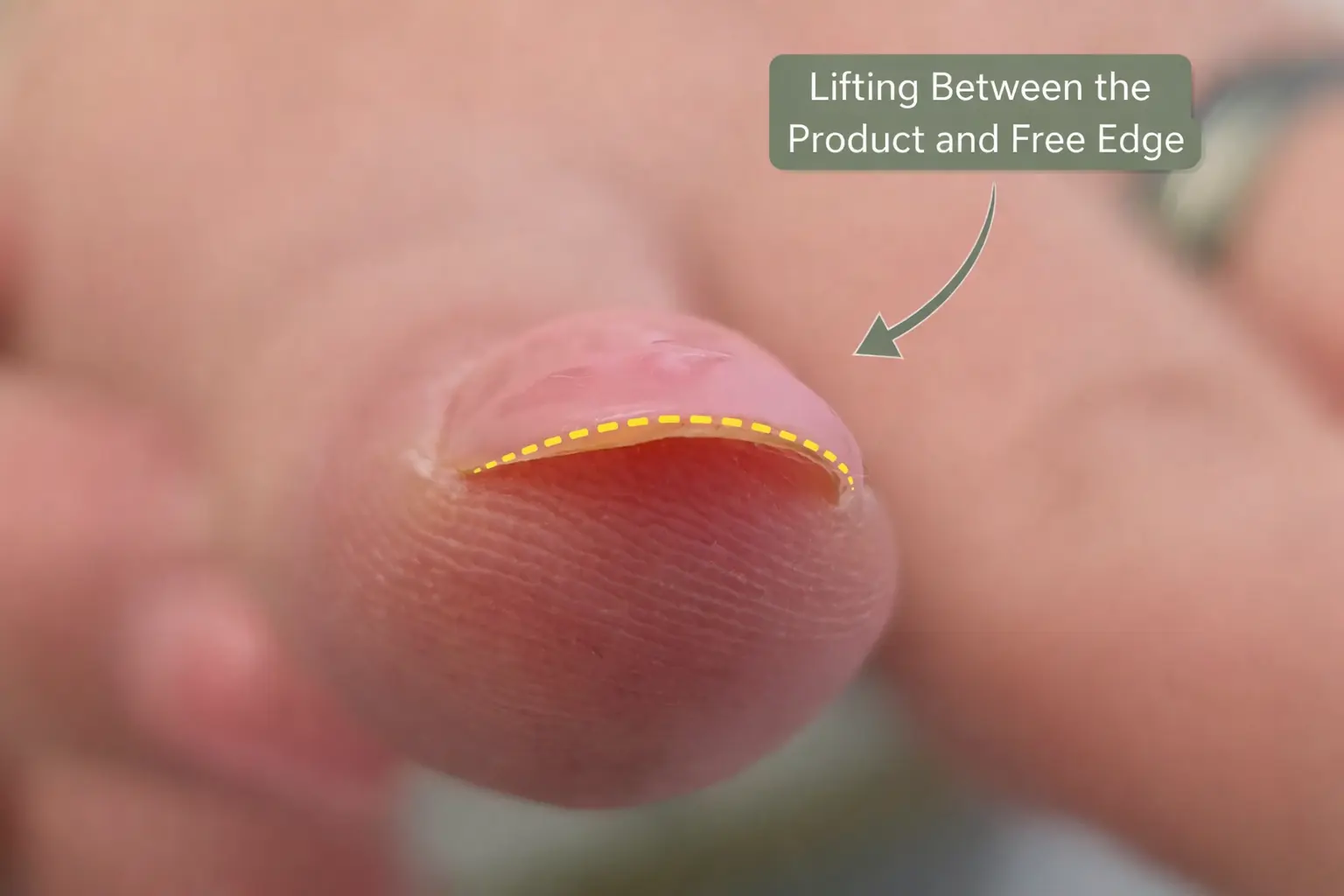
Lifting manifests as visible separation between the gel product and natural nail plate, typically beginning at the cuticle area, free edge, or sidewalls. The gap allows moisture, bacteria, and debris to enter, creating both aesthetic and hygiene concerns.
Research indicates that over 80% of gel lifting cases result from application errors rather than product defects, making proper technique education essential for service longevity.
This comprehensive guide examines the ten most common causes of gel lifting with evidence-based solutions for each issue. Understanding these causes enables nail technicians to diagnose specific problems and implement targeted corrections.
1. Improper Nail Preparation
The Problem
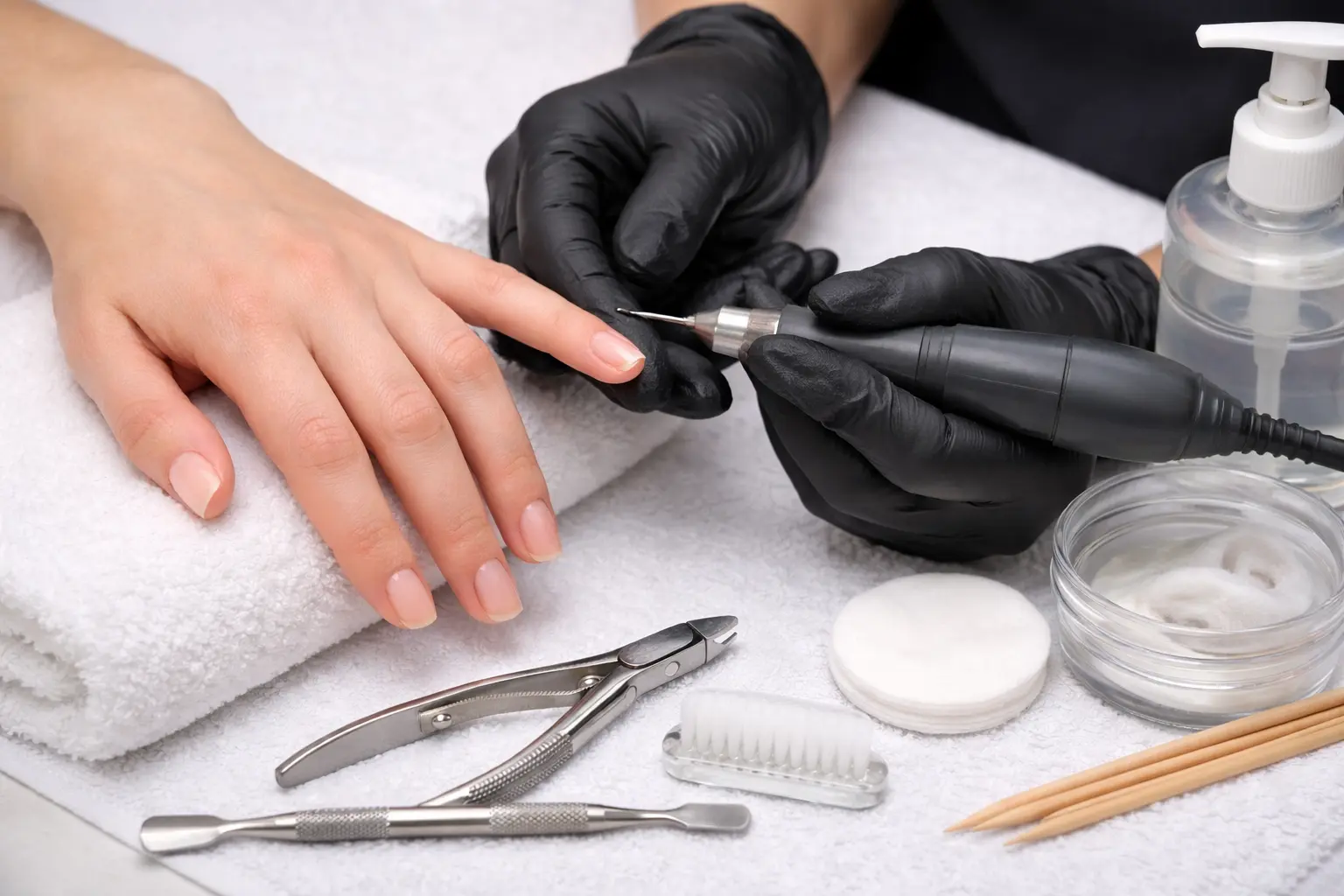
Inadequate preparation is the leading cause of gel lifting. When dead tissue, cuticle, or eponychium remains on the nail plate, gel product adheres to this tissue rather than the nail itself. As the tissue naturally sheds or loosens, the gel lifts with it.
Surface oils, dust, and natural shine on the nail plate create barriers between the gel and keratin structure. Without proper surface preparation, molecular bonding cannot occur effectively.
The Solution
- Remove all cuticle tissue: Use cuticle remover and proper tools to eliminate all dead tissue from the nail plate surface
- Clean under the free edge: Debris trapped underneath causes lifting from the tip
- Buff the nail surface: Light buffing with 180-240 grit removes shine and creates mechanical adhesion points
- Clean thoroughly: Wipe with lint-free pads and appropriate cleanser to remove all dust and oils
Professional Tip
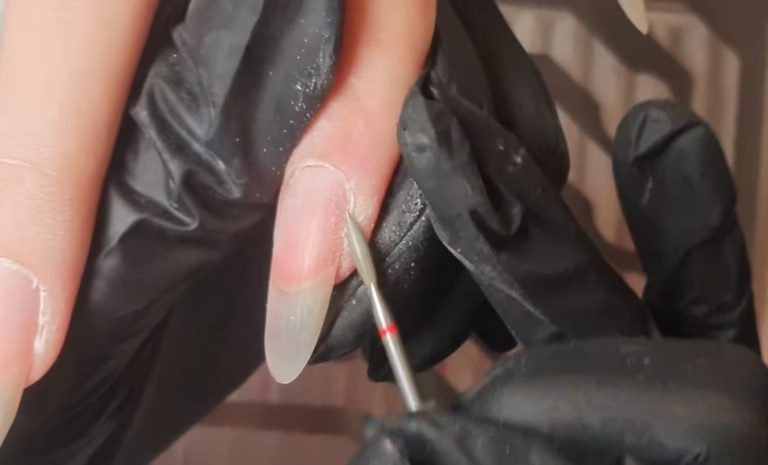
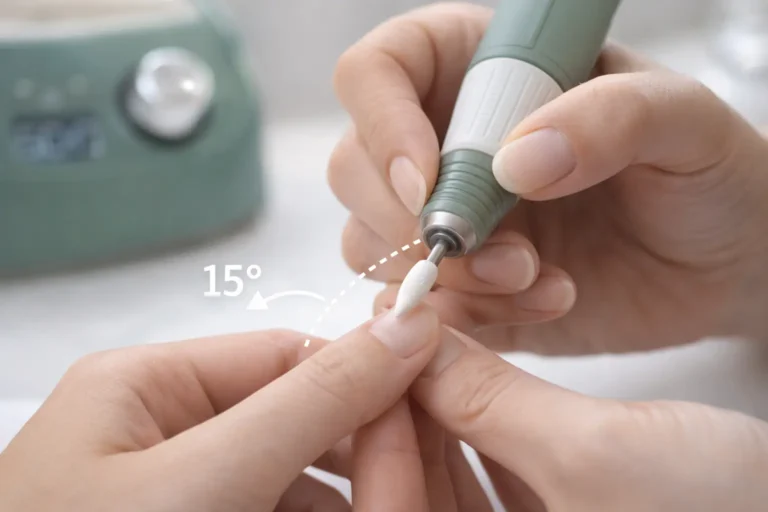
E-file preparation provides more thorough cuticle removal and surface preparation than manual methods alone. However, proper e-file training is essential to prevent nail damage. Consider professional e-file education to improve preparation quality and service longevity.
2. Insufficient Dehydration
The Problem
Natural nails contain approximately 18% moisture content. This water content prevents proper gel adhesion as gel products are hydrophobic and cannot bond effectively to moist surfaces.
Clients with naturally high nail moisture content, those who have recently showered, or those whose hands have been in water immediately before service experience increased lifting rates without proper dehydration protocols.
The Solution
- Use nail dehydrator: Apply dedicated dehydrating products that remove surface moisture
- Allow proper drying time: Wait 30-60 seconds after dehydrator application before proceeding
- Avoid water contact: Instruct clients not to wash hands immediately before appointments
- Apply acid-based primer: For clients with persistent lifting, acid primers provide additional adhesion enhancement
⚠️ Important Safety Note
Acid-based primers are corrosive and require careful handling. Avoid skin contact and follow manufacturer safety guidelines. Non-acid primers are safer alternatives for most applications whilst still improving adhesion effectively.
3. Oil and Moisture Contamination
The Problem
Natural skin oils from fingers touching the nail plate, cuticle oil residue, hand lotion contamination, or oils from the technician’s hands create invisible barriers that prevent gel adhesion.
Even trace amounts of oil or moisture contamination cause adhesion failure. Oils spread across the nail surface in thin films that are not always visible but dramatically reduce gel bonding capability.
The Solution
- Avoid touching prepared nails: After preparation and cleansing, do not touch nail plates with fingers
- Skip cuticle oil before service: Apply cuticle oil only after complete gel application and curing
- Cleanse between steps: If contamination occurs, re-cleanse the nail before gel application
- Use lint-free wipes: Cotton pads can leave fibres; lint-free wipes ensure clean surfaces
- Store products properly: Keep gel bottles sealed and away from contamination sources
4. Incorrect Application Technique
The Problem
Gel application errors cause multiple lifting patterns depending on the specific mistake:
- Thick application layers: Prevent complete curing and create internal stress
- Product flooding: Gel touching skin or cuticle creates lifting points as it cures and shrinks
- Incomplete coverage: Missing spots along the cuticle or sidewalls allow moisture entry
- Free edge gaps: Not capping the free edge properly causes tip lifting
The Solution
Proper Application Protocol
- Thin base layer: Apply a very thin coat ensuring complete coverage but no flooding
- Leave micro-gap: Keep gel 0.5-1mm away from cuticle and sidewalls to prevent skin contact
- Cap the free edge: Brush gel over the tip edge to seal it
- Build gradually: Multiple thin layers perform better than one thick layer
- Check coverage: Ensure no gaps or thin spots remain before curing
Application technique improves with practice and proper training. Consider professional education to refine application skills and reduce service failure rates.
5. Inadequate or Incorrect Curing
The Problem
Under-cured gel remains partially liquid at the molecular level. This incomplete polymerisation creates weak spots that separate easily under stress. Common curing problems include:
- Insufficient lamp wattage: Low-power lamps cannot cure gel completely
- Incorrect cure times: Not following manufacturer specifications
- Worn lamp bulbs: LED and UV bulbs lose effectiveness over time
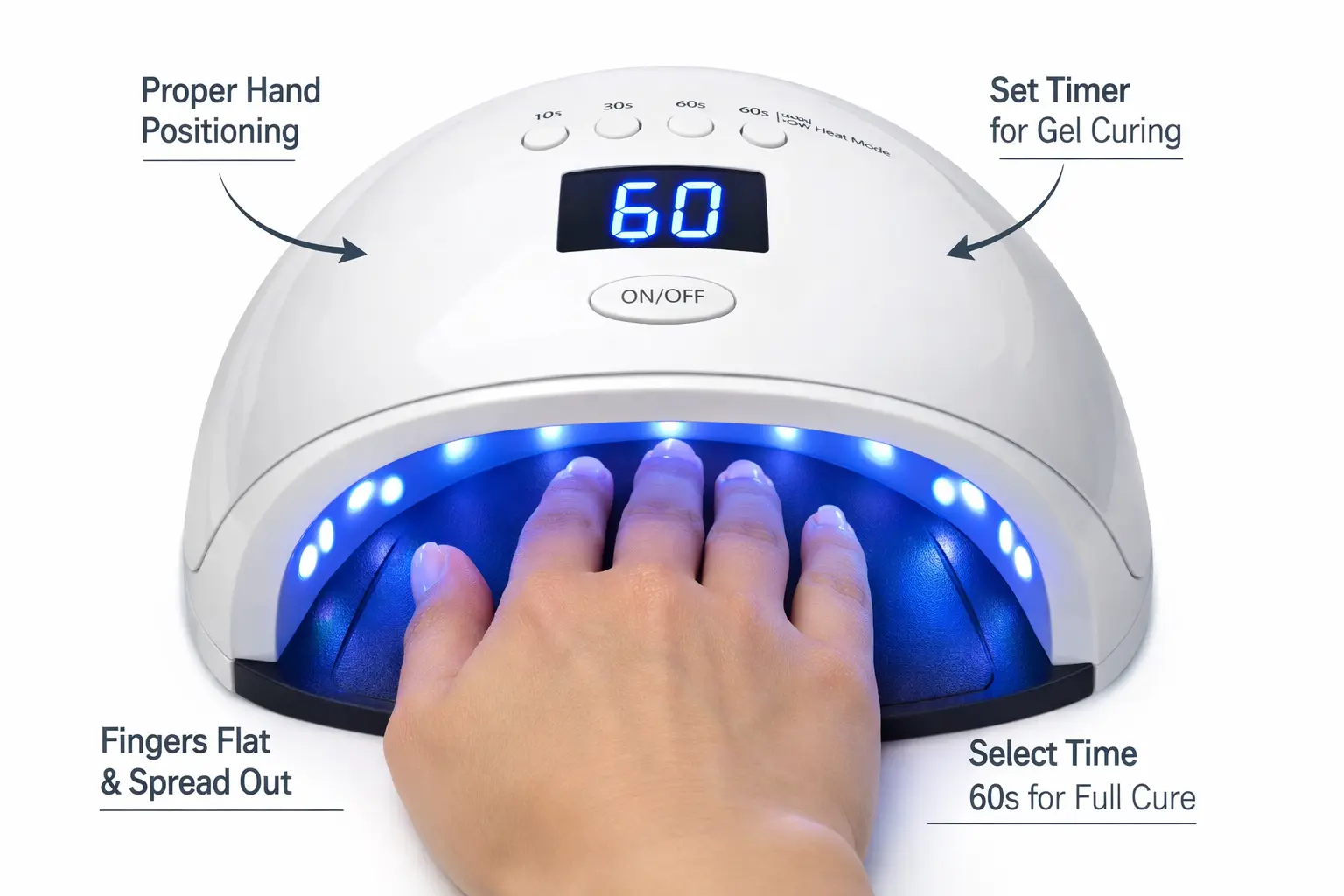
- Poor hand positioning: Fingers not fully inserted or angled incorrectly
- Dirty lamp reflectors: Product buildup reduces light reflection
The Solution
- Use appropriate lamp: Minimum 36-48W LED lamp for professional services
- Follow cure time guidelines: Cure each layer according to product manufacturer instructions
- Replace bulbs regularly: Replace LED arrays every 50,000 hours or when effectiveness decreases
- Clean lamp interior: Wipe reflective surfaces monthly to maintain optimal light output
- Ensure full insertion: Position hand completely inside lamp with all nails receiving equal light exposure
- Add extra cure time: For thicker applications or pigmented colours, add 10-20 seconds
Testing for Complete Cure
Properly cured gel should be completely hard with no tacky feel (unless it has a tacky inhibition layer). If gel feels soft, flexible, or bends easily, it is under-cured. Re-cure or increase cure time for subsequent applications.
6. Natural Nail Flexibility and Structure
The Problem
Natural nails are not rigid structures. They flex with pressure and movement. When gel product is more rigid than the natural nail, the flexing creates stress at the product-nail interface, leading to lifting.
Clients with very thin, flexible nails experience higher lifting rates because their natural nail flexion exceeds the gel’s flexibility tolerance. Downward-curved nails (ski-jump nails) create additional stress points at the apex.
The Solution
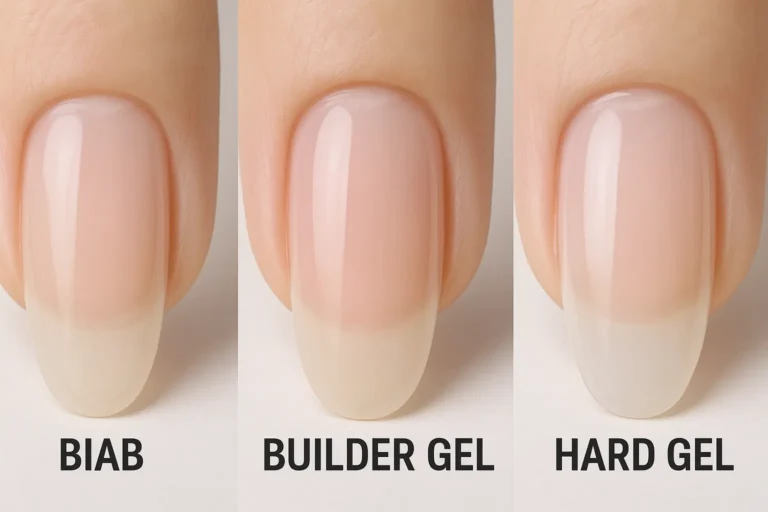
- Choose flexible gel systems: BIAB and flexible builder gels move with natural nail flexion
- Build proper apex structure: Correct structural design distributes stress evenly
- Keep length conservative: Shorter length reduces stress on flexible nails
- Recommend supplements: Biotin supplementation may improve nail strength over time
- Consider alternative systems: Very flexible nails may perform better with other enhancement options
Some nail structures are biomechanically incompatible with gel products regardless of technique quality. Honest client consultation about realistic expectations prevents dissatisfaction.
7. Client Lifestyle and Activities
The Problem
External factors beyond technician control significantly impact gel longevity:
- Frequent water exposure: Swimming, dishwashing, cleaning without gloves
- Chemical exposure: Harsh cleaning products, acetone, alcohol-based hand sanitisers
- Manual labour: Typing, manual work, picking at edges
- Temperature extremes: Hot yoga, sauna use, working in cold conditions
- Nail biting or picking: Mechanical damage to gel edges
The Solution
Client Education Protocol
Provide written aftercare instructions covering:
- Wear gloves for cleaning, dishwashing, and prolonged water exposure
- Avoid using nails as tools for opening, scratching, or prying
- Apply cuticle oil daily to maintain flexibility and prevent brittleness
- Avoid picking at lifted edges; return for professional repair
- Keep nails at appropriate length for lifestyle requirements
Set realistic expectations during consultation. Clients with high-demand lifestyles may need shorter maintenance intervals or alternative nail enhancement options.
8. Product Incompatibility
The Problem
Mixing products from different manufacturers or using products not designed to work together creates chemical incompatibility issues:
- Base coat from one brand, colour from another: Different formulations may not bond properly
- Incompatible cleansers or primers: Wrong prep products prevent adhesion
- Expired products: Gel formulations degrade over time
- Contaminated bottles: Cross-contamination affects chemical structure
The Solution
- Use complete systems: Keep base, colour, and top coat from the same manufacturer
- Follow manufacturer guidelines: Use recommended prep products and application protocols
- Check expiration dates: Replace products past their recommended shelf life
- Prevent contamination: Never wipe brush on bottle neck; do not double-dip
- Store properly: Keep products sealed, away from heat and direct sunlight
⚠️ Testing New Products
When introducing new products to your service menu, test them on yourself or willing models before using on paying clients. Allow full wear time to assess lifting, adhesion, and compatibility with your existing products and techniques.
9. Environmental Conditions
The Problem
Temperature and humidity affect gel chemistry during application and curing:
- Cold workspace: Gel becomes thick and difficult to apply smoothly
- High humidity: Increases nail moisture content and prevents proper dehydration
- Extreme heat: Gel may cure prematurely or thin excessively
- Seasonal changes: Natural nail characteristics change with climate
The Solution
- Maintain workspace temperature: Keep salon between 20-24°C (68-75°F)
- Control humidity: Use dehumidifiers in damp environments; humidifiers in dry climates
- Warm products in winter: Store gel in warmer areas or warm bottles in hands before application
- Adjust dehydration in humidity: Allow longer drying time for dehydrators in humid conditions
- Account for seasonal changes: Natural nail hydration varies; adjust preparation accordingly
10. Underlying Nail Health Issues
The Problem
Certain nail conditions compromise gel adhesion regardless of application quality:
- Onycholysis: Existing separation between nail plate and bed
- Psoriasis: Creates pitting and irregular nail surface
- Fungal infections: Compromised keratin structure prevents adhesion
- Medication effects: Chemotherapy, antibiotics, or other drugs alter nail chemistry
- Nutritional deficiencies: Poor nail quality from inadequate nutrition
- Excessive natural oil production: Some individuals produce more nail bed oil
The Solution
⚠️ Professional Responsibility
Nail technicians must recognize when conditions require medical evaluation rather than nail services. Fungal infections, severe nail disease, and unexplained nail changes require referral to medical professionals. Applying gel over infected or diseased nails creates health risks and violates professional practice standards.
- Conduct thorough consultations: Ask about medications, health conditions, and nail history
- Postpone services when appropriate: Wait until infections clear or nail health improves
- Adjust expectations: Clients with nail health issues may experience shorter wear time
- Consider alternatives: Some clients may be better suited to nail polish or press-ons
- Document concerns: Keep records of nail condition and client communications
How to Diagnose Which Cause Is Creating Your Lifting Problem
Different lifting patterns indicate specific causes. Use this diagnostic guide to identify the problem:
Complete Gel Lifting Prevention Checklist
Use this checklist for every gel application to prevent lifting:
Pre-Application Checklist
- ☐ Client hands have not been in water for 2+ hours
- ☐ All cuticle tissue removed from nail plate
- ☐ Free edge cleaned underneath
- ☐ Natural shine buffed away with 180-240 grit
- ☐ Dust removed with lint-free wipe
- ☐ Dehydrator applied and dried
- ☐ Primer applied if required
- ☐ No touching of nail plates after preparation
Application Checklist
- ☐ Thin base coat applied
- ☐ Proper margin maintained (0.5-1mm from skin)
- ☐ Free edge capped
- ☐ Complete coverage with no gaps
- ☐ Each layer cured fully per manufacturer guidelines
- ☐ Hand positioned correctly in lamp
- ☐ Product builds gradually (not one thick layer)
- ☐ Final cure is hard with no flexibility
Post-Application Checklist
- ☐ Client educated about aftercare
- ☐ Written aftercare instructions provided
- ☐ Cuticle oil applied after completion
- ☐ Client instructed to avoid water for 2 hours
- ☐ Next appointment scheduled
Frequently Asked Questions About Gel Nail Lifting
How long should gel nails last without lifting?
Properly applied gel manicures typically last 2-4 weeks without lifting, depending on client lifestyle, natural nail growth rate, and nail health. Lifting within the first week indicates application error. Lifting after 2-3 weeks is normal wear and signals time for maintenance.
Can I fix lifted gel nails at home?
Do not attempt to glue down or patch lifted gel at home. Moisture, bacteria, and debris trapped under lifted gel create infection risks. Remove lifted gel completely or return to your nail technician for professional repair. Attempting home fixes often causes further damage and worsens the problem.
Why do my gel nails lift after one day?
Lifting within 24-48 hours indicates preparation errors, contamination, or inadequate curing. Common causes include insufficient cuticle removal, oil contamination, lack of dehydration, or under-cured gel. Return to your technician for correction and discussion of the specific cause.
Does gel lift more in water?
Water exposure accelerates lifting if gel is already compromised or if moisture enters through gaps. Prolonged water contact softens natural nails and creates stress at the product interface. Wearing protective gloves during cleaning, dishwashing, and swimming significantly improves gel longevity.
Will buffing my nails more prevent lifting?
Light buffing with 180-240 grit creates appropriate texture for adhesion. Excessive buffing damages the nail plate and actually increases lifting risk by weakening nail structure. Buff only enough to remove natural shine; aggressive filing is unnecessary and harmful.
Should I switch gel brands if mine keeps lifting?
Product changes should be the last resort after ruling out application errors. Over 80% of lifting results from technique rather than product quality. Review your preparation and application protocol thoroughly before switching brands. If technique is correct and lifting persists across multiple clients, then product evaluation is appropriate.
Can cuticle oil cause gel lifting?
Cuticle oil applied before gel application causes immediate adhesion failure. Always apply cuticle oil only after complete gel application and final cure. Daily cuticle oil use between appointments actually improves gel longevity by maintaining nail flexibility and preventing brittleness.
Why do only some of my nails lift?
Individual nail characteristics vary. Some fingers may have more flexible nails, higher oil production, or different moisture content. Thumbs and index fingers often lift first due to increased use and stress. Consistent lifting on specific nails may require adjusted preparation or product choice for those nails.
When to Seek Professional Training
Persistent lifting despite following this guidance indicates need for hands-on technique correction:
- Lifting occurs on more than 20% of clients consistently
- Lifting happens within first week despite careful preparation
- Unable to identify specific cause using diagnostic guide
- Self-taught techniques without formal education
- Transitioning to new gel systems or application methods
Professional education provides supervised practice, real-time technique correction, and troubleshooting guidance that cannot be replicated through written content alone.
Investment in Education
Proper training reduces product waste, increases client retention, improves service pricing capability, and builds professional reputation. The cost of education is recovered rapidly through improved service quality and reduced remake rates. Consider structured training programmes that include hands-on practice with technique feedback.
Preventing Gel Lifting Through Systematic Approach
Gel nail lifting results from identifiable, correctable causes rather than random chance. The ten causes outlined in this guide account for the vast majority of premature gel failure. Systematic evaluation of preparation, application, curing, and client factors enables targeted problem-solving.
Most lifting issues stem from preparation errors that can be corrected through improved technique rather than product changes. Focus on thorough cuticle removal, proper dehydration, contamination prevention, and correct application margins before assuming product incompatibility.
Client education about aftercare and realistic expectations prevents dissatisfaction when natural wear occurs. Not all lifting indicates service failure; normal nail growth and client lifestyle factors influence longevity beyond technician control.
Consistent use of the prevention checklist, diagnostic guide, and corrective solutions provided in this article will dramatically improve gel manicure longevity and client satisfaction.
About the Author: Radina Ignatova
Radina Ignatova is a Professional Nail Expert, Certified Educator, and founder of Artistic Touch Nail Training Academy, based in Dundee, Scotland.
With over a decade of professional experience in gel systems, BIAB application, and advanced nail techniques, Radina specialises in identifying and correcting common application errors that cause service failure.
Her teaching approach focuses on problem-solving and practical troubleshooting rather than idealised demonstrations. She helps nail technicians understand why problems occur and how to correct them systematically.
Radina provides both online and in-person training covering proper preparation techniques, application protocols, and troubleshooting methods to improve service longevity and client satisfaction.
Related Articles from The Nail Wiki
- BIAB vs Builder Gel vs Hard Gel: Complete Comparison
- What Is BIAB (Builder in a Bottle)? Complete Guide
- Professional Nail Preparation Techniques
- E-File Manicure Safety and Technique Guide
- Understanding Nail Product Allergies
Master Proper Gel Application Technique
If you want to eliminate gel lifting through proper preparation, application, and troubleshooting techniques, explore comprehensive training at Artistic Touch Nail Training Academy.
About The Nail Wiki: Independent educational resource providing evidence-based nail industry information for professional nail technicians and enthusiasts. Content authored by verified nail professionals and industry experts.