
E-File Manicure: Complete Guide to Electric Nail Files
Author: Radina Ignatova, Professional Nail Expert | Last Updated: January 2026
Quick Summary
An e-file manicure uses an electric nail file (also called a nail drill or e-file) to perform various nail preparation tasks including cuticle work, nail shaping, and gel removal. E-files allow for precise, controlled nail work when used with proper technique and safety protocols.
E-files are professional tools that require training to use safely and effectively. They are essential equipment for advanced techniques like Russian Manicure and significantly improve efficiency in professional nail services.
Contents
What is an E-File Manicure?
An e-file manicure is a nail service that utilizes an electric nail file (e-file) as the primary tool for nail preparation, cuticle work, and product removal. Unlike traditional manicures that rely solely on manual tools such as metal pushers and hand files, e-file manicures employ a motorized device with interchangeable bits to perform precise nail work.
The term “e-file” is short for “electric file,” though these devices are also commonly referred to as nail drills or electric nail files. Professional nail technicians use e-files to improve efficiency, precision, and results in various nail services including gel polish application, nail extensions, and advanced techniques like Russian Manicure.
Origins of E-File Use in Nail Services
E-files were originally developed for dental applications and later adapted for nail services in the 1970s. Initially used primarily for acrylic nail application and removal, e-file technology has evolved significantly. Modern professional e-files now feature precise speed control, forward and reverse rotation, and specialized bits designed specifically for delicate cuticle work and nail preparation.
The widespread adoption of e-files in professional nail services occurred as nail technicians recognized the tool’s ability to perform detailed work with greater control and less physical strain compared to manual methods. Eastern European nail technicians, particularly in Russia, pioneered many of the advanced e-file techniques used globally today.
How E-Files Work
An e-file system consists of a motorized handpiece that accepts interchangeable bits (also called burrs or drill bits). The motor rotates these bits at controlled speeds, measured in revolutions per minute (RPM), allowing the technician to file, smooth, or remove material from the nail or surrounding skin.
Key Components
Essential E-File Components
- Control Box: Houses the motor and controls for speed adjustment and rotation direction
- Handpiece: The pen-like tool held by the technician that accepts and rotates the bits
- Bits/Burrs: Interchangeable attachments made from various materials (carbide, ceramic, diamond, etc.) designed for specific tasks
- Foot Pedal (Optional): Allows hands-free speed control during service
RPM and Speed Control
Professional e-files typically operate within a range of 0 to 35,000 RPM, though most nail work occurs between 5,000 and 20,000 RPM. Different tasks require different speeds:
- Low speeds (5,000-10,000 RPM): Nail preparation and cuticle work
- Medium speeds (10,000-16,000 RPM): Cuticle work
- Higher speeds (20,000+ RPM): Filing off product, shaping, length removal
Lower speeds with higher pressure can generate heat and cause discomfort or damage. Proper e-file technique involves using appropriate speeds with light pressure and constant movement to prevent heat buildup and ensure client comfort.
Types of E-File Machines
E-file machines vary significantly in quality, power, and features. Understanding these differences is essential for selecting appropriate equipment for professional or personal use.
Professional E-Files
Professional-grade e-files are designed for daily salon use and feature more powerful motors (typically 35-50 watts), precise speed control, minimal vibration, and durability for thousands of hours of operation. These machines typically cost between £150-£500+ depending on features and brand.
Professional E-File Features
- Strong, consistent motor power (35-50 watts minimum)
- Wide RPM range (0-35,000 RPM) with precise digital control
- Forward and reverse rotation settings
- Low vibration and noise levels
- Durable construction for daily professional use
- Heat-resistant handpiece
- Compatible with standard 3/32″ bits
Consumer/Home Use E-Files
Consumer-grade e-files are designed for occasional personal use and typically feature less powerful motors (10-25 watts), simpler controls, and lower maximum speeds. These machines generally cost between £30-£150.
⚠️ Important Limitations of Home E-Files
Consumer e-files lack the power, precision, and durability needed for professional techniques like Russian Manicure. Attempting advanced e-file work with inadequate equipment can result in poor results, excessive service time, and increased risk of injury. Professional training with professional-grade equipment is essential for safe, effective e-file work.
Portable vs Stationary E-Files
E-files are available in two main configurations:
- Stationary systems: Traditional setup with separate control box and handpiece connected by cable. These offer maximum power and precision for salon use.
- Portable/rechargeable systems: All-in-one handpiece with built-in battery. More convenient for mobile services but typically less powerful than stationary systems.
E-File Bits and Their Uses
E-file bits are specialized attachments designed for specific tasks in nail services. Understanding bit materials, shapes, and grit levels is essential for safe and effective e-file work.
Bit Materials
Different materials offer distinct characteristics suited to various applications:
Common Bit Shapes and Uses
Essential E-File Bit Shapes
- Barrel/Cylinder bits: General cuticle work, removing dead skin from nail plate
- Flame/Bullet bits: Detailed cuticle work, accessing lateral nail folds and sidewalls
- Ball/Round bits: Cuticle line cleaning, gentle skin work around nail perimeter
- Cone/Tapered bits: Under-nail cleaning, accessing tight spaces, sidewall work
- Safety bits: Rounded tips designed to minimize risk of injury during cuticle work
- Large barrel bits: Product removal, nail surface work, length reduction
Grit Levels
E-file bit grit is measured similarly to sandpaper—higher numbers indicate finer grit (smoother, less aggressive):
- Extra coarse (80-100 grit): Heavy product removal, callus work—never used on natural nail
- Coarse (120-150 grit): Product removal, nail shortening
- Medium (180-240 grit): General nail shaping, product smoothing
- Fine (280-400 grit): Gentle cuticle work, delicate skin removal, nail surface refinement
- Extra fine (600+ grit): Polishing, final smoothing, sensitive skin work
Common E-File Techniques
Professional nail technicians use e-files for various tasks throughout nail services. Each technique requires specific bits, speeds, and hand positioning for safe and effective results.
Cuticle Preparation
E-file cuticle preparation involves using fine-grit ceramic or diamond bits to gently remove dead skin (cuticle) from the nail plate and clean around the cuticle area. This technique is fundamental to Russian Manicure and other advanced nail preparation methods.
Proper cuticle work with an e-file requires light pressure, constant movement, and careful attention to bit angle to avoid injury to the living cuticle (eponychium) or nail matrix. This is one of the most advanced e-file skills and requires professional training to perform safely.
Nail Surface Preparation
E-files can gently buff the nail surface to remove shine and create optimal adhesion for gel polish or nail enhancements. This technique uses fine-grit diamond bits or specialized buffing attachments at moderate speeds with light, sweeping motions across the nail plate.
Gel Polish Removal
E-files significantly reduce gel polish removal time compared to traditional soaking methods. Using coarse carbide bits or sanding bands, technicians can carefully file away the bulk of gel polish, leaving only a thin layer that is either removed with a finer bit or briefly soaked off.
⚠️ Safety Warning: Gel Removal
Improper gel removal with an e-file can quickly damage the natural nail plate if too much pressure is applied or if the technician files into the natural nail. This technique requires experience recognizing the difference between product and natural nail, which becomes more challenging with thin or damaged natural nails.
Nail Shaping
E-files can shape natural nails or nail enhancements efficiently using medium-grit diamond bits or sanding bands. The e-file is moved along the free edge and sides of the nail to create the desired shape (square, round, almond, etc.) with smooth, even results.
Russian Manicure Technique
Russian Manicure is an advanced dry manicure technique that relies entirely on e-file work for nail preparation. This method involves meticulous cleaning of the cuticle area, nail folds, and nail plate using a combination of ceramic and diamond bits at controlled speeds.
Russian Manicure creates an exceptionally clean nail bed that allows coatings to last 3-5 weeks without lifting. This technique requires extensive training and represents the most advanced application of e-file technology in nail services.
Master Professional E-File Technique
Learn safe, effective e-file methods including Russian Manicure preparation, proper bit selection, and techniques that create long-lasting gel polish results.
View E-File Manicure Course →Safety Guidelines for E-File Use
E-files are powerful tools that require proper training and careful use to prevent injury. Both nail technicians and clients should understand essential safety protocols.
Essential Safety Protocols
Critical Safety Rules
- Never apply excessive pressure: Let the bit do the work; pressing hard generates heat and can cause injury
- Keep the bit moving: Staying in one spot creates heat buildup and increases risk of damage
- Use appropriate speeds: Lower speeds for delicate work, higher speeds for product removal
- Maintain proper bit angle: Incorrect angles increase risk of catching skin or damaging the nail
- Sanitize bits between clients: Proper infection control requires thorough cleaning and disinfection
- Replace worn bits: Dull bits require more pressure, increasing heat and risk of injury
- Never use e-file on inflamed or infected areas: This can spread infection and cause additional damage
Signs of Improper E-File Use
Clients and technicians should recognize warning signs that indicate unsafe e-file technique:
⚠️ Warning Signs
- Burning sensation or heat during service
- Sharp pain or discomfort
- Redness or irritation after service
- Bleeding or skin breaks
- Thinning or weakening of natural nails
- Nail sensitivity that persists days after service
Any of these symptoms indicate that the e-file technique needs correction or that e-file work may not be appropriate for that particular client at that time.
Contraindications for E-File Use
E-file work should be avoided or modified for clients with certain conditions:
- Very thin or damaged nails: Risk of over-filing and further damage
- Active infections: Can spread bacteria or fungi
- Extremely thin or fragile skin: Higher risk of cuts or abrasions
- Certain medical conditions: Diabetes, blood clotting disorders, or immunosuppression may increase risk
- Recent injuries: Allow complete healing before e-file work in affected area
Professional vs Home Use E-Files
The distinction between professional and home use e-files extends beyond equipment quality to training requirements, safety considerations, and appropriate applications.
Professional E-File Use
Professional nail technicians undergo specialized training to use e-files safely and effectively. This training typically includes:
- Understanding of nail anatomy and physiology
- Proper bit selection for various tasks and nail conditions
- Speed and pressure control techniques
- Hand positioning and bit angle management
- Recognition of contraindications and problem conditions
- Infection control and equipment maintenance
- Client consultation and safety assessment
Professional-grade equipment provides the power, precision, and durability needed for advanced techniques and daily salon use. Investment in quality equipment and proper training enables nail technicians to offer efficient, safe services that produce superior results.
Home E-File Use
Consumer e-files are designed for basic, occasional personal use such as:
- Nail shaping and smoothing
- Light callus reduction
- Basic gel polish removal (with caution)
⚠️ Not Recommended for Home Use
The following techniques should not be attempted with consumer e-files or without professional training:
- Detailed cuticle work or cuticle removal
- Russian Manicure or advanced dry manicure techniques
- Aggressive gel or acrylic removal near the natural nail
- Work on damaged, thin, or problematic nails
When to Seek Professional E-File Services
Clients should seek professional services for:
- Detailed cuticle preparation for long-lasting gel polish
- Safe removal of gel polish or nail enhancements
- Treatment of problem nails or skin conditions
- Learning proper technique before attempting home use
- Advanced nail services like Russian Manicure
E-File vs Manual Tools Comparison
Understanding the differences between e-file and traditional manual tool approaches helps clients and technicians make informed decisions about nail service methods.
Combining E-File and Manual Methods
Many professional nail technicians use a combination of e-file and manual tools, selecting the most appropriate method for each specific task and client need. This hybrid approach maximizes the benefits of both methods whilst minimizing limitations.
For example, a technician might use e-file for efficient cuticle preparation and gel removal, but switch to manual tools for final refinement or when working with particularly sensitive clients.
Frequently Asked Questions About E-File Manicures
Does e-file manicure hurt?
An e-file manicure should not cause pain when performed correctly. Clients may feel vibration, gentle pressure, or slight warmth from the bit, but sharp pain, burning, or significant discomfort indicates improper technique. A properly trained technician using appropriate bits, speeds, and pressure will create a comfortable experience. Clients with very sensitive skin may experience more sensation than those with thicker skin, but the service should never be painful.
Is e-file bad for natural nails?
E-files are not inherently damaging to natural nails when used properly. However, improper e-file use (excessive pressure, wrong speeds, inappropriate bits, or inadequate training) can cause significant damage including nail thinning, heat damage, or injury to the nail bed and surrounding skin. The tool itself is neutral—the technician’s skill and training determine whether e-file work is safe and beneficial or harmful. Properly performed e-file manicures actually improve nail health by creating cleaner nail beds that are less prone to lifting and bacterial growth.
How long does an e-file manicure take?
A complete e-file manicure with gel polish application typically takes 60-90 minutes depending on the specific techniques used, nail condition, and whether the service includes removal of previous gel polish. Russian Manicure, which involves detailed e-file cuticle work, typically requires 75-90 minutes. Basic e-file gel polish removal and reapplication may take as little as 45-60 minutes. E-file work is generally faster than equivalent manual tool methods, with time savings of 30-50% for tasks like gel removal and cuticle preparation.
Can I use an e-file at home?
Consumer-grade e-files can be used at home for basic tasks such as nail shaping, gentle surface buffing, and light callus reduction. However, advanced techniques including detailed cuticle work, Russian Manicure, and aggressive gel removal should not be attempted without professional training regardless of equipment quality. Even basic home e-file use benefits from proper instruction in speed control, pressure management, and safety protocols. Many nail technicians offer brief training sessions to teach clients safe home e-file use for maintenance between professional services.
What is the difference between e-file manicure and Russian Manicure?
E-file manicure is a broad term describing any nail service that uses an electric nail file as a primary tool. Russian Manicure is a specific advanced technique that uses e-files exclusively (no water soaking) to perform extremely detailed cuticle preparation and nail cleaning. All Russian Manicures use e-files, but not all e-file manicures follow the Russian Manicure method. Russian Manicure represents the most advanced application of e-file technology, whilst general e-file manicures may incorporate e-files alongside traditional methods for various tasks. Russian Manicure requires specialized training beyond basic e-file competency.
How do I choose a safe e-file nail technician?
Look for technicians who have completed formal e-file training, preferably with certification from recognized educational institutions. Ask potential technicians about their training background, years of e-file experience, and whether they follow manufacturer safety guidelines for speed and pressure. During the service, you should feel minimal discomfort, the technician should explain what they are doing and check in about your comfort level, and you should see proper sanitation of equipment between clients. Red flags include excessive pain or heat during service, technicians who cannot explain their technique, or rushed work without attention to your comfort. Client reviews specifically mentioning e-file work can provide valuable insight into a technician’s skill and safety practices.
References and Further Reading
- Professional Beauty Association – Nail Technology Safety Standards and Best Practices
- British Association of Beauty Therapy & Cosmetology (BABTAC) – E-File Equipment Guidelines for Professional Nail Services
- UK Health and Safety Executive – Workplace Safety Guidelines for Beauty Professionals
- BABTAC Insurance and Standards – Professional Requirements for Nail Technicians in the UK
About the Author: Radina Ignatova
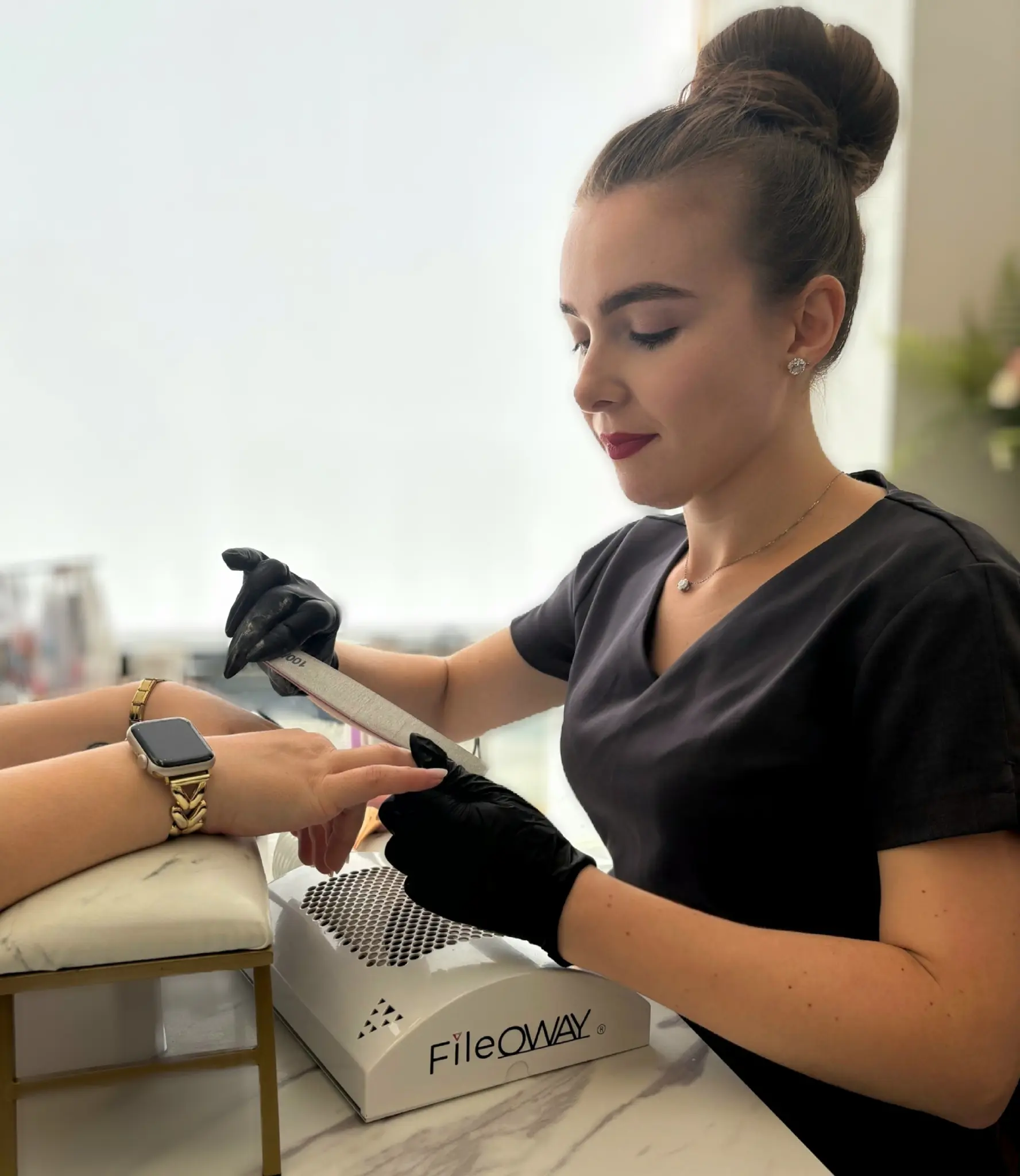
Radina Ignatova is a Professional Nail Expert, Certified Educator, and founder of both Artistic Touch – Nail Training Academy and TheNailWiki.
With hands-on experience in advanced nail techniques since 2014, Radina specialises in Russian Manicure, BIAB application, e-file techniques, and nail safety protocols. Based in Dundee, Scotland, UK, she operates a professional salon whilst teaching nail technicians internationally through online courses and in-person training.
Radina’s e-file expertise developed through extensive study of Russian and Eastern European dry manicure methods, combined with practical salon experience serving thousands of clients. She has trained over 200 students in safe, effective e-file techniques that prioritize nail health and client safety whilst delivering superior cosmetic results.
Her teaching philosophy emphasizes understanding nail anatomy, recognizing contraindications, and mastering controlled technique before attempting advanced e-file work. She advocates for comprehensive training rather than self-teaching, particularly for techniques involving live tissue manipulation.
Learn Professional E-File Technique
Proper e-file technique requires professional training that covers equipment selection, bit usage, speed control, pressure management, and safety protocols. Learning from an experienced educator prevents common mistakes that can cause client injury or nail damage whilst significantly reducing the learning curve for safe, effective e-file work.
E-File Manicure & Gel Polish Course
Learn safe e-file techniques for long-lasting gel polish application including Russian Manicure preparation, proper bit selection for different tasks, speed and pressure control, cuticle work fundamentals, gel removal methods, and comprehensive safety protocols. Suitable for nail technicians ready to advance their skills with professional e-file training.
About TheNailWiki: Free, evidence-based nail education resource founded by Professional Nail Expert Radina Ignatova. Our mission is to provide accurate, safe, and professionally-informed nail care guidance accessible to everyone. For professional certification training, visit Artistic Touch Nail Training Academy.