
Contraindications in Nail Services: Complete Safety Guide for Nail Technicians
Written by: Radina Ignatova, Professional Nail Expert & Educator
Last Updated: 15 January 2026
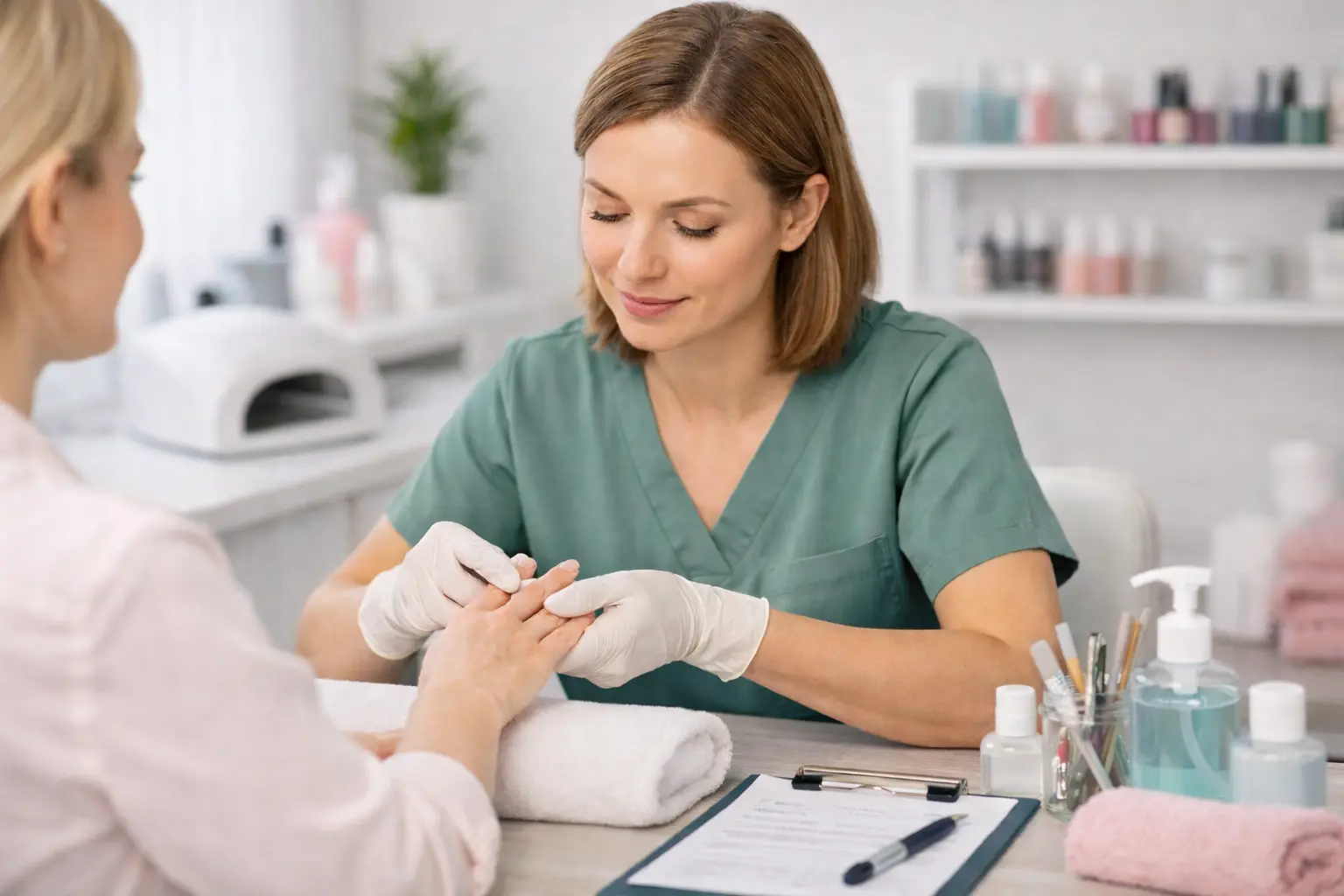
Quick Answer: What Are Contraindications in Nail Services?
Contraindications are medical conditions, health factors, or physical states that make nail treatments unsafe, require service modifications, or necessitate complete service decline to protect client wellbeing. They represent situations where providing standard nail services could cause harm, worsen existing conditions, or create unacceptable health risks.
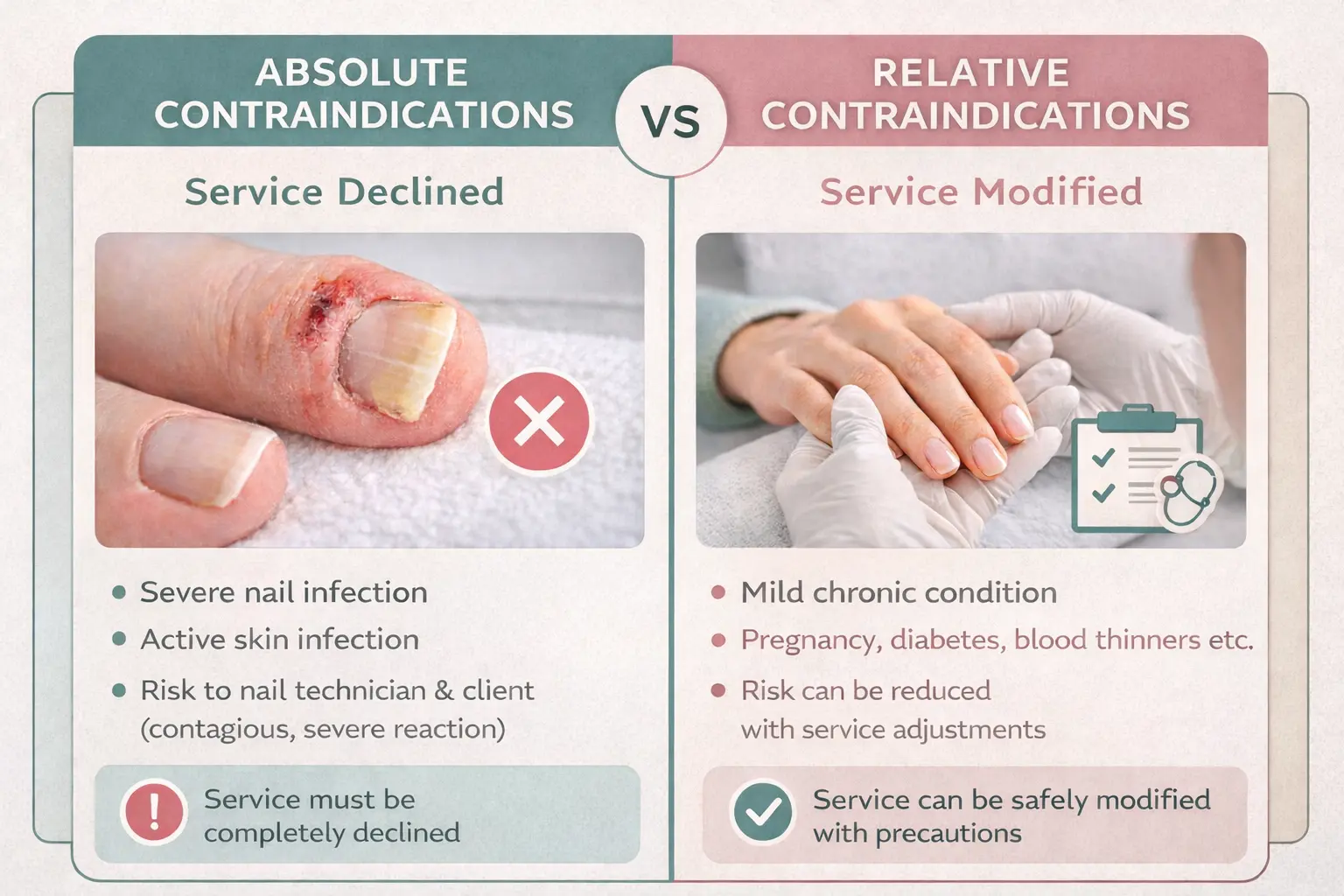
Two categories exist: Absolute contraindications (complete service decline required) and relative contraindications (service modifications or adaptations allow safe treatment).
Why it matters: Recognising and responding appropriately to contraindications demonstrates professional competence, protects client safety, fulfils duty of care obligations, and shields your business from liability.
Learn How to Identify Contraindications Through Consultation →
Why Understanding Contraindications Is Essential for Nail Professionals
Every nail technician carries professional responsibility for client safety. Before applying products, using tools, or performing treatments, you must assess whether the service is appropriate for each individual client’s current health status.
Contraindications are not theoretical concerns studied only for examinations—they are real conditions you will encounter regularly in professional practice. Diabetes, medications affecting healing, active infections, severe allergic histories, and countless other factors can make standard nail treatments unsafe or inappropriate.
Providing nail services without contraindication assessment is professionally negligent. You cannot claim ignorance if you never asked the questions. You cannot claim you acted responsibly if you ignored warning signs. Professional practice requires knowledge, vigilance, and willingness to decline services when client safety is at risk.
What Contraindications Actually Mean in Practice
Contraindications fall into two distinct categories requiring different professional responses:
Absolute Contraindications
Absolute contraindications require complete service decline. These are conditions where providing nail treatments is unsafe under any circumstances and could cause immediate harm, spread infection, or worsen serious medical conditions.
Examples of absolute contraindications:
- Active nail or skin infections (fungal, bacterial, viral)
- Open wounds or unhealed cuts in treatment area
- Severe allergic reactions to nail products in recent history
- Active chemotherapy with severely compromised nails
- Severe nail diseases requiring medical treatment
- Contagious skin conditions affecting hands
When absolute contraindications are present, do not provide services regardless of client insistence. Your professional judgment protects both parties. Politely explain why treatment cannot proceed and, where appropriate, recommend medical consultation before rebooking.
Relative Contraindications
Relative contraindications do not require complete service refusal but do require treatment modifications, adapted techniques, product changes, or special precautions to ensure safe service delivery.
Examples of relative contraindications:
- Diabetes (requires careful cuticle work, infection prevention)
- Blood thinning medication (requires modified cutting techniques)
- Pregnancy (requires excellent ventilation, comfort considerations)
- Minor skin sensitivities (may benefit from alternative products)
- Very weak or damaged nails (requires conservative service choices)
- Psoriasis or eczema in non-acute phases (requires gentle approaches)
Relative contraindications require professional knowledge to determine appropriate modifications. This is where your education, experience, and commitment to ongoing learning demonstrate their value—you must know not only when to decline but also how to adapt.
Medical Conditions as Contraindications
Numerous medical conditions affect nail service safety and suitability. Professional nail technicians must understand common health conditions, their implications for nail treatments, and appropriate service responses.
Diabetes and Nail Services
Diabetes represents one of the most common medical contraindications requiring careful consideration. Diabetes affects multiple body systems relevant to nail services:
How Diabetes Affects Nail Services
- Reduced circulation: Particularly to extremities, slowing healing and increasing infection risk
- Compromised immune function: Reduced ability to fight infections if skin is broken
- Neuropathy: Reduced sensation means clients may not feel pain from accidental cuts or burns
- Delayed healing: Minor injuries take significantly longer to heal and have higher infection rates
- Increased infection severity: Even minor infections can progress rapidly and become serious
Diabetes Service Modifications
Clients with diabetes can receive nail services with appropriate adaptations:
- Avoid aggressive cuticle work: E-file cuticle removal carries higher bleeding risk—use gentler manual methods or skip cuticle cutting entirely
- Enhanced sanitation protocols: Meticulous tool sterilisation and workspace disinfection
- Conservative service choices: Avoid extreme nail lengths, very thin enhancements, or anything increasing breakage risk
- Client education on monitoring: Instruct diabetic clients to watch for any signs of infection (redness, swelling, warmth, pain) and seek immediate medical attention if noticed
- Documented consent: Ensure your consultation form documents diabetic status and client understanding of modified approach
When to decline diabetic clients: If diabetes is poorly controlled, if client has active foot ulcers or severe circulation problems, or if neuropathy is so advanced they cannot feel your work at all—these situations require medical clearance before cosmetic nail services.
Blood Thinning Medications
Many clients take anticoagulant medications (warfarin, rivaroxaban, apixaban, aspirin, clopidogrel) for various cardiovascular conditions. These medications significantly affect clotting ability.
Blood Thinner Implications
- Increased bleeding risk: Even minor cuts bleed longer and more profusely
- Bruising susceptibility: Clients bruise easily from normal pressure during treatments
- Prolonged bleeding episodes: May require extended pressure application to stop bleeding
Service Modifications for Blood Thinners
- Avoid cutting cuticles: Use only pushing and gentle e-file smoothing, never scissors or nippers
- Extremely careful e-file use: Light pressure, slow speed, constant movement to prevent any skin contact
- Immediate response protocols: Have styptic powder or alum readily available if bleeding occurs
- Inform client: Explain why technique is modified so they understand the careful approach
Immunosuppression and Immune System Conditions
Clients with compromised immune systems face significantly higher infection risks from nail services. Immunosuppression occurs through:
- Chemotherapy or radiation therapy
- Autoimmune conditions (lupus, rheumatoid arthritis, Crohn’s disease)
- HIV/AIDS
- Organ transplant recipients on anti-rejection medications
- Long-term steroid use
- Specific immunosuppressant medications
Immunocompromised Client Protocols
- Strict sterilisation protocols: All reusable tools must be properly sanitised and sterilised (autoclave sterilisation is professional standard). Disposable files and buffers are essential requirements for all nail services, not just immunocompromised clients—these items cannot be adequately sterilised and must never be reused between clients
- Avoid any cutting: Even minor breaks in skin integrity create infection entry points
- New product use only: Never use products shared with other clients (polishes should be new or client’s personal supply)
- Schedule strategically: First appointment of the day when workspace is freshly cleaned
- Conservative approach: Gentle treatments, minimal intervention, focus on nail health rather than aggressive enhancement
When to decline immunocompromised clients: During active chemotherapy when nails are severely compromised, during acute illness phases, or if you cannot provide genuinely sterile conditions—referring to medical nail specialists may be more appropriate.
Pregnancy and Nail Services
Pregnancy is generally a relative contraindication rather than absolute—pregnant clients can receive nail services with appropriate considerations.
Pregnancy-Related Service Considerations
- Ventilation: Excellent air circulation essential to minimise chemical exposure
- Comfort positioning: Pregnancy discomfort may require position adjustments, back support, more frequent breaks
- Product sensitivity: Hormonal changes can increase sensitivity to smells and products
- Timing consideration: First trimester—some clients prefer to avoid all chemical exposure during early pregnancy
- Nail changes: Pregnancy hormones affect nail growth rate and strength
- Avoid foot massages: Certain pressure points should not be stimulated during pregnancy—omit massage from pedicure services for pregnant clients
No evidence suggests standard nail services harm pregnancy when proper ventilation exists and products are used as directed. However, respecting client comfort with chemical exposure during pregnancy is appropriate professional practice.
Circulatory and Cardiovascular Conditions
Various circulatory conditions affect nail service safety:
- Peripheral arterial disease: Reduced blood flow to extremities, affects healing
- Raynaud’s phenomenon: Extreme sensitivity to cold, fingers turn white or blue
- Deep vein thrombosis history: Blood clot risks, may be on blood thinners
- Heart conditions: May affect overall health status and medication list
These conditions generally require gentle techniques, avoiding anything that could cause injury, and extra attention to sanitation since healing capacity is reduced.
Skin Conditions Affecting Nail Treatment Area
Dermatological conditions around nails require careful assessment:
Psoriasis
Psoriasis affecting nails or surrounding skin:
- During active flares: Decline services—trauma can worsen psoriasis (Koebner phenomenon)
- During calm periods: Very gentle services possible, avoid aggressive techniques
- Product selection: Avoid known irritants, be conservative with chemical exposure
Eczema
Eczema on hands or fingers:
- Active eczema: Decline services during flare-ups with broken skin
- Controlled eczema: Gentle services possible, avoid products that may trigger reactions
- Patch testing: Consider testing products on unaffected area before full application
Contact Dermatitis
History of allergic reactions to nail products:
- Identified allergen: Avoid specific products known to cause reactions
- General sensitivity: May require products with larger molecular structures like Light Elegance systems, hypoallergenic options, or traditional polish only
- Known allergies or previous reactions: For clients with documented sensitivities, professional patch testing may help identify safe alternatives. Learn proper patch testing protocols before working with allergy-prone clients. Recent severe reactions are absolute contraindications requiring medical clearance before any further nail services
Infections as Absolute Contraindications
Active infections represent absolute contraindications—you must decline services and never proceed regardless of client wishes or financial considerations.
Fungal Nail Infections
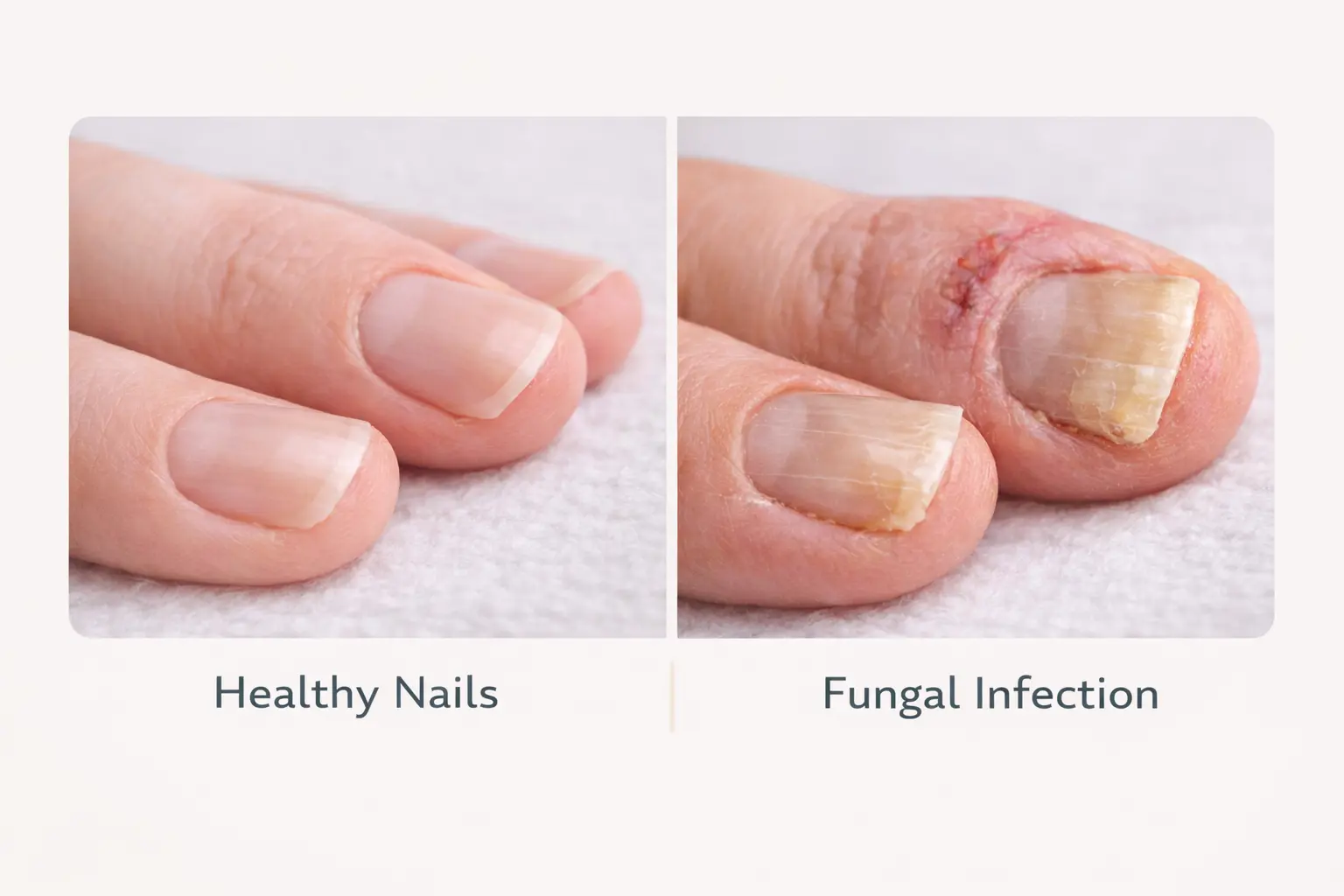
Fungal infections affecting nails are extremely common contraindications. Onychomycosis is one type of fungal nail infection, but various fungal organisms can affect nails:
⚠️ Why Fungal Infections Require Service Decline
- Contagious nature: Fungus spreads easily through contaminated tools, equipment, and surfaces
- Cross-contamination risk: Providing services risks spreading infection to other clients
- Treatment interference: Nail enhancements trap moisture and prevent antifungal medications from reaching infection
- Worsening condition: Covered fungal infections often worsen rapidly under enhancements
- Professional reputation: Accepting clients with visible infections damages professional credibility
Identifying Fungal Infections
Common signs of fungal nail infections include:
- Yellow, brown, or white discolouration of nail plate
- Thickened, brittle, or crumbling nails
- Separation of nail from nail bed (onycholysis)
- Distorted nail shape or texture
- Debris accumulation under nail
- Unpleasant odour from affected nails
Professional response: Politely decline service, explain that medical treatment is required first, and suggest consulting a doctor or podiatrist. Offer to provide services once the infection has fully resolved and been cleared by a healthcare provider.
Bacterial Infections
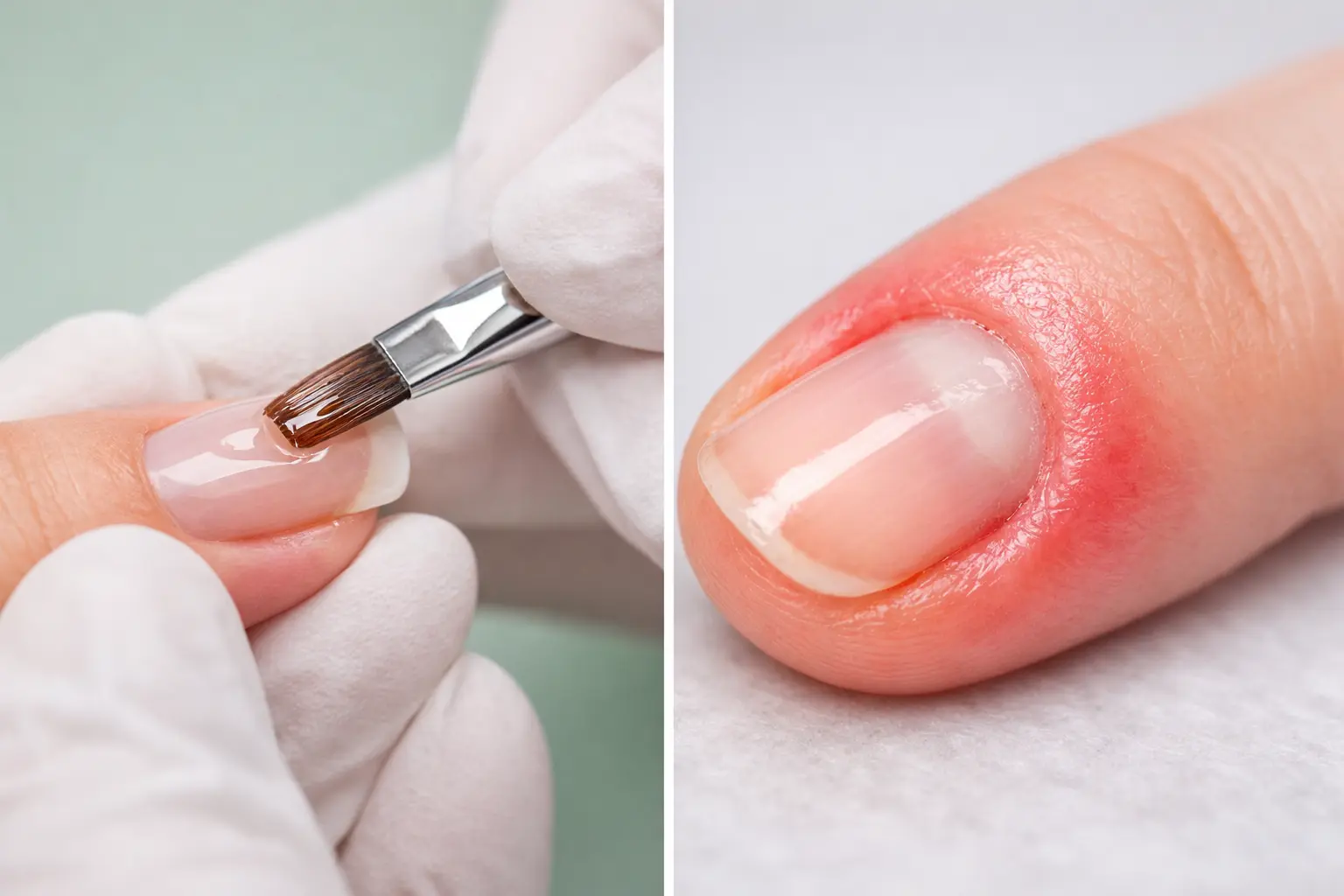
Bacterial nail infections (paronychia, felon, or other bacterial conditions) present as:
- Red, swollen, warm skin around nails
- Pus or discharge from nail folds
- Severe pain or tenderness
- Abscess formation
Bacterial infections require immediate medical treatment with antibiotics. Providing nail services over bacterial infections is dangerous, painful for the client, and risks serious complications including systemic infection.
Viral Infections
Viral infections affecting nail treatment area include:
Warts (Verrucae)
- Small, rough growths on fingers or around nails
- Can spread through direct contact or contaminated tools
- Require medical treatment before nail services
Herpetic Whitlow
- Herpes simplex virus infection on fingers
- Painful blisters or sores near nails
- Highly contagious, absolute service contraindication
Allergies and Product Sensitivities
Allergic reactions to nail products represent increasingly common contraindications requiring careful professional management.
Understanding Nail Product Allergies
Allergies to nail products typically manifest as:
- Contact dermatitis around application site: Redness, itching, swelling on skin surrounding nails, fingers, or hands
- Respiratory symptoms: Difficulty breathing, wheezing, chest tightness from inhaled product vapours
- Systemic reactions: Severe cases can cause reactions affecting entire body
Common Allergens in Nail Products
Acrylates and Methacrylates
The most common nail product allergens include:
- HEMA (2-Hydroxyethyl methacrylate)—found in many gel polishes and systems
- EGDMA (Ethylene glycol dimethacrylate)
- MMA (Methyl methacrylate)—should not be used in nail services but sometimes present in low-quality products
- Di-HEMA trimethylhexyl dicarbamate—common in gel systems
Acrylate allergies are permanent and often worsen with repeated exposure. Once sensitised, clients typically cannot use products containing the allergen without reaction.
Other Common Allergens
- Formaldehyde and formalin: Present in some nail hardeners and polish formulations
- Toluene: Solvent in some polishes
- Colophony (rosin): Adhesion promoter in some systems
- Tosylamide/formaldehyde resin: Film former in polishes
- Latex: If using latex gloves or latex-containing products
Preventing Allergy Development
Professional nail technicians can help prevent allergy development in both themselves and clients through proper application techniques:
- Avoid skin contact with uncured gel products
- Clean skin immediately if contact occurs
- Proper curing ensures products fully polymerise (uncured products are more likely to cause sensitisation)
- Adequate ventilation reduces vapour exposure
- Wearing nitrile gloves protects technician from repeated product exposure
Managing Clients with Allergy Histories
Previous mild reactions: Consider alternative products. Standard HEMA-free or TPO-free products may still cause reactions in sensitised clients. Products with larger molecular structures such as Light Elegance systems are specifically designed to reduce sensitisation risk. For clients with known allergies or previous sensitivities, professional patch testing should be performed to identify safe alternatives—learn proper patch testing methods before working with allergy-prone clients. Monitor closely for any reaction signs during and after service.
Previous severe reactions: Absolute contraindication. Decline services unless client provides documented medical clearance from dermatologist or allergist identifying specific safe products through professional medical patch testing. Even with clearance, proceed with extreme caution and obtain signed informed consent acknowledging risks.
Unknown allergen: If client experienced reactions but specific allergen is unidentified, medical patch testing is essential before any further nail services. Guessing which products might be safe is professionally irresponsible and risks severe reactions.
Nail Damage and Structural Contraindications
The physical condition of natural nails themselves can constitute contraindications requiring service modifications or decline.
Severe Nail Damage
Extreme nail damage includes:
- Extensive onycholysis: Large areas of nail separated from nail bed
- Severe trauma damage: Crushed nails, significant nail bed injury, recent serious nail damage
- Multiple nail splits: Deep vertical or horizontal cracks compromising structural integrity
- Extreme nail thinning: Over-filed or chemically damaged nails approaching transparency
Why severe damage is a contraindication: Nail enhancements require stable natural nail foundation. Severely damaged nails cannot support enhancements safely, will not retain products reliably, and may worsen with enhancement application weight and stress.
Professional response: Decline enhancement services. Recommend rehabilitation period focusing on nail strengthening, careful maintenance, and natural growth. Services can resume once sufficient nail health is restored.
Bitten Nails and Surrounding Tissue Damage
Nail biting (onychophagia) with associated damage:
- Open wounds or raw tissue: Absolute contraindication until healed
- Severely shortened nails: May lack sufficient nail plate for safe enhancement attachment
- Ongoing biting habit: Enhancements may fail quickly due to continued stress
Professional approach involves honest discussion about realistic outcomes, potential for early product failure, and requirement for habit modification to achieve and maintain enhancement success.
How to Assess Contraindications Professionally
Identifying contraindications requires systematic assessment combining visual inspection, client consultation, and professional judgment.
The Assessment Process
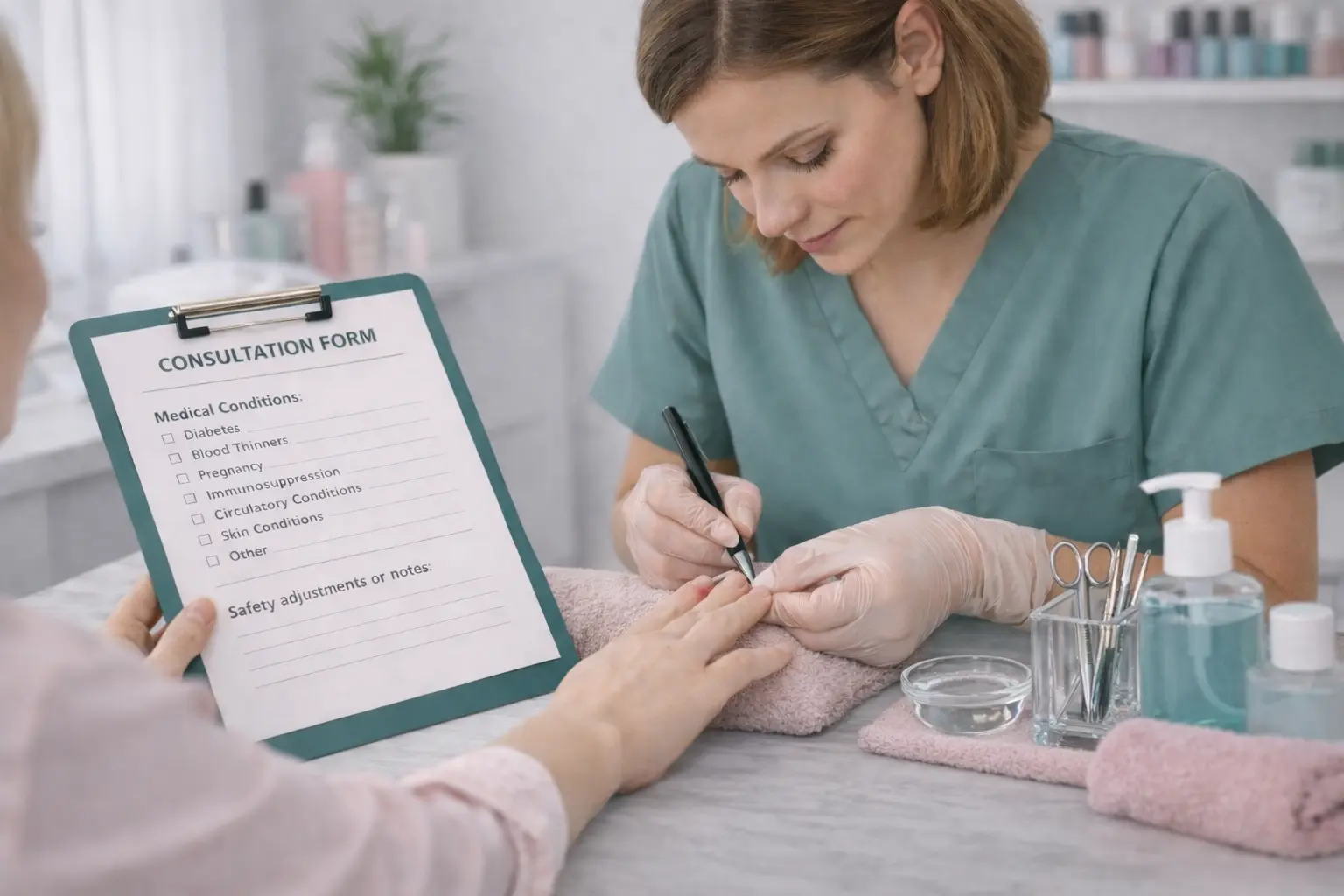
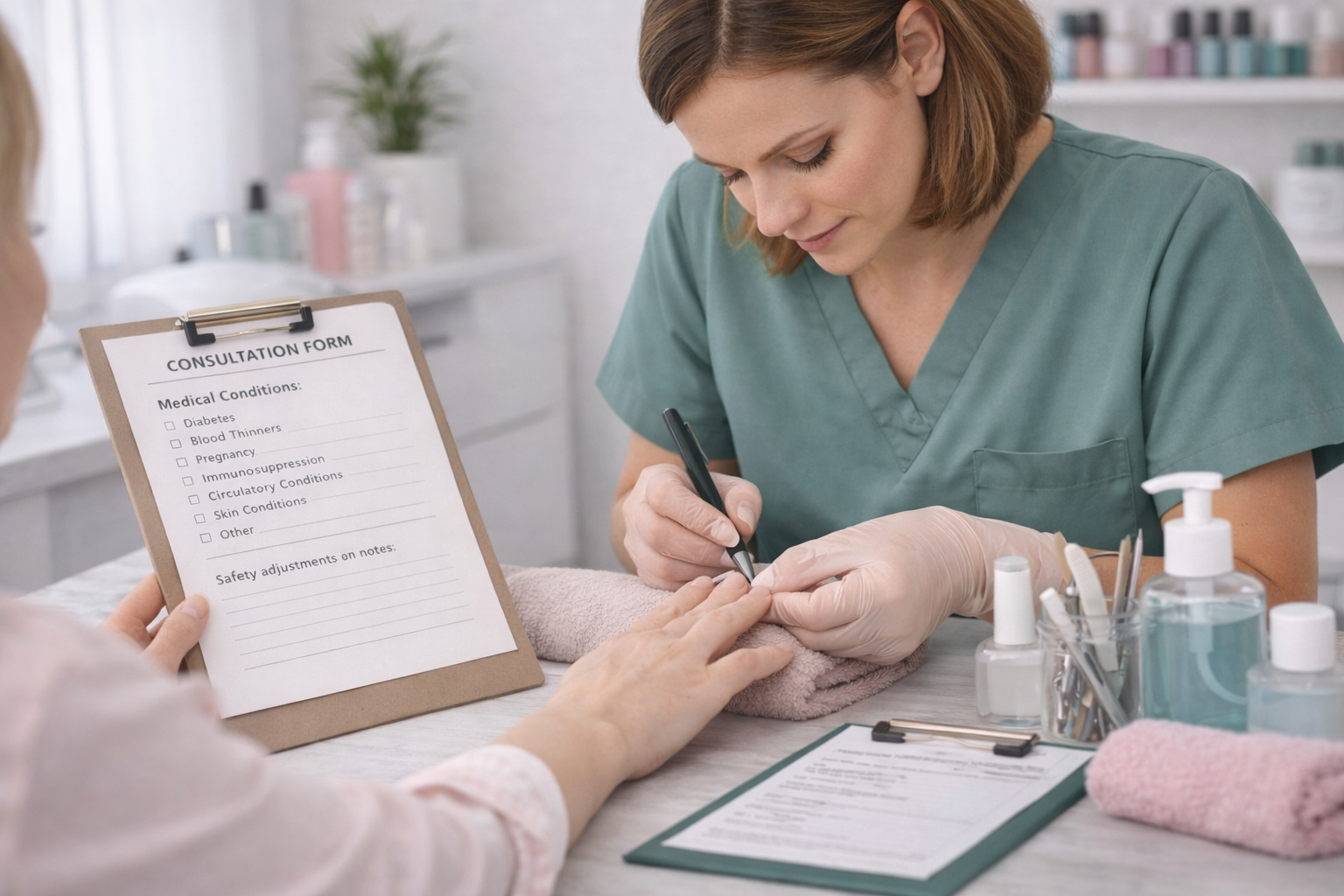
1. Thorough Consultation Forms
Every client must complete a comprehensive consultation form documenting:
- Medical conditions and medications
- Known allergies and previous reactions
- Current health status
- Previous nail service experiences
Consultation forms provide the foundation for contraindication identification but cannot replace professional visual assessment and client interview.
2. Visual Hand and Nail Examination
Before any service begins, thoroughly examine:
- Overall nail appearance: Colour, shape, thickness, texture
- Nail plate integrity: Cracks, splits, separation, damage
- Surrounding skin: Redness, swelling, breaks, infections, rashes
- Cuticle condition: Overgrowth, damage, pterygium, inflammation
- Signs of infection: Discolouration, discharge, odour, inflammation
3. Verbal Discussion
Consultation forms provide written documentation, but verbal discussion allows clarification:
- Ask open-ended questions about health concerns
- Clarify any medical conditions or medications listed
- Discuss previous service experiences, particularly any problems or reactions
- Assess client understanding of their own health factors
- Gauge client expectations and whether they are realistic given any identified contraindications
4. Professional Judgment Decision
Based on gathered information, make one of three professional decisions:
- Proceed with standard service: No contraindications identified, client suitable for requested treatment
- Proceed with modifications: Relative contraindications present requiring adapted techniques, alternative products, or conservative approach
- Decline service: Absolute contraindications present making treatment unsafe or inappropriate
⚠️ When in Doubt, Decline or Defer
If you are uncertain whether a condition is a contraindication, whether your knowledge is sufficient to make the decision, or whether you can safely adapt services, the appropriate professional response is to decline or defer the service. Suggest medical consultation, additional research, or referral to a specialist with relevant experience. Never proceed with services when significant uncertainty exists about safety or appropriateness.
How to Communicate About Contraindications Professionally
Discussing contraindications with clients requires tact, clarity, and confidence in your professional judgment.
When You Must Decline Service
The conversation structure:
- State the decision clearly: “I am unable to provide nail services today.”
- Explain the reason: “I have noticed [specific observation—active infection, severe damage, etc.] which makes nail treatments unsafe.”
- Provide context: “Providing services over [condition] could worsen the condition, spread infection, or cause harm.”
- Recommend action: “I recommend seeing your doctor/podiatrist for treatment of this condition.”
- Offer future services: “Once the condition has resolved and been cleared medically, I would be happy to provide nail services.”
Tone considerations: Professional but empathetic. Firm about the decision but kind in delivery. The client may be disappointed, embarrassed, or defensive—remain calm, non-judgmental, and focused on their safety and wellbeing.
When Modifications Are Required
The conversation structure:
- Acknowledge the request: “I understand you would like [original service request].”
- Explain the modification need: “Based on [specific health factor], I need to adapt my usual approach to ensure your safety.”
- Describe specific changes: “This means [specific modifications—avoiding cuticle cutting, using alternative products, conservative length, etc.].”
- Explain the reasoning: “[Health factor] means [specific risk] so these adjustments protect you from [specific concern].”
- Confirm understanding and agreement: “Are you comfortable proceeding with these modifications?”
Difficult Client Conversations
The Insistent Client
“I know I have [condition] but I have nail services everywhere else without problems.”
Professional response: “I understand you have had services elsewhere, but I have professional responsibility for your safety while in my care. My assessment shows [specific concern] which makes me unable to provide services today. Other professionals make their own decisions, but I must follow what I believe protects you best.”
The Dismissive Client
“It is fine, it is just a small infection, it does not hurt.”
Professional response: “I appreciate that it may seem minor to you, but infections can worsen rapidly, spread to others, and create serious complications. My professional guidelines and insurance require me to decline services when active infections are present. This protects both your health and other clients.”
The Angry Client
“This is ridiculous, I booked this appointment weeks ago!”
Professional response: “I understand this is frustrating, and I apologise for the inconvenience. However, my professional responsibility to your safety must take priority over appointment bookings. I would never forgive myself if providing services caused harm or worsened your condition. Let me help you reschedule once the situation has resolved.”
Professional Communication Training
The Nail Consultation Form course includes detailed guidance on professional communication strategies for difficult contraindication conversations, helping you maintain client relationships whilst protecting both parties.
Absolute vs Relative Contraindications: Decision Guide
| Condition | Type | Action Required | Reasoning |
|---|---|---|---|
| Active fungal infection | Absolute | Decline service completely | Contagious, worsens under enhancements, requires medical treatment |
| Active bacterial infection | Absolute | Decline service completely | Dangerous, painful, requires antibiotics |
| Open wounds in treatment area | Absolute | Decline until healed | Infection risk, prevents proper healing |
| Recent severe allergic reaction | Absolute | Decline without medical clearance | Repeated exposure can cause worse reactions |
| Warts near treatment area | Absolute | Decline service | Contagious viral infection |
| Severe nail damage/trauma | Absolute | Decline enhancements | Insufficient foundation, likely failure |
| Diabetes (controlled) | Relative | Modify cuticle work, enhanced sanitation | Healing concerns, infection risk |
| Blood thinning medication | Relative | Avoid cutting, gentle techniques only | Bleeding risk |
| Pregnancy | Relative | Ensure excellent ventilation, comfort | Chemical exposure concerns, physical comfort |
| Immunosuppression | Relative | Enhanced sterilisation, gentle approach | Infection risk |
| Weak/damaged nails | Relative | Conservative services, strengthening focus | Enhancement failure risk, further damage potential |
| Previous mild product sensitivity | Relative | Alternative products, patch testing | Allergy development prevention |
| Psoriasis (non-active) | Relative | Very gentle techniques | Trauma can trigger flares |
| Eczema (controlled) | Relative | Avoid irritants, gentle approach | Reaction prevention |
Legal and Insurance Implications of Contraindications
Understanding and responding appropriately to contraindications carries legal significance and affects professional insurance coverage.
Professional Duty of Care
Nail technicians owe clients a legal duty of care. This duty requires:
- Competence: Possessing knowledge and skills expected of professionals in your field
- Assessment: Conducting appropriate evaluation of client suitability for treatments
- Informed consent: Ensuring clients understand treatments and any associated risks
- Safe practice: Following procedures that protect client wellbeing
- Appropriate decline: Refusing services when contraindications make treatment unsafe
Breach of duty of care occurs when you fail to meet these standards and harm results. Providing services despite identified contraindications is clear breach of duty.
Insurance Coverage Considerations
Professional liability insurance typically includes clauses about contraindications:
- Coverage void if contraindications ignored: Insurance may refuse claims if you provided services despite documented contraindications
- Consultation requirement: Policies often require proper consultation forms and contraindication assessment
- Scope of practice: Providing treatments outside your competence or training may void coverage
- Documentation importance: Insurance claims require evidence of proper assessment and decision-making
Ignoring contraindications not only risks client harm but also potentially leaves you personally liable for any damages without insurance protection.
Documentation Protection
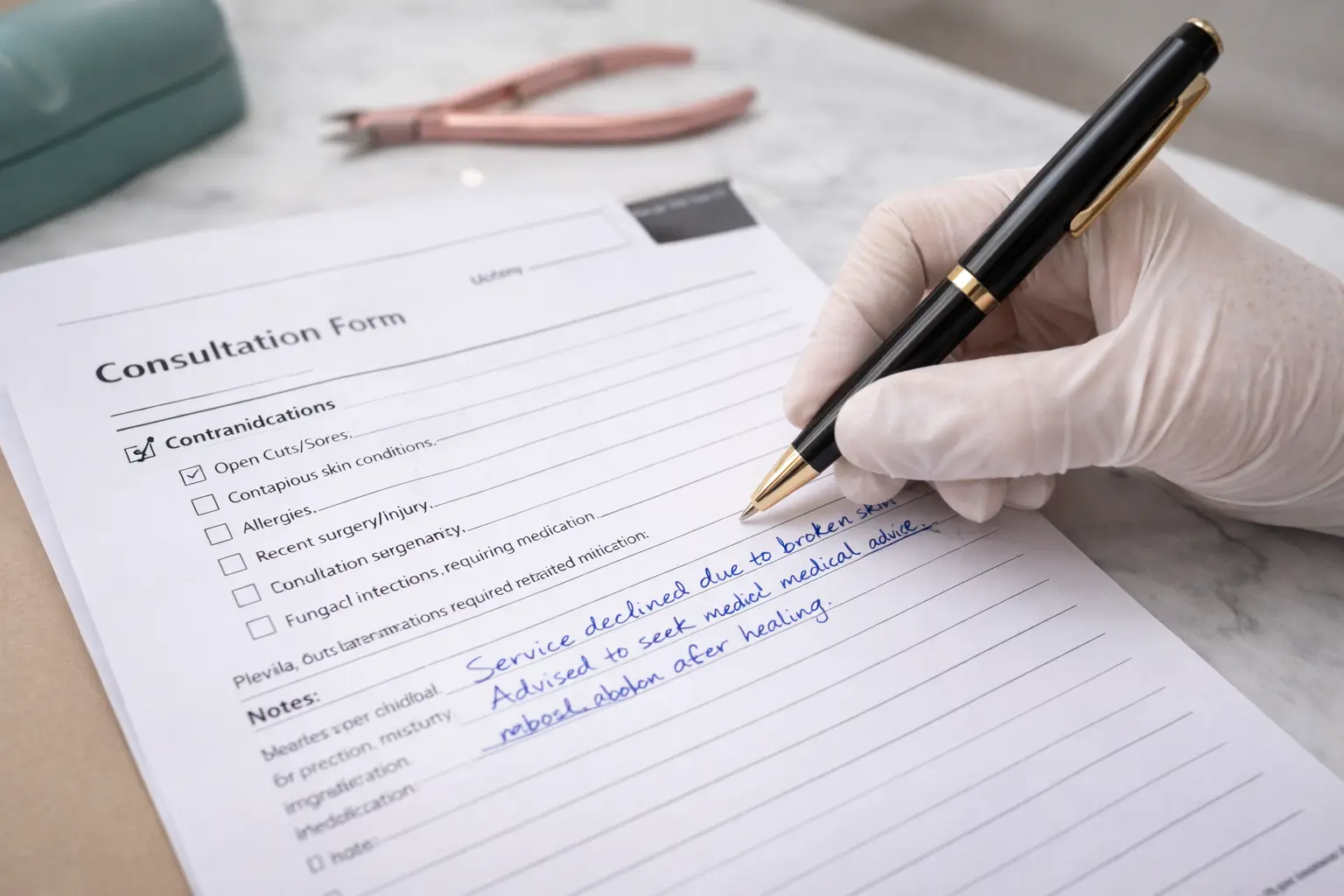
When you decline services due to contraindications, document the decision:
- Note the specific contraindication observed
- Record that service was declined and why
- Document any recommendations provided (medical consultation, etc.)
- Keep this documentation with client records
If a client later claims you damaged their nails or caused problems, documentation showing you actually declined services due to pre-existing conditions provides essential protection.
Building Contraindication Knowledge as a Nail Professional
Contraindication knowledge is not static—it requires ongoing education and professional development.
Initial Training Foundation
Quality nail education should include comprehensive contraindication training covering:
- Common medical conditions affecting nail services
- Infection identification and appropriate responses
- Allergy recognition and management
- Structural nail problems and treatment limitations
- Professional communication strategies
- Legal and ethical responsibilities
If your initial training was limited in contraindication education, investing in additional professional development specifically addressing this area strengthens your practice significantly.
Ongoing Professional Development
Continue building contraindication knowledge through:
- Medical and dermatological resources: Understanding conditions beyond basic nail training
- Professional association updates: New research, emerging concerns, updated guidelines
- Specialist courses: Advanced education on nail diseases, medical nail care, complex client management
- Peer discussion: Learning from other professionals’ experiences managing contraindications
- Case study analysis: Reviewing real situations where contraindication decisions were critical
When to Seek Additional Guidance
Situations where consulting other professionals is appropriate:
- Medical conditions you have never encountered before
- Unclear whether a condition is a contraindication
- Client with complex medical history and multiple conditions
- Unusual nail presentation that might indicate undiagnosed medical condition
Professional responsibility includes recognising the limits of your knowledge and seeking guidance when necessary rather than guessing about client safety.
Comprehensive Safety Training
The Nail Consultation Form course provides detailed contraindication education including:
- ✓ Video training on identifying common contraindications
- ✓ Decision frameworks for absolute vs relative contraindications
- ✓ Service modification protocols for various medical conditions
- ✓ Professional communication strategies for difficult situations
- ✓ Documentation requirements protecting your business
- ✓ Real scenario examples demonstrating proper decision-making
Frequently Asked Questions About Contraindications
What is the difference between absolute and relative contraindications?
Absolute contraindications require complete service decline because treatment is unsafe under any circumstances (active infections, severe allergic history, open wounds). Relative contraindications allow modified services with appropriate adaptations (diabetes requiring gentle techniques, pregnancy requiring excellent ventilation, minor sensitivities requiring alternative products). Absolute contraindications mean “do not proceed.” Relative contraindications mean “proceed differently.”
Can I provide nail services to diabetic clients?
Yes, with appropriate modifications. Diabetic clients require extremely gentle cuticle work (avoid cutting), enhanced sanitation protocols, conservative service choices, and education about infection monitoring. Decline services if diabetes is poorly controlled, severe circulation problems exist, or advanced neuropathy prevents sensation. Well-controlled diabetes is a relative contraindication requiring adapted approach, not absolute service decline. Learn proper consultation protocols to identify and document medical conditions appropriately.
What should I do if I notice signs of infection during a service?
Stop the service immediately. Do not continue or attempt to complete the treatment. Politely explain what you have observed, recommend medical consultation, and decline to proceed. Document the observation and decision in client records using proper consultation and documentation systems. Do not feel obligated to complete services or meet client expectations when safety concerns arise during treatment—professional responsibility requires stopping when contraindications are identified.
How do I know if a client’s nail condition requires medical attention?
Refer clients for medical evaluation when you observe: significant discolouration suggesting infection, severe pain or inflammation, rapid changes in nail appearance, conditions affecting multiple nails simultaneously, nail symptoms accompanied by systemic illness, or any condition outside your professional knowledge scope. When uncertain whether something is a cosmetic concern or medical condition, erring on side of medical referral is appropriate professional response.
Can pregnant clients have gel nails?
Yes. Pregnancy is not an absolute contraindication for gel nails. Ensure excellent ventilation during service, accommodate physical comfort needs, avoid foot massages (certain pressure points should not be stimulated during pregnancy), and be aware that hormonal changes may affect product sensitivity. No evidence suggests standard nail services harm pregnancy when proper ventilation exists and products are used as directed. However, respect client preferences if they wish to avoid all chemical exposure during pregnancy, particularly first trimester. Document pregnancy status in your consultation forms and service modifications implemented.
What if a client becomes angry when I decline service due to contraindications?
Remain calm, professional, and firm in your decision. Explain that professional responsibility and client safety must take priority over appointment bookings or client disappointment. Your insurance and professional standards require appropriate contraindication responses. Offer to reschedule once the condition has resolved, provide relevant information about seeking medical treatment, and maintain professional boundaries. Client anger does not override your duty of care or professional judgment.
Should I provide services if a client says other nail technicians have done it before?
No. Other professionals make their own decisions, but you are responsible for your own professional judgment and duty of care. If you identify contraindications, decline service regardless of what other technicians may have done. Other professionals may have different training, risk tolerance, insurance, or may simply have provided inappropriate services—none of which obligates you to do the same.
How detailed should my contraindication documentation be?
Document specific observations (what you saw or were told), the decision you made (proceed with modifications, or decline service), reasoning behind the decision (which contraindication and why it matters), and any recommendations provided (medical consultation, product alternatives, etc.). Documentation should be sufficient to demonstrate you conducted appropriate assessment and made reasoned professional decision. Brief but specific notes are adequate—lengthy essays are unnecessary. Use a professional consultation form system designed for proper documentation and legal protection.
Are there contraindications specific to certain nail services like BIAB or extensions?
Yes. Extension services have additional contraindications including: very short natural nails providing insufficient foundation, extremely weak nails unable to support enhancement weight, manual labour occupations likely to cause early failure, and unrealistic length expectations. BIAB and gel overlay services have fewer contraindications than extensions but still require assessment of nail plate integrity, previous allergy history (clients with known sensitivities or previous reactions may benefit from patch testing to identify safe products), and realistic expectation alignment. Different services require different suitability assessments based on natural nail condition and client lifestyle.
Can I be sued for declining services based on contraindications?
Declining services based on legitimate contraindications is appropriate professional practice protecting both parties. Legal risk comes from providing inappropriate services despite contraindications, not from declining services for safety reasons. Document your assessment and decision using proper consultation and documentation systems, maintain professional communication, and follow recognised professional standards—these actions protect you legally. Clients may be disappointed, but appropriate contraindication responses demonstrate responsible professional practice, not discrimination or inappropriate refusal.
What resources should I consult when unsure about contraindications?
Consult: professional association guidelines (British Association of Beauty Therapy & Cosmetology, Hair and Beauty Industry Authority), dermatological resources for skin and nail conditions, your professional liability insurance documentation (often includes contraindication guidance), experienced colleagues or mentors in the industry, and when necessary, suggest clients consult their own healthcare providers for medical clearance. Never proceed with uncertainty—deferring decision until you can research properly is appropriate professional response.
How often should I update my contraindication knowledge?
Contraindication knowledge requires ongoing attention. Review professional guidance annually, stay informed about emerging concerns (new product allergies, evolving best practices), attend continuing education courses addressing client safety through institutions like Artistic Touch Nail Training Academy, and maintain awareness of medical developments affecting nail services. Each time you encounter an unfamiliar condition, research it thoroughly to expand your professional knowledge foundation.
Professional Responsibility and Client Safety
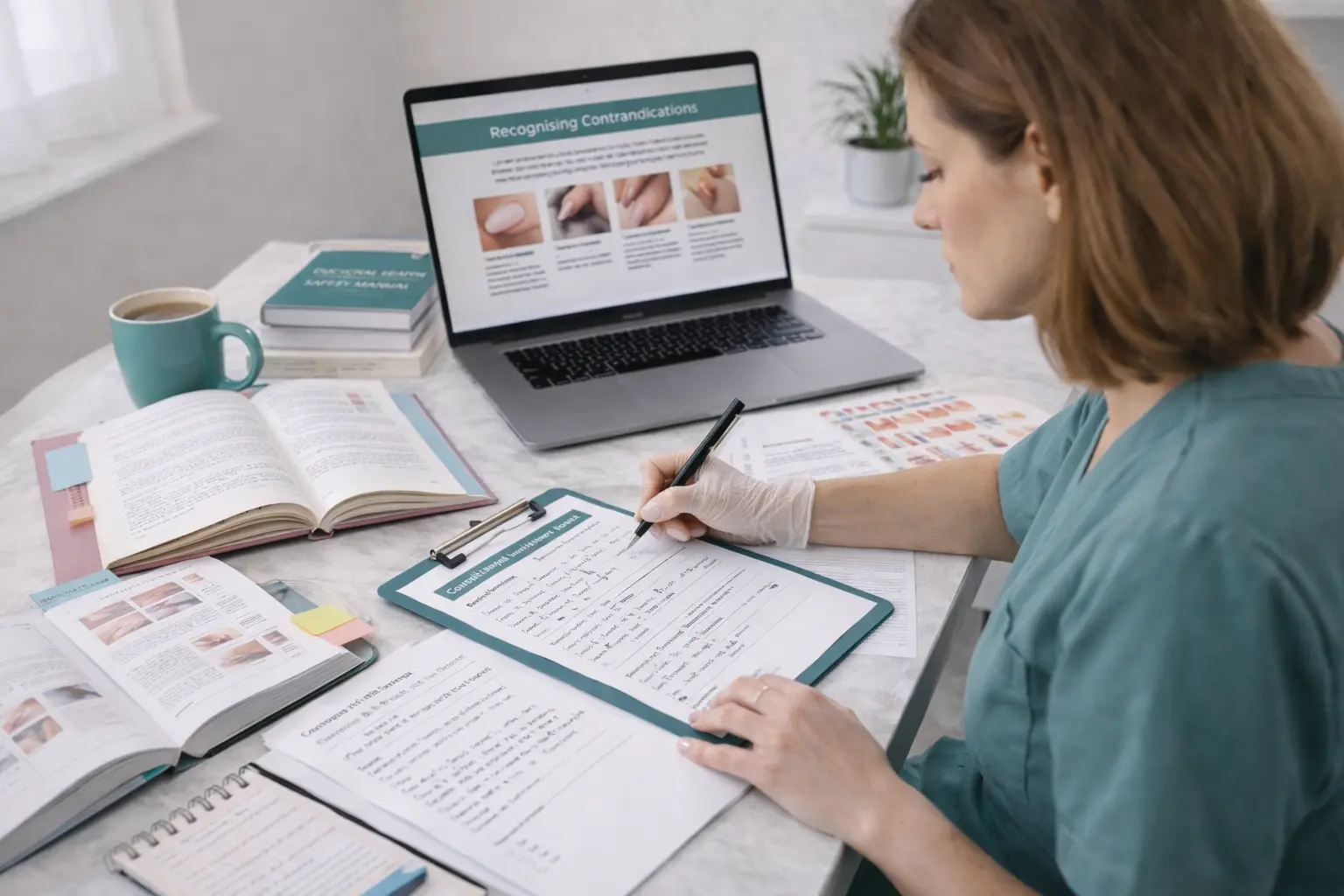
Understanding and appropriately responding to contraindications represents fundamental professional competence in nail services. Every nail technician must develop the knowledge to identify conditions affecting service safety and the professional courage to decline services when necessary.
Contraindications are not obstacles to overcome or rules to work around—they are essential safety considerations protecting both you and your clients. When you decline services due to contraindications, you demonstrate professional responsibility, protect client wellbeing, and maintain the ethical standards that distinguish qualified professionals from untrained practitioners.
Financial pressure, client disappointment, or fear of losing business should never override professional judgment about safety. Your reputation, your insurance, your peace of mind, and most importantly, your client’s health depend on making appropriate contraindication decisions even when they are commercially inconvenient.
Invest in comprehensive contraindication education, implement thorough consultation processes, maintain clear documentation, and never compromise safety for convenience. These practices protect everyone involved and establish you as a responsible professional worthy of client trust.
Learn to Identify and Manage Contraindications Professionally
Stop guessing about client safety. Develop confident contraindication assessment skills through comprehensive professional training:
- ✓ Complete contraindication identification training covering medical conditions, infections, allergies, and nail damage
- ✓ Decision frameworks distinguishing absolute from relative contraindications
- ✓ Service modification protocols for common health conditions
- ✓ Professional communication strategies for difficult contraindication conversations
- ✓ Documentation requirements protecting your business legally
- ✓ Real scenario examples demonstrating proper professional judgment
- ✓ Comprehensive consultation form system ensuring thorough client assessment
Access Professional Contraindication & Safety Training →
Lifetime access • Certificate of completion • Professional templates • Protect your clients and your business
Looking to master advanced nail techniques alongside professional safety practices? Explore comprehensive nail education at Artistic Touch – Nail Training Academy.
About the Author
Radina Ignatova is a Professional Nail Expert and Founder of Artistic Touch – Nail Training Academy, based in Dundee, Scotland, UK. With over 12 years of active salon experience since 2014, Radina specialises in advanced nail techniques including Russian Manicure, BIAB (Builder in a Bottle), e-file methods, and professional client safety protocols. She combines technical nail expertise with COSCA-accredited counselling skills in her teaching approach, focusing on honest education that shows real salon scenarios rather than idealised demonstrations. Radina is dedicated to elevating professional standards in the nail industry through evidence-based education and comprehensive safety training.
About TheNailWiki: TheNailWiki provides free, evidence-based nail education to nail professionals and enthusiasts worldwide. Our content is written by experienced professionals and designed to build knowledge, improve professional standards, and support safe, ethical nail care practices.