E-File Nail Drill Safety: Complete UK Beginner’s Guide (2026)
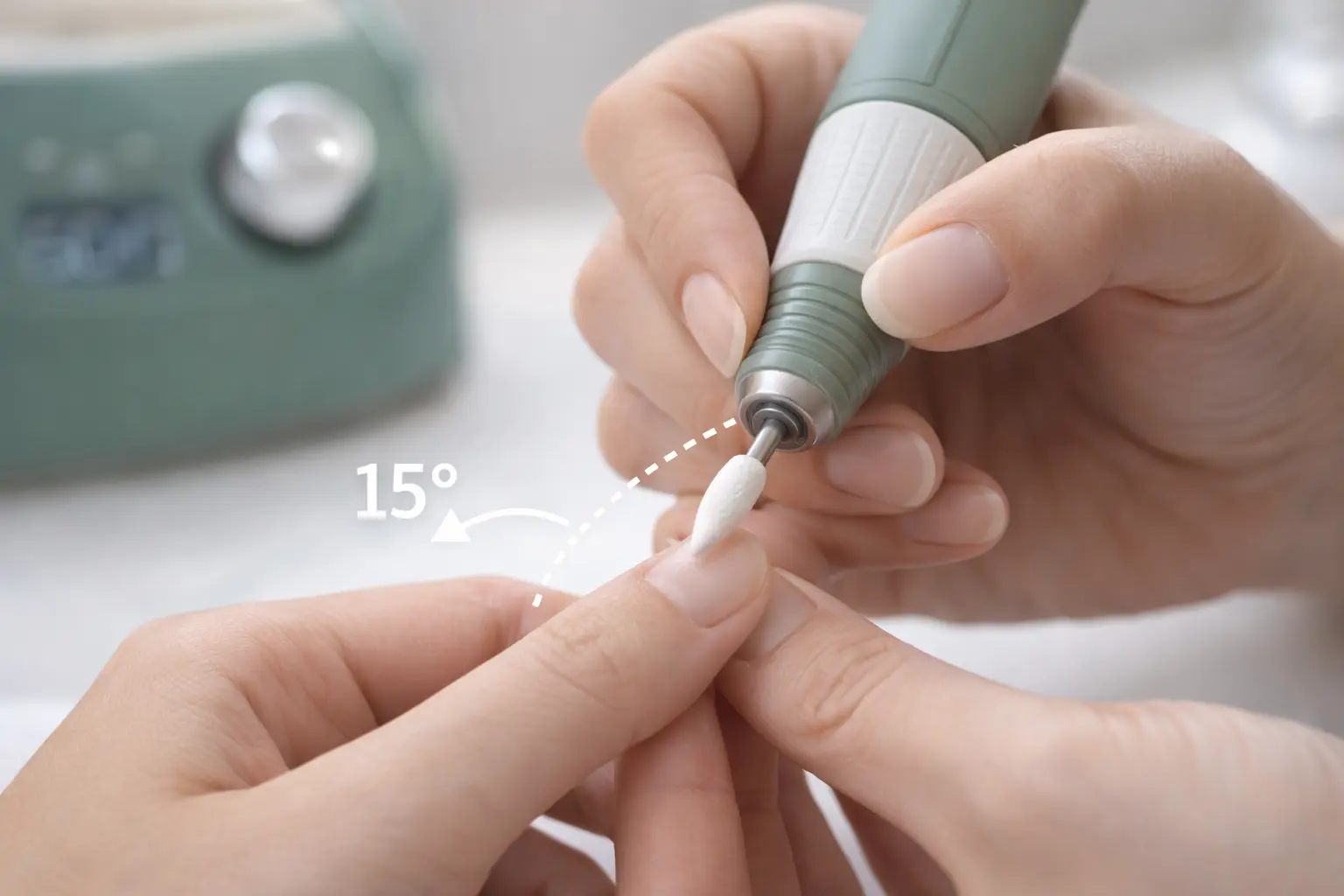
Quick Answer: Is E-File Safe for Nails?
E-files are safe when used correctly with proper training, appropriate speed settings (5,000-15,000 RPM for natural nails), correct bit selection, and controlled pressure. However, improper use causes nail plate damage, burns, infections, and permanent injury. Professional training is essential before working on clients.
Key safety requirements: Complete professional training (minimum 20-40 hours), understand nail anatomy, use correct RPM speeds, select appropriate bits, apply light pressure only, never work on damaged or infected nails, maintain strict hygiene protocols.
Common dangers: Excessive heat causing burns, nail plate thinning from over-filing, damage to nail matrix (growth area), bacterial infections from contaminated bits, allergic reactions to metal bits, and permanent scarring from improper cuticle work.
Why E-File Safety Matters in 2026
Electric nail files (e-files or nail drills) have revolutionised professional nail services, enabling faster product removal, precise cuticle work, and extended gel wear times. However, the same power that makes e-files efficient also makes them potentially dangerous when misused.
In the UK nail industry, e-file injuries have increased alongside the popularity of Russian Manicure and BIAB services. Common injuries include nail plate thinning, burns, cuticle damage, infections, and in severe cases, permanent nail matrix damage preventing healthy nail growth.
The reality: most e-file injuries occur from lack of proper training, not equipment failure. Many nail technicians learn through YouTube videos or rushed courses without understanding nail anatomy, appropriate speeds, or safe techniques.
This comprehensive guide covers everything UK nail technicians need to know about e-file safety, from understanding your equipment to preventing common injuries and maintaining professional standards.
Understanding Your E-File Equipment
What is an E-File?
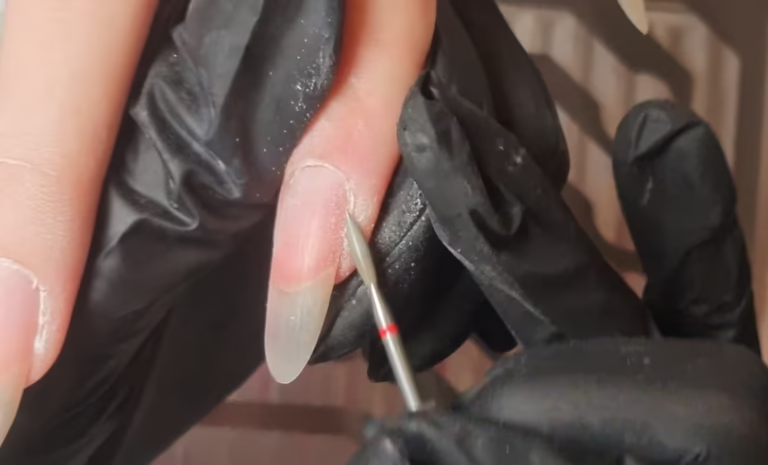
An electric nail file (e-file) is a motorised rotary tool with interchangeable bits (attachments) used for filing, shaping, and product removal on natural and artificial nails. Professional e-files rotate at variable speeds measured in revolutions per minute (RPM).
Types of E-Files
Important: Higher RPM capability does not mean better quality. Professional e-files should offer precise speed control, consistent torque, and reliable forward/reverse rotation. Avoid cheap models with poor speed regulation as they increase injury risk.
E-File Bits: Types, Uses, and Safety
Bit Materials and Grit Levels
E-file bits are categorised by material, shape, and grit (coarseness). Using the wrong bit or grit level is a leading cause of nail damage.
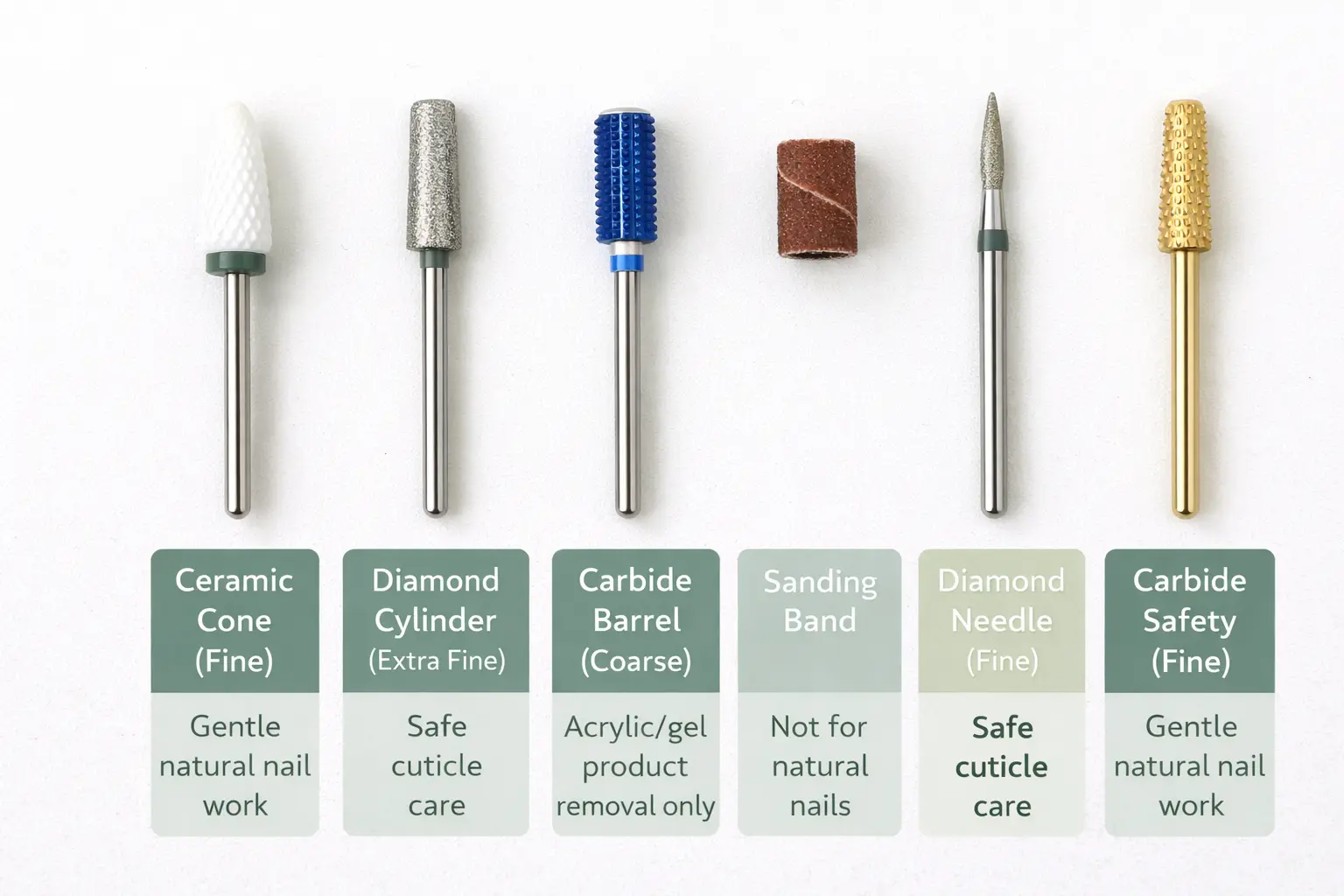
Understanding Bit Grading Systems
E-file bits use different grading systems depending on type:
Sanding Bands: Grit Numbers
Sanding bands are graded by grit like traditional nail files:
- 80-120 grit (Coarse): Product removal, callus removal. Never use on natural nails.
- 150-180 grit (Medium): Gel removal, smoothing product. Can be used carefully on natural nails at very low speed.
- 240-280 grit (Fine): Natural nail prep, gentle surface work, removing shine.
- 320+ grit (Extra Fine): Buffing, finishing, sensitive areas.
Ceramic, Carbide & Diamond Bits: Colour Coding
These bits use colour bands to indicate coarseness. Colour systems vary by manufacturer, but common standard includes:
- Black/Red: Typically coarse/medium – product removal
- Blue: Typically coarse – aggressive product removal
- Green: Typically medium – general product work
- Yellow/White: Typically fine – gentle work, cuticle area
- Pink/Silver: Typically extra fine – finishing, sensitive areas
Important: Always check your specific bit manufacturer’s colour coding system as these can differ between brands. Never assume—verify with manufacturer documentation.
Safe RPM Speeds for Different Techniques
Using appropriate rotation speed is critical for preventing heat burns and nail damage. Speed requirements vary based on technique, bit type, and nail condition.
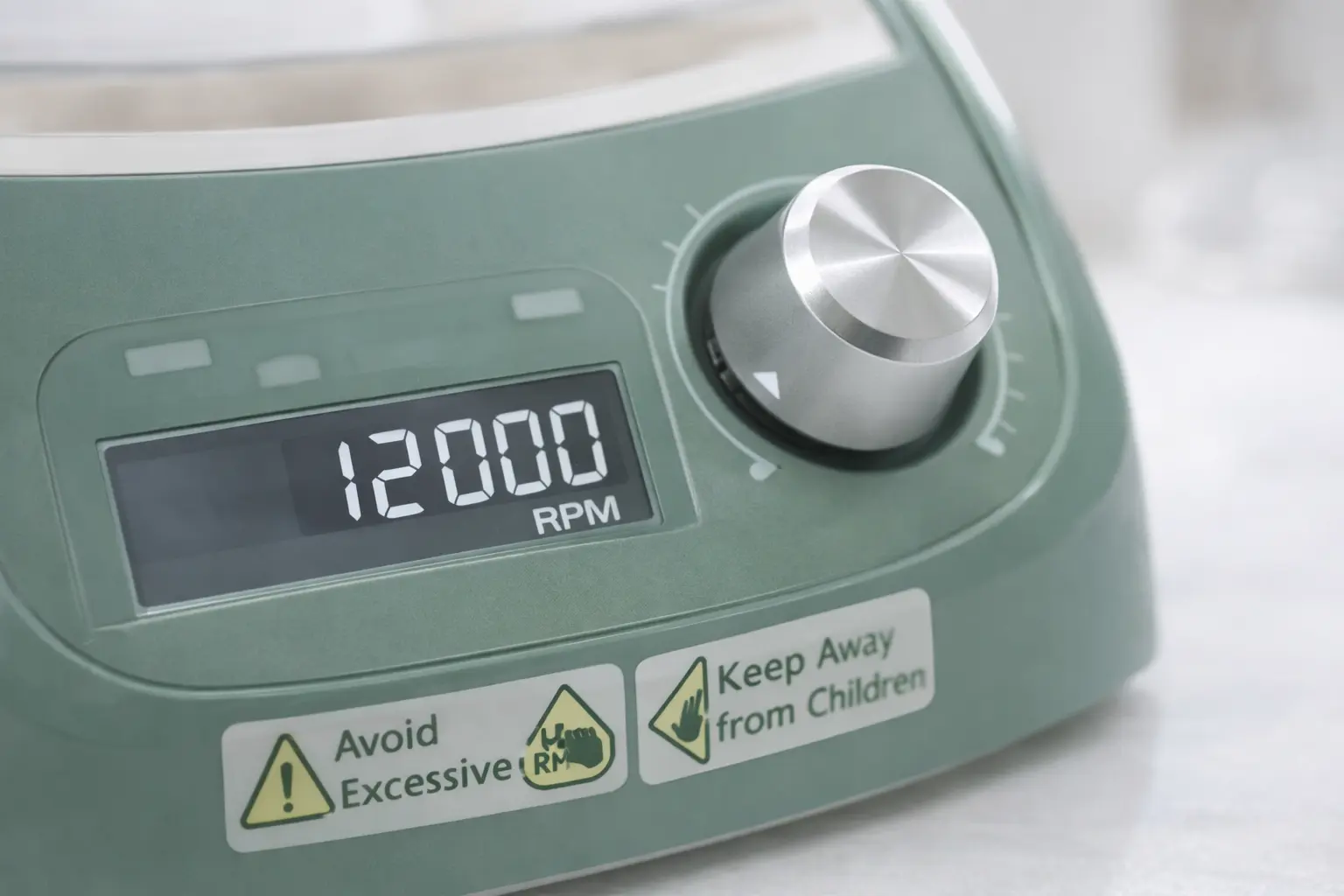
⚠️ Critical Speed and Pressure Rule
Use the correct speed for the technique, not the lowest speed. Too-low speed with heavy pressure creates more friction and heat than correct higher speed with light pressure. Burns occur from staying in one place too long, not from speed alone. Beginners often press too hard because they fear higher speeds – this causes more damage than proper technique at appropriate RPM. Professional training teaches you to select correct speeds and maintain feather-light pressure.
Common E-File Injuries and How to Prevent Them
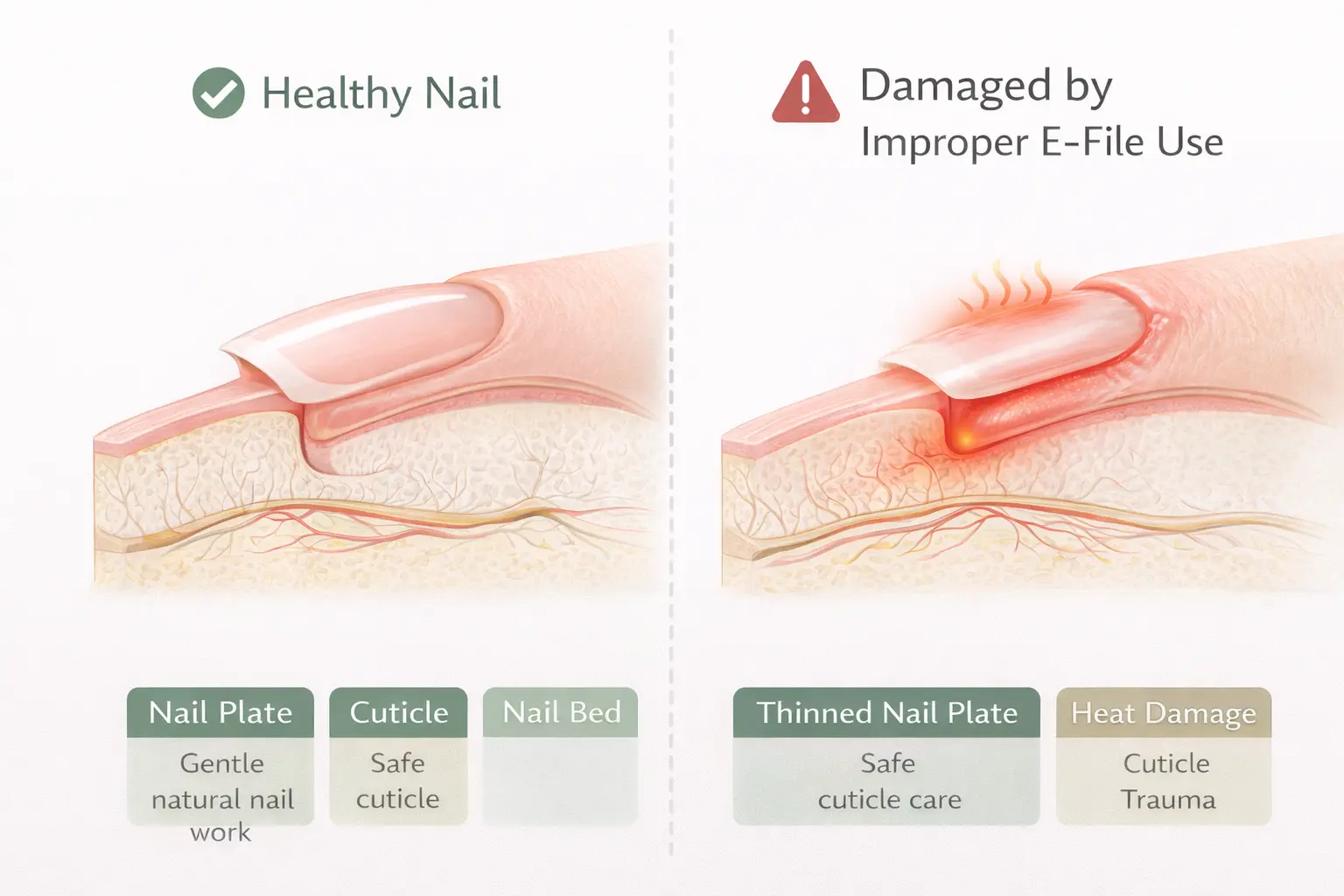
1. Nail Plate Burns
Cause: Staying in one place too long, using excessive pressure, or incorrect speed for the technique and bit being used.
Symptoms: Immediate burning sensation, redness, heat sensitivity, white or dark discolouration, pain lasting hours or days.
Prevention:
- Learn proper training to select correct RPM for each technique
- Keep bit moving continuously—never hold in one spot
- Use light, feathering pressure (correct speed needs less pressure)
- Choose appropriate grit for the task
- Check client comfort frequently (“Does this feel comfortable?”)
- Understand that too-low speed with heavy pressure causes more friction than correct speed with light touch
2. Over-Filing and Nail Plate Thinning
Cause: Removing too much natural nail plate thickness, often from aggressive gel removal or repeated Russian Manicures.
Symptoms: Flexible, bendy nails, transparency, sensitivity to temperature and pressure, increased breakage, pain when applying pressure.
Prevention:
- Learn to recognise healthy nail plate thickness (typically 0.5-0.8mm)
- File until you see colour change (gel to natural nail), then STOP
- Never file “just to be sure”—this causes cumulative damage
- Use medium grit for removal, switch to fine for final cleanup
- Educate clients that some gel residue is safer than over-filing
3. Cuticle and Matrix Damage
Cause: Aggressive cuticle removal with e-file, particularly in Russian Manicure technique, damaging the nail matrix (growth area beneath cuticle).
Symptoms: Bleeding, pain, ridges in new nail growth, irregular nail texture, permanent growth deformities, scarring.
Prevention:
- Understand nail anatomy—know where the matrix is located
- Use only extra-fine diamond or ceramic bits for cuticle work
- Maintain shallow angle (10-15 degrees maximum)
- Apply virtually zero pressure—let the bit do the work
- Never file beyond the visible cuticle line
- STOP immediately if client feels pain or you see bleeding
⚠️ Matrix Damage is Often Permanent
The nail matrix produces new nail cells. Damage to this area can cause permanent ridges, waves, or irregular growth patterns that last for life. Aggressive cuticle work is never worth this risk. Conservative technique is always safer.
4. Bacterial and Fungal Infections
Cause: Using contaminated bits on multiple clients, filing damaged or compromised nails, creating entry points for bacteria through micro-cuts.
Symptoms: Redness, swelling, pain, pus, green or yellow discolouration, foul odour, separation of nail from nail bed.
Prevention:
- Sterilise all bits between clients (autoclave or hospital-grade disinfectant)
- Use disposable sanding bands when possible
- Never work on visibly infected or damaged nails
- Sanitise hands before and after each service
- Educate clients about post-service hygiene
- Maintain separate bits for natural nails vs artificial enhancements
5. Allergic Reactions to Metal Bits
Cause: Nickel sensitivity from carbide or metal bits, metal dust particles entering broken skin.
Symptoms: Rash, itching, redness around cuticle area, contact dermatitis, worsening with repeated exposure.
Prevention:
- Ask clients about metal allergies during consultation
- Use ceramic or diamond bits for clients with known sensitivities
- Avoid filing broken skin
- Recommend patch testing if client has history of contact dermatitis
Safe E-File Technique: Step-by-Step
Proper Grip and Hand Position
Correct grip prevents excessive pressure and improves control:
- Pen grip: Hold e-file handpiece like a pen, fingers near the bit for maximum control
- Light touch: Rest your working hand on client’s hand for stability without applying downward pressure
- Support hand: Use your non-dominant hand to stabilise client’s finger and maintain proper angle
- Wrist position: Keep wrist relaxed and neutral—tension leads to heavy-handed filing
The Three Rules of Safe Pressure
- Feather Touch Only – E-file bits cut through friction and rotation, not pressure. If you are pressing, you are doing it wrong.
- Constant Movement – Never hold bit stationary. Continuous gentle movement prevents heat buildup and uneven filing.
- Check Frequently – Stop every 10-15 seconds to assess progress and check client comfort. Over-filing happens quickly.
Safe Directional Filing
Direction of rotation matters for safety and effectiveness:
- Forward rotation: Standard for most filing. Bit rotates away from cuticle towards free edge.
- Reverse rotation: Used for cleaning under free edge and some cuticle work. Requires extra caution.
- Side filing: Use the side of cylindrical bits, not the tip, to prevent gouging.
- Angle control: Maintain shallow angle (10-30 degrees) to nail surface. Perpendicular filing causes damage.
Hygiene, Sterilisation, and Equipment Maintenance
Professional Bit Sterilisation Protocol
Proper sterilisation prevents cross-contamination and infection transmission:
- Immediate Manual Cleaning – Scrub bits with brass brush under running water immediately after use to remove all debris, OR place into good quality ultrasonic cleaner
- Disinfection – After manual cleaning, soak bits in hospital-grade disinfectant (10 minutes minimum) or autoclave if available
- Drying – Air dry completely before storage to prevent bacterial growth
- Storage – Store sterilised bits in sealed container, separate from used bits
- Inspection – Check bits regularly for damage, dullness, or contamination buildup
Critical: Multi-use drill bits must be manually cleaned with brass brush or placed in ultrasonic cleaner FIRST to remove debris before disinfection. Disinfectant cannot penetrate debris—manual cleaning is non-negotiable for effective sterilisation.
✓ UK Hygiene Requirement
Local councils and insurance providers require professional nail technicians to follow strict hygiene protocols. Using non-sterilised bits between clients violates health and safety regulations and exposes you to liability. Single-use disposable sanding bands eliminate sterilisation requirements for removal services.
E-File Machine Maintenance
- Clean dust collector: Empty and clean after each client to maintain motor efficiency and prevent overheating
- Wipe handpiece: Disinfect handpiece exterior between clients—it contacts hands and surfaces
- Check collet: Inspect bit holder monthly for wear or damage that could cause bits to slip or vibrate
- Motor rest: Allow motor to cool between intensive services to extend equipment lifespan
- Professional servicing: Annual professional maintenance for high-use salon equipment
Professional Training Requirements
E-file safety begins with proper education. The UK nail industry lacks mandatory e-file certification, but professional insurance and client safety demand comprehensive training.
What Proper E-File Training Should Include
- Nail anatomy education: Understanding nail structure, growth, and damage mechanisms (minimum 2-4 hours)
- Equipment knowledge: E-file types, RPM settings, bit materials, and appropriate applications (2-3 hours)
- Hands-on practice: Supervised practice on training hands and live models (minimum 10-15 hours)
- Safety protocols: Injury prevention, hygiene, sterilisation, and emergency procedures (2 hours)
- Technique development: Grip, pressure, angle, speed control across different services (8-12 hours)
- Troubleshooting: Recognising and correcting common mistakes and damage (2 hours)
Total minimum training time: 20-40 hours depending on technique complexity and student experience level.
Warning Signs of Inadequate Training
- ❌ Courses under 6 hours total duration
- ❌ No discussion of nail anatomy or damage mechanisms
- ❌ No supervised practice on live models
- ❌ No coverage of hygiene and sterilisation protocols
- ❌ Instructor cannot explain WHY certain techniques are safer
- ❌ Certificate provided without skills assessment
- ❌ YouTube or online-only learning with no hands-on component
Professional E-File Training at Artistic Touch
Our comprehensive E-File Manicure & Gel Polish Course covers:
- ✓ Complete nail anatomy and physiology
- ✓ Safe RPM speeds and bit selection for each technique
- ✓ Proper grip, pressure control, and angle management
- ✓ Injury prevention and damage recognition
- ✓ Professional hygiene and sterilisation protocols
- ✓ Lifetime access with regular safety updates
When NOT to Use an E-File
Recognising contraindications (reasons not to proceed) protects both client safety and your professional reputation.
Absolute Contraindications (Never Proceed)
- Active infection: Bacterial, fungal, or viral infection visible on nail or surrounding skin
- Open wounds: Cuts, hangnails, torn cuticles, or broken skin near nail area
- Severe nail damage: Separated nail (onycholysis), severely thin or weak nails
- Recent trauma: Bruising, crushing injury, or recent nail loss
- Uncontrolled diabetes: Poor circulation and slow healing increase infection risk
- Blood thinning medication: Warfarin, aspirin therapy—increased bleeding risk
Relative Contraindications (Proceed with Extreme Caution)
- Very thin nails: Use lowest speeds, finest bits, minimal contact time
- Psoriasis or eczema: Avoid affected areas, use gentle technique
- Pregnancy: Extra caution due to increased nail sensitivity and blood flow
- Metal allergies: Use only ceramic or diamond bits, no carbide
- Previous damage: Nails recovering from injury require gentler approach
⚠️ Professional Liability
Working on contraindicated nails can invalidate your insurance coverage if injury occurs. When in doubt, refuse service or offer manual alternatives. Documenting contraindications in consultation forms protects your business legally.
Frequently Asked Questions About E-File Safety
Can I learn e-file technique from YouTube videos?
No. YouTube videos lack hands-on supervision, personalised feedback, and cannot assess your technique safety. Whilst videos provide helpful visual references, they cannot replace supervised training where an experienced educator corrects grip, pressure, and angle in real time. Most e-file injuries occur in technicians who learned exclusively online without practical supervision.
What RPM speed is safe for removing gel polish?
For gel polish removal, use 20,000-30,000 RPM with medium grit carbide bit or sanding band. Higher speed with light, feathering pressure creates less friction and heat than lower speed with heavy pressure. The key is continuous movement and proper pressure control—never stay in one place. If client reports discomfort, check your pressure first, then adjust speed if needed. Proper technique prevents heat buildup regardless of speed.
How do I know if I have over-filed a client’s nails?
Signs of over-filing include nails appearing more transparent than before service, client reporting increased sensitivity to pressure or temperature, visible flexibility or bending that was not present previously, or client experiencing discomfort during filing. If you see these signs, stop filing immediately. Over-filing cannot be reversed; damaged nail must grow out naturally over 3-6 months.
Do I need different bits for natural nails versus gel removal?
Yes, absolutely. Natural nail work requires fine or extra-fine grit ceramic or diamond bits (240+ grit) at low speeds. Gel removal uses medium to coarse carbide bits or sanding bands at higher speeds. Using coarse product removal bits on natural nails causes immediate damage. Maintain separate bit sets for natural nail work and product removal to prevent cross-contamination and accidental misuse.
Is Russian Manicure safe when done properly?
Russian Manicure involves significantly higher risk than traditional wet manicure due to aggressive cuticle removal with e-file near the nail matrix. When performed by extensively trained technicians using appropriate bits, speeds, and conservative technique, risk can be minimised but never eliminated. However, many practitioners lack adequate training, leading to frequent injuries. Conservative cuticle work is always safer than aggressive removal regardless of technique name.
How often should I replace e-file bits?
Replace bits when they become dull, damaged, or contamination buildup cannot be removed through sterilisation. Ceramic and diamond bits typically last 6-12 months with proper care and regular sterilisation. Carbide bits may last 3-6 months depending on usage frequency. Sanding bands are single-use disposable. Dull bits require increased pressure to work effectively, increasing injury risk significantly.
What should I do if I accidentally burn a client’s nail?
Stop e-file work immediately. Apply cool (not ice cold) compress to affected nail for 5-10 minutes. Document the incident and apologise professionally. Do not continue service on affected nail. Advise client to monitor for signs of infection (increased pain, redness, swelling, pus) and seek medical attention if symptoms develop. Severe burns may require medical treatment. Review your technique, speed settings, and bit selection to prevent recurrence.
Can I use the same e-file for nails and pedicures?
Yes, but maintain completely separate bit sets. Foot work requires different bits (typically coarser for callus removal) and carries higher contamination risk. Never use pedicure bits on fingernails. Clearly label and store bit sets separately. Some professionals prefer dedicated pedicure e-files to eliminate any risk of cross-contamination between hand and foot services.
About the Author: Radina Ignatova
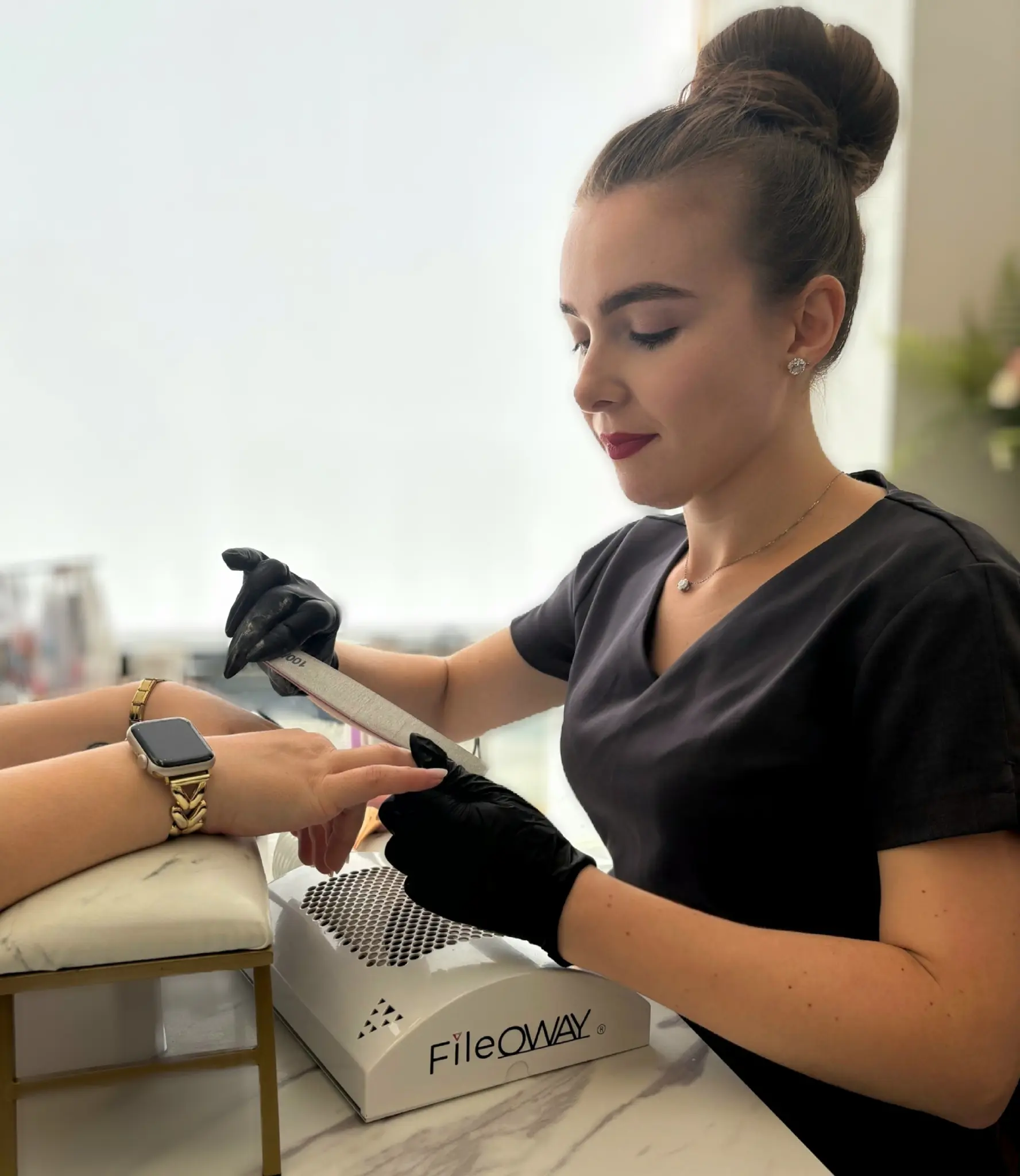
Radina Ignatova is a Professional Nail Expert, Certified Educator, and founder of Artistic Touch – Nail Training Academy, based in Dundee, Scotland, UK.
With over 15 years of professional experience in advanced nail techniques including e-file manicure, Russian Manicure, and BIAB application, Radina specialises in safety-first education that prioritises client wellbeing over speed or trends.
Her teaching philosophy emphasises:
- Comprehensive nail anatomy education before introducing power tools
- Conservative, evidence-based techniques that minimise injury risk
- Honest discussion of risks rather than promoting trendy but dangerous methods
- Professional standards and ethics in every aspect of nail services
Radina’s E-File Manicure & Gel Polish Course has trained hundreds of UK nail technicians in safe, professional e-file technique with zero reported serious injuries amongst graduates.
Master Safe E-File Technique
E-file safety is not intuitive—it requires structured education, supervised practice, and ongoing commitment to professional standards. The difference between safe and dangerous e-file work often comes down to subtle details in technique that only become apparent through proper training.
Protect your clients, your reputation, and your career by investing in comprehensive e-file education before offering these services professionally.
Learn E-File Safety from a Certified Expert
Comprehensive training in safe technique, proper speeds, bit selection, and injury prevention
Lifetime access • Certificate included • Safety-first methodology
About TheNailWiki: Independent nail education resource providing evidence-based safety information, professional techniques, and industry standards for UK nail technicians and enthusiasts. Part of the Artistic Touch educational network.