Nail Consultation Forms: Professional Guide for UK Salons
Last Updated: January 2026 | Educational Resource | Independent Analysis
Summary
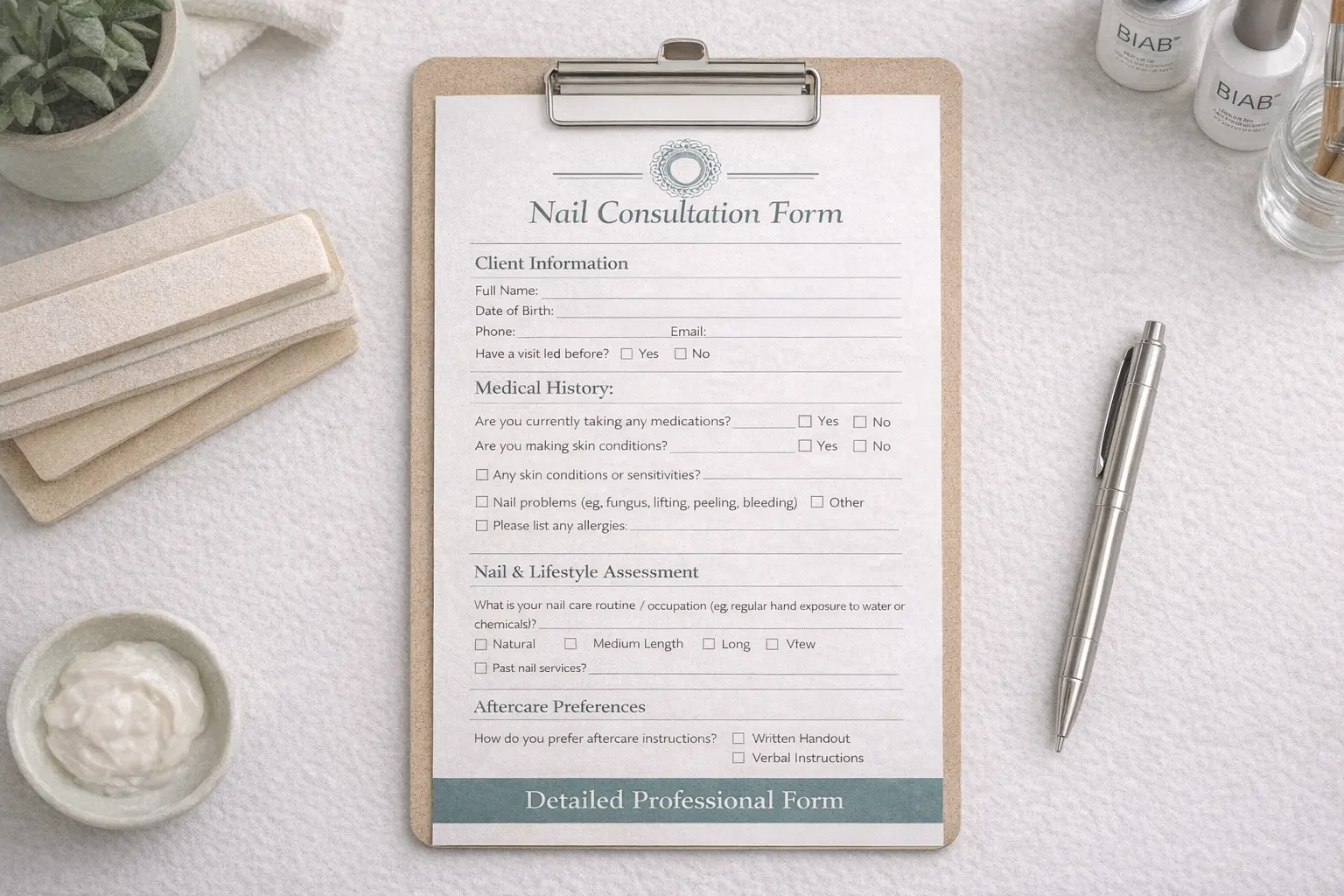
Nail consultation forms document client health history, contraindications, and informed consent prior to nail services. Professional consultation procedures serve multiple functions: identifying health conditions that may affect treatment safety, documenting allergy history and patch testing, ensuring GDPR-compliant data handling, and creating records of professional duty of care.
Key components: Client identification, medical history screening, nail-specific contraindication assessment, allergy documentation, lifestyle factors, GDPR consent statements, and treatment authorization.
Contents
Purpose of Consultation Forms
Professional nail consultation forms serve multiple essential functions within salon and mobile nail services:
Client Safety Documentation
Consultation forms identify health conditions, medications, or circumstances that may affect nail service safety. Proper screening reduces risk of adverse reactions, contraindication complications, and service-related injuries.
Professional Duty of Care
Documented consultations demonstrate professional standards and duty of care. Thorough health screening shows adherence to industry best practices and professional competence.
Insurance Requirements
Many professional liability insurance policies require documented client consultations. Specific requirements vary by insurer and policy terms. Practitioners should verify their individual insurance provider’s documentation standards. Comprehensive consultation training programmes, such as the Nail Consultation Form & Client Safety Guide, provide guidance on documentation practices aligned with professional standards.
GDPR Compliance
Consultation forms collect personal data requiring proper consent, storage, and handling under UK GDPR regulations. Forms must include appropriate data protection statements and client rights information.
Essential Screening Questions
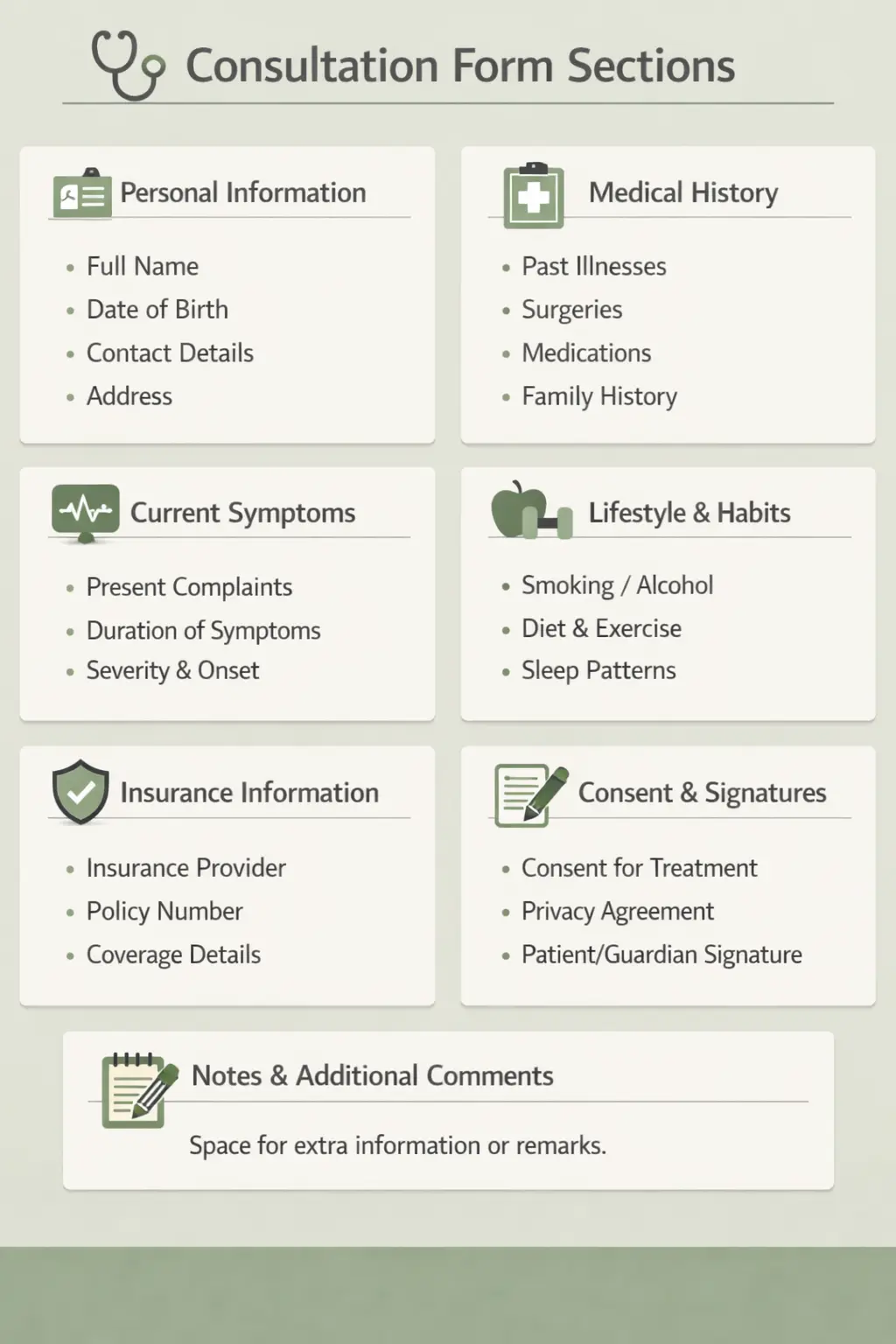
Professional consultation forms typically include the following screening categories:
Client Identification
- Full name and preferred name
- Contact information (phone, email, address)
- Date of birth (age verification for minor protocols)
- Emergency contact details
Medical History Assessment
- Diabetes or circulatory conditions affecting extremities
- Immune system disorders or autoimmune conditions
- Medications affecting bleeding, healing, or skin sensitivity
- Recent injuries or surgeries to hands, wrists, or arms
- Skin conditions (eczema, psoriasis, dermatitis)
- Pregnancy status (relevant for certain treatments and chemicals)
Allergy and Sensitivity Documentation
- Previous reactions to nail products (gel, acrylic, polish, removers)
- Known allergies to acrylates, methacrylates, or specific chemicals
- Latex sensitivity (relevant for glove use)
- History of contact dermatitis or chemical sensitivities
- Patch testing history and results (see professional patch testing protocols)
- Symptoms experienced after previous nail services
Nail Health Status
- Current or recent nail infections
- Nail lifting, peeling, or separation
- Changes in nail colour, texture, or growth patterns
- Areas of pain, tenderness, or unusual sensation
- Previous nail services and timing (particularly relevant for BIAB applications and gel systems)
- Current nail condition assessment
Lifestyle Factors
- Occupation and hand exposure levels
- Regular contact with water, chemicals, or cleaning products
- Hobbies or activities affecting nail health
- Home nail care routine
- Expected maintenance frequency
Nail-Specific Contraindications
Certain conditions require treatment modification, postponement, or medical clearance before proceeding with nail services.
Absolute Contraindications
Conditions requiring treatment refusal or medical clearance:
- Active fungal, bacterial, or viral nail infections
- Severe nail damage or trauma requiring medical attention
- Open wounds, cuts, or abrasions in treatment area
- Undiagnosed nail conditions or abnormalities
- Known allergy to products being used
Relative Contraindications
Conditions requiring treatment modification or additional caution:
- Diabetes with poor circulation or neuropathy
- Severe eczema or psoriasis around nail area
- Recent chemotherapy or immune system compromise
- Pregnancy (certain chemicals may be contraindicated)
- Extremely fragile or damaged nails (may require strengthening systems such as BIAB builder gel treatments)
- Previous adverse reactions to similar services
Professional Judgment: Identifying contraindications requires training and experience. Technicians should understand why conditions pose risks and when specialist medical advice should be sought before proceeding with treatment. Comprehensive training programmes such as professional consultation courses teach contraindication assessment and decision-making procedures.
GDPR Compliance Requirements
UK data protection law requires specific elements within consultation forms that collect and store personal information.
Required GDPR Components
- Data Storage Statement: Clear explanation of how long client information will be retained and where it will be stored
- Marketing Consent: Separate opt-in for promotional communications with straightforward withdrawal process
- Third-Party Sharing: Disclosure of circumstances where data might be shared (insurance claims, medical referrals)
- Client Rights Information: Explanation of rights to access, correct, or delete personal data
- Data Controller Details: Business name and contact information for data protection enquiries
Digital vs Paper Storage Compliance

Format Options
Consultation forms are implemented in various formats depending on business needs and technical capabilities.
Printed Forms
Advantages: No technology requirements, familiar process for clients, suitable for locations with limited digital infrastructure
Considerations: Requires physical storage space, manual data entry for digital records, paper-based GDPR compliance procedures
Digital Forms
Advantages: Integrated with booking systems, encrypted storage, searchable records, automated backup, client completion before appointments
Considerations: Requires compatible software, client technological literacy, initial setup investment
Digital consultation forms can be integrated into various salon management systems including Ovatu, Zenoti, Fresha, Phorest, and similar platforms. Forms should be available in editable formats (Word, digital templates) for customization to specific business needs.
Hybrid Approach
Many businesses maintain both digital and printed forms to accommodate different client preferences and circumstances. This provides flexibility whilst maintaining consistent documentation standards.
Working with Minors
Providing nail services to clients under 18 years requires additional documentation and consent procedures.
Parental Consent Requirements
- Legal guardian or parent signature required
- Guardian identification verification
- Age-appropriate service restrictions clearly stated
- Guardian contact information for emergencies
- Specific consent for each treatment type
Age-Appropriate Considerations
Professional standards typically recommend age restrictions for certain services:
- Acrylic or gel enhancements: Often restricted to ages 16+
- E-file use: May require higher age threshold
- Chemical exposure duration: Limited for younger clients
- Natural nail services: Generally suitable for younger ages with guardian consent
Implementation Considerations
Consultation Form Sources
Nail technicians and salon owners obtain consultation forms through various sources:
- Free Online Templates: Basic structure available through internet searches; typically lack nail-specific contraindications and comprehensive GDPR statements
- Generic Business Templates: Purchased from beauty supply companies; may not address nail service specifics or booking system integration
- Professional Training Packages: Include both forms and education on proper consultation procedures, contraindication identification, and documentation standards
- Custom Development: Created specifically for individual business needs with professional guidance
Professional Development: Comprehensive training in nail services, such as the BIAB Masterclass, includes guidance on service-specific consultation requirements, contraindication assessment, and client screening procedures relevant to advanced nail techniques.
Training Requirements
Effective consultation procedures require understanding beyond merely having a form. Professional education should cover:
- How to conduct consultations professionally and sensitively
- Why specific questions are asked and what answers indicate
- Identifying red flags requiring treatment refusal or medical clearance
- Proper documentation procedures
- When and how to refuse treatment professionally
- Communication skills for sensitive health discussions
Structured training programmes like the Artistic Touch Nail Consultation Form & Client Safety Guide provide 23 comprehensive lectures covering these essential procedures, including working with minors, contraindication assessment, and GDPR compliance implementation.
Record Retention
UK professional standards typically recommend retaining client consultation records for 6-7 years from last treatment due to potential liability timeframes. Digital storage with encrypted backup provides secure long-term retention whilst maintaining GDPR compliance. Professional nail services such as BIAB applications and gel systems require particularly thorough documentation due to their semi-permanent nature and potential for allergic reactions.
Frequently Asked Questions
Are nail consultation forms required by law?
No specific UK legislation mandates nail consultation forms. However, professional duty of care expectations, insurance policy requirements, and GDPR data protection regulations create practical necessity for documented client screening. Individual insurance providers specify their own documentation requirements.
What happens if a client refuses to complete a consultation form?
Technicians retain the right to refuse service if clients decline health screening documentation. Without consultation information, technicians cannot assess contraindications or document informed consent, creating unacceptable safety and professional risks.
How often should consultation forms be updated?
New consultations are completed for first appointments. Subsequent appointments require abbreviated health screening focusing on changes since last visit. Comprehensive re-consultation is recommended annually or when significant health changes occur.
Can consultation forms be completed digitally before appointments?
Yes. Digital pre-appointment consultation completion improves efficiency and allows technicians to review health information before client arrival. Forms must maintain GDPR-compliant secure transmission and storage regardless of format.
What should technicians do if consultation reveals contraindications?
Contraindications may require treatment refusal, medical clearance, or service modification. Technicians should explain concerns professionally, recommend appropriate medical consultation when indicated, and document decisions clearly. Training in contraindication identification and professional communication supports these situations. Comprehensive consultation training such as the Nail Consultation Form & Client Safety Guide provides in-depth guidance on handling contraindications and making professional treatment decisions.
Do mobile nail technicians need consultation forms?
Yes. Mobile technicians require the same professional documentation standards as salon-based practitioners. Digital forms may be particularly practical for mobile services, though printed forms remain acceptable with proper storage procedures.
References and Further Reading
Professional Bodies & Accreditation
- Associated Beauty Therapists (ABT) – Professional standards and insurance guidance
- British Association of Beauty Therapy & Cosmetology (BABTAC) – Documentation best practices
- VTCT – Qualification frameworks and professional standards
Data Protection Resources
- Information Commissioner’s Office (ICO) – UK GDPR guidance for businesses
- UK GDPR requirements for health data handling and consent
Industry Publications
- Professional Beauty UK – Industry best practices
- Scratch Magazine – Nail industry professional standards
Related TheNailWiki Resources
- Nail Wiki Library – Comprehensive nail education reference
- Nail Industry Glossary – Professional terminology
Professional Training Resources
- BIAB Masterclass: Application & Troubleshooting – Advanced gel system training including consultation protocols
- Nail Consultation Form & Client Safety Guide – Comprehensive consultation training
- Professional Patch Testing Protocols – Allergy screening procedures
About the Author: Radina Ignatova
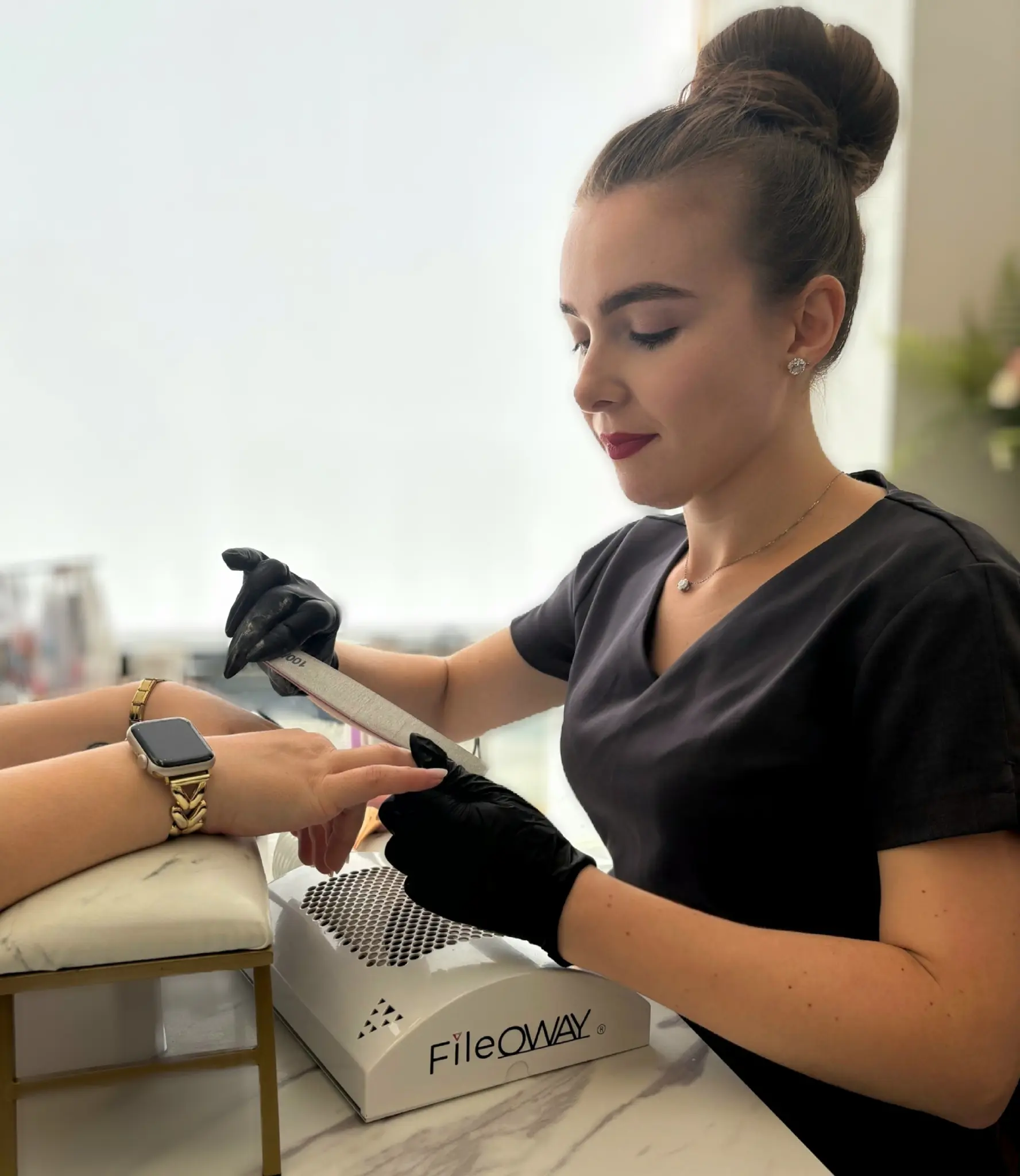
Radina Ignatova is a Professional Nail Expert, COSCA-accredited counsellor, and founder of TheNailWiki educational platform, based in Dundee, Scotland, UK.
With over 12 years of continuous client-facing work in professional nail services, Radina brings practical experience in conducting client consultations, health screening procedures, and professional documentation. Her unique background combines technical nail expertise with formal counselling qualifications, providing comprehensive understanding of both medical screening requirements and sensitive client communication.
This consultation forms guide draws upon extensive firsthand experience conducting thousands of client consultations in professional salon practice, combined with formal training in client communication and duty of care principles.
Learn more: Full author biography and credentials
About TheNailWiki: Independent educational resource providing evidence-based information about nail care, professional practices, and industry standards. This guide represents objective analysis based on professional standards and does not constitute legal or medical advice.
Last Updated: January 2026 | Independent Analysis | Educational Resource