
Lunula: What the Half-Moon at the Base of the Nail Actually Is
Author: Radina Ignatova, Professional Nail Expert & International Nail Educator | Last Updated: May 2026
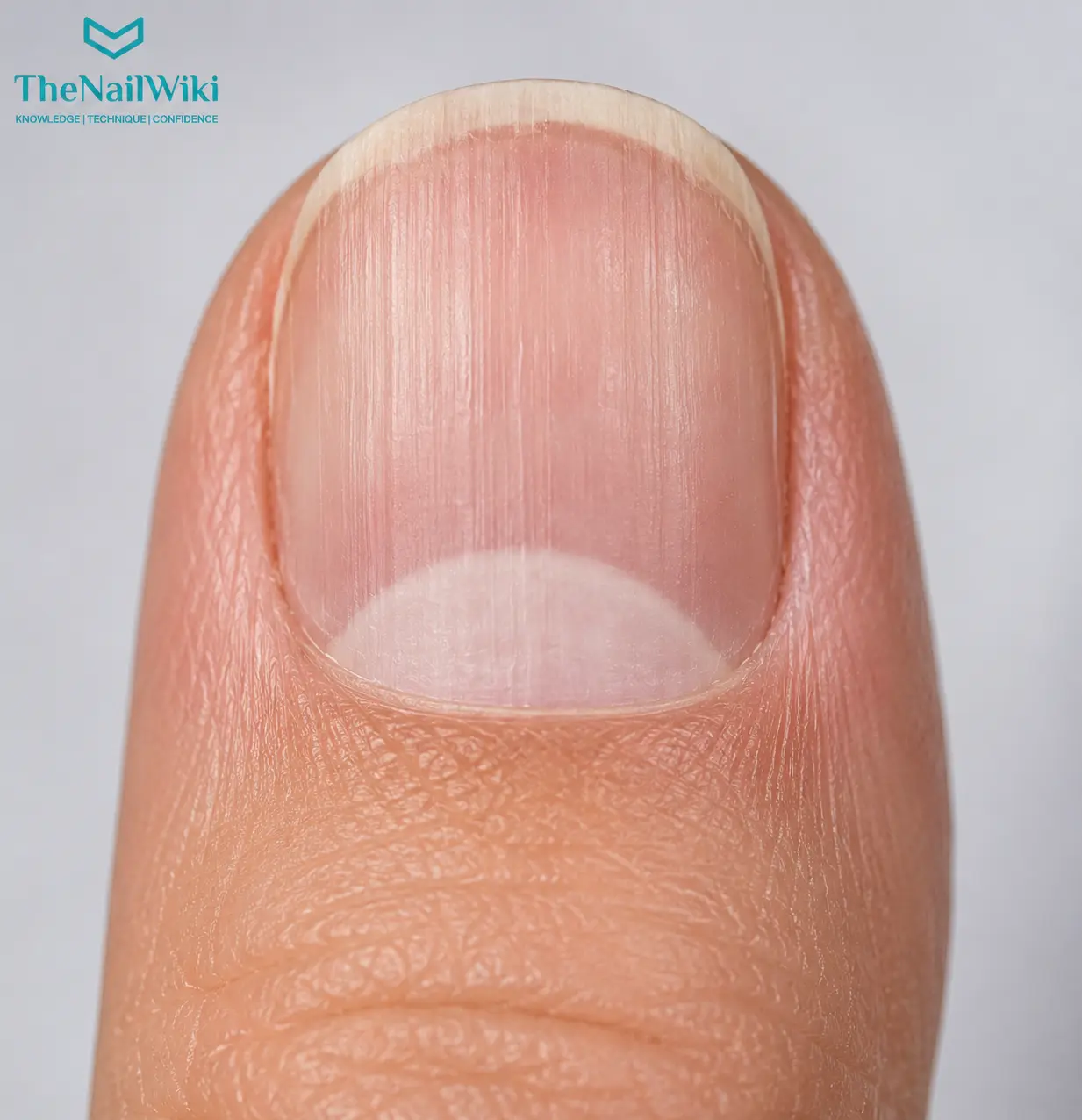
Quick Answer: The lunula is the pale, whitish, crescent-shaped area visible at the base of the nail plate — most prominently on the thumb. It is the visible portion of the nail matrix showing through the nail plate, appearing white because the cells in this zone are not yet fully keratinised and do not transmit the pink colour of the underlying blood supply in the same way as the rest of the plate. The lunula is not a separate structure — it is a visual feature produced by the anatomy beneath it.
Contents
What the Lunula Is
Why It Appears White
The rest of the nail plate appears pink because the translucent plate transmits the colour of the blood-rich nail bed beneath it. The lunula appears white for two reasons that work together. The nail matrix page has a detailed explanation of how the matrix produces the nail plate cells that form the lunula zone.
First, the cells in the lunula zone are in a transitional state — they are nail matrix cells that are in the process of keratinising into nail plate cells but have not yet fully completed that transformation. These incompletely keratinised cells scatter light differently from the fully keratinised cells of the rest of the plate, producing the opaque white appearance rather than translucency.
Second, the distal nail matrix that underlies the lunula is not as vascular as the nail bed that underlies the more distal nail plate — it does not transmit the same pink colour from beneath. The combination of less vascular tissue below and incompletely keratinised cells above produces the distinctive white crescent.
Why It Is Visible on Some Nails and Not Others
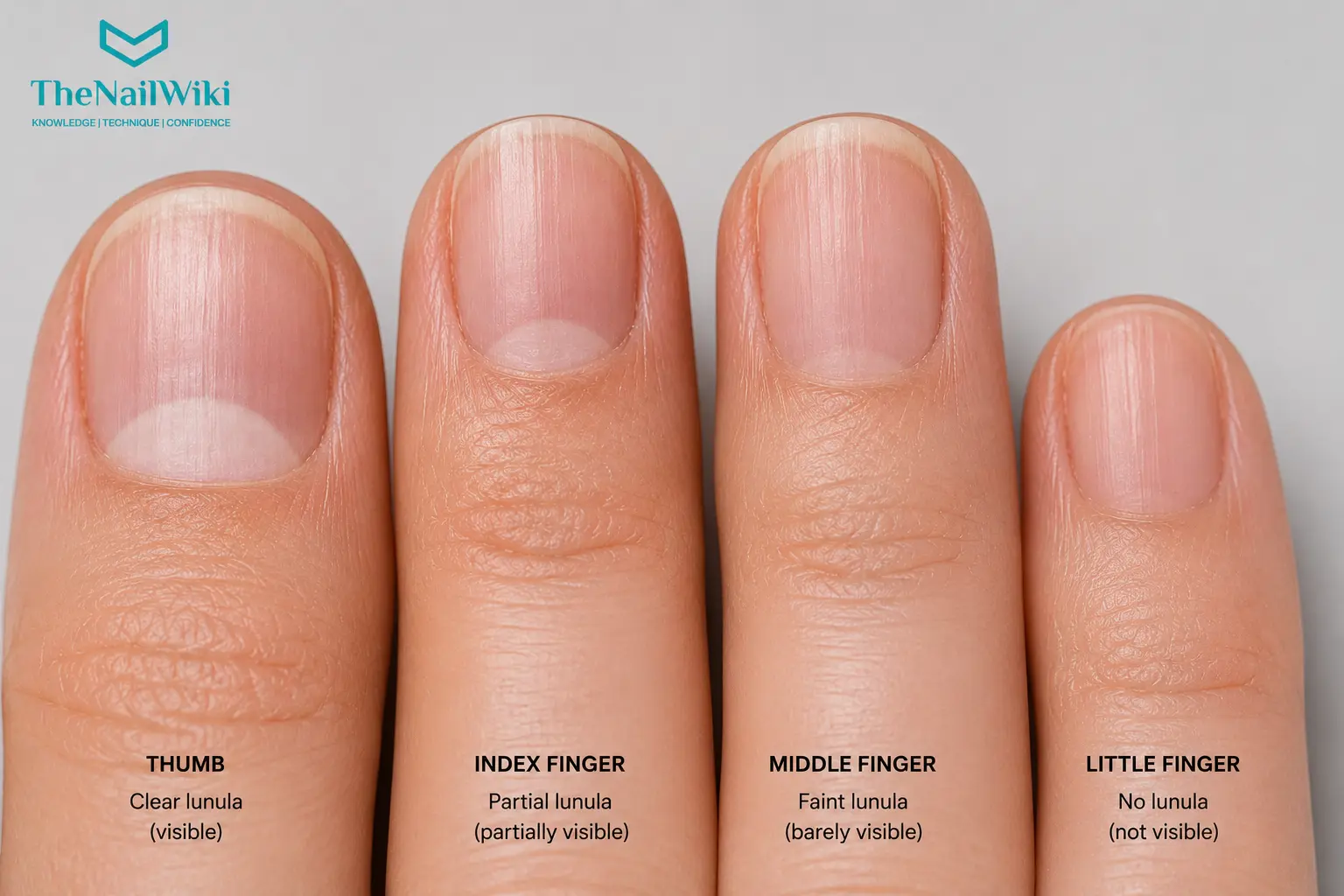
The visibility of the lunula depends on how far the distal matrix extends beyond the proximal nail fold. On the thumb, the matrix is large and extends further forward — the lunula is typically clearly visible. On the little finger, the matrix is smaller and sits further back beneath the fold — the lunula is often entirely hidden.
Nail plate thickness also affects visibility. Thicker nail plates are less transparent throughout, which can make the boundary between the lunula zone and the rest of the plate less distinct. Conversely, on very thin or translucent nail plates, the lunula boundary may be less pronounced because the entire plate transmits light less selectively.
A large, clearly visible lunula on all ten digits is considered typical of a large, active nail matrix producing robust nail plate. A very small or absent lunula across most digits is simply a reflection of matrix position relative to the fold — it does not indicate disease or abnormality in the absence of other signs.
© TheNailWiki
What the Lunula Tells You
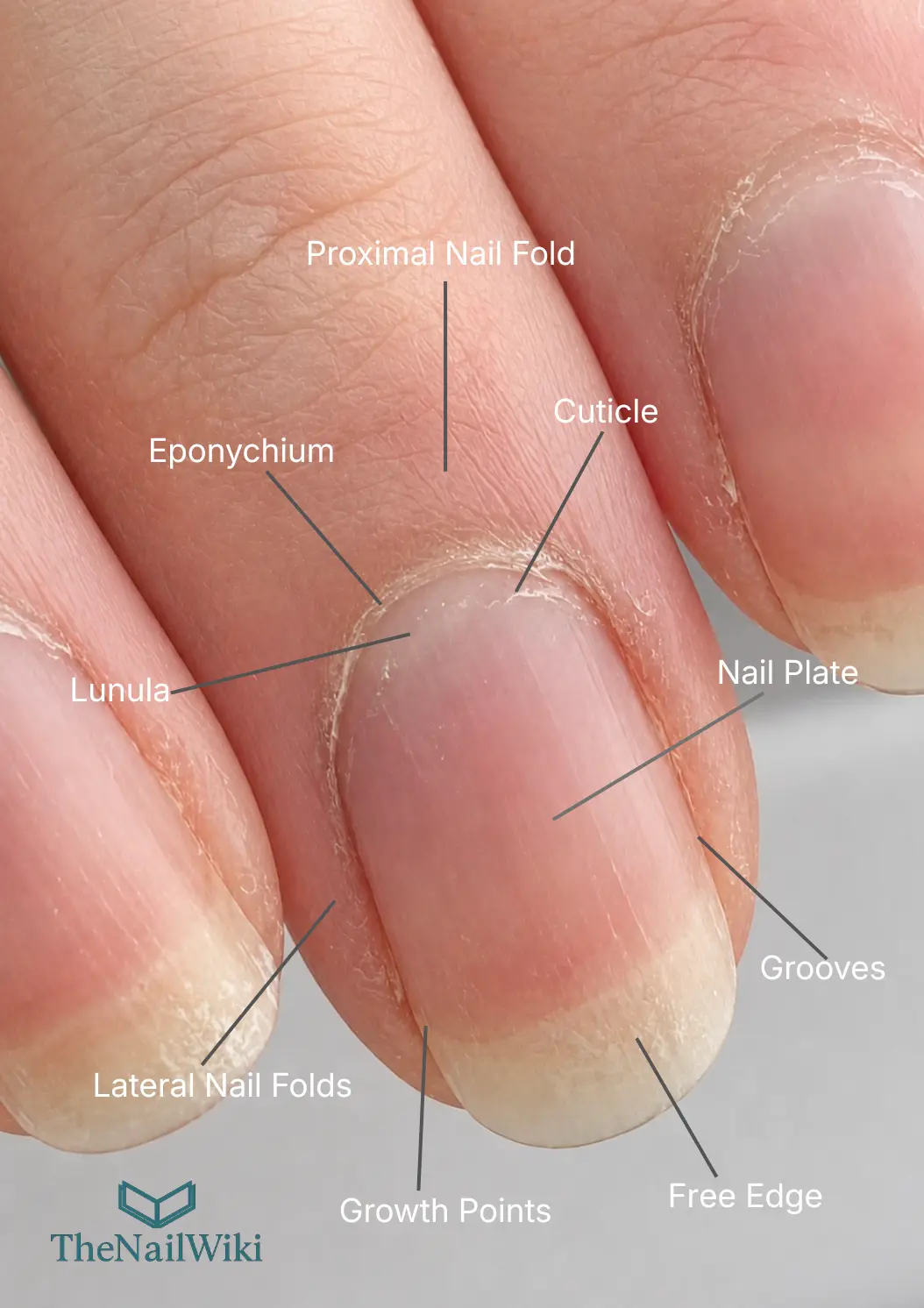
For nail technicians, the lunula is a useful visual indicator of where the nail matrix lies beneath the plate. Because the lunula represents the distal edge of the matrix zone, understanding its position is relevant when considering any work done in the proximal nail area — cuticle work, product application at the base of the nail, and enhancement placement.
Discolouration of the lunula
Changes to the colour of the lunula can indicate underlying systemic or local conditions. A red lunula has been associated with cardiovascular conditions and autoimmune diseases. A blue or purple lunula can be seen in certain circulatory or systemic conditions. Terry’s nails — where the lunula is obscured and the nail appears mostly white — has been associated with liver disease, heart failure, and other systemic conditions. These colour changes warrant referral to a GP rather than any salon-based assessment or treatment.
Trauma and the lunula
The Lunula in Professional Nail Services
The lunula is relevant in professional nail services as a visual reference point for the extent of the nail matrix beneath the plate. When applying product at the base of the nail — whether gel, BIAB, or any enhancement system — the lunula zone marks the area where the plate is transitioning from matrix to fully formed nail plate. Product applied in this zone must not flood onto the surrounding skin or be applied with pressure that could transmit trauma to the underlying matrix.
In nail plate preparation, the lunula zone requires the same care as the rest of the proximal area — gentle technique, appropriate tools, and awareness that the matrix sits directly beneath. In enhancement services including Sandwich Dual Forms and BIAB, the lunula is a useful visual reference for placement — keeping product application from the lunula forward and away from the fold ensures clean application and reduces the risk of product contact with the surrounding skin.
The lunula is also a useful reference in client education — explaining that the white crescent is not a flaw or a sign of damage, but the visible portion of the nail matrix, helps clients understand their nail anatomy and builds professional credibility.
White marks that appear after trauma at the lunula zone
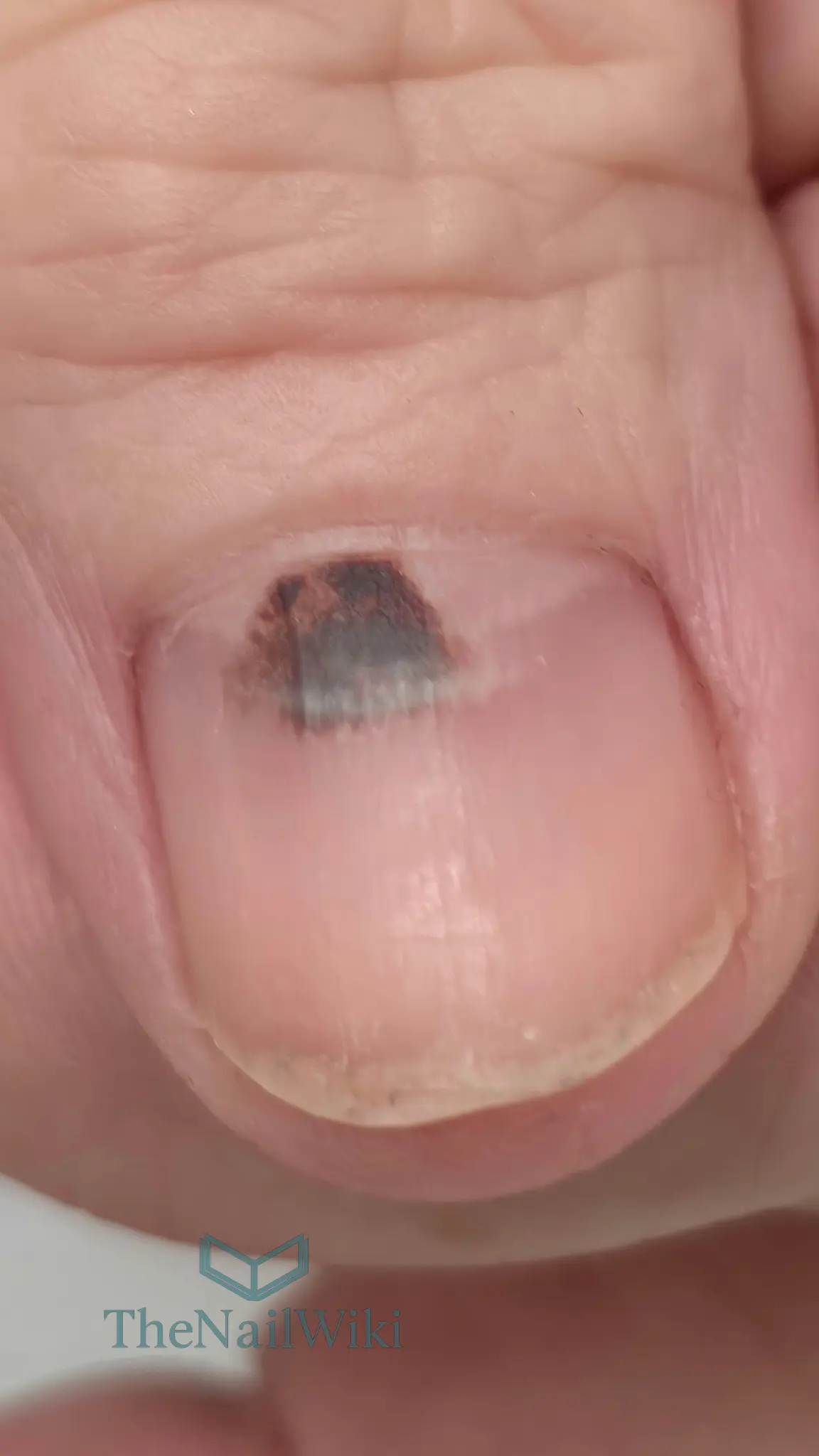
White marks that appear in the nail plate after trauma near the nail base — after hitting a finger, after a heavy impact, or after aggressive work near the proximal fold — are often the result of disruption to the matrix at the point of the lunula. They are not surface marks. They are embedded in the plate at the moment it was being formed and will travel forward with the nail as it grows. They cannot be buffed out. As the nail matrix guide explains, once the cause resolves, the affected section grows forward and eventually out — the plate returns to its previous quality once the disruption has fully grown through.
Frequently Asked Questions
What is the lunula on a nail?
The lunula is the pale white crescent at the base of the nail plate. It is the visible portion of the distal nail matrix showing through the overlying nail plate, appearing white because the cells in this zone are not yet fully keratinised.
Is it normal not to have a visible lunula?
Yes — the lunula is only clearly visible on some digits, most commonly the thumb. On many fingers it sits partially or entirely beneath the proximal nail fold and is not visible. This is normal anatomy and does not indicate a problem.
Why is the lunula white?
The lunula appears white because the cells in this transitional zone between the nail matrix and nail plate are not yet fully keratinised — they scatter light differently from the translucent, fully keratinised cells of the rest of the plate. The underlying tissue is also less vascular here, so the pink colour of the nail bed does not transmit through as it does further forward on the nail.
Can the lunula change colour?
Yes — discolouration of the lunula, such as a red, blue, or brown tint, can be associated with systemic health conditions. Any unexplained colour change in the lunula should be assessed by a GP. A nail technician does not diagnose or treat changes in lunula colour.
What does a large lunula mean?
A large, clearly visible lunula generally indicates a large nail matrix that extends further forward beneath the nail plate. It is associated with thicker, more robust nail plate production. In itself it is not a sign of any condition — it simply reflects the size and position of that individual’s nail matrix.
Professional training in nail anatomy
Nail anatomy, nail plate preparation, and professional application technique are covered in structured online courses at Artistic Touch Nail Training Academy.
Related Library Pages
Nail Anatomy
- → Nail Plate
- → Nail Matrix
- → Nail Bed
- → Proximal Nail Fold
- → Eponychium and Cuticle
- → Nail Root
- → Points of Growth
Some linked pages are currently in development and will be published progressively.
Professional Disclaimer
The information on this page is provided for educational purposes and is intended to support the professional knowledge of nail technicians and nail educators. It does not constitute medical advice. Any changes to nail or skin appearance should be assessed by a qualified medical professional.

About the Author
Radina Ignatova
Professional Nail Expert since 2014 | International Nail Educator | Founder of TheNailWiki and Artistic Touch Nail Training Academy
Radina Ignatova is a Professional Nail Expert since 2014 and an International Nail Educator specialising in Russian Manicure, BIAB application, advanced e-file techniques, and nail safety protocols. Based in Dundee, Scotland, UK, she operates a professional salon whilst teaching nail technicians internationally through online courses.
Her teaching philosophy is centred on honest education — demonstrating real salon challenges, practical corrections and performance-based techniques rather than presenting only polished results.
Read full bio →© 2026 TheNailWiki — an independent nail education resource. Content is safety-led and professionally informed.