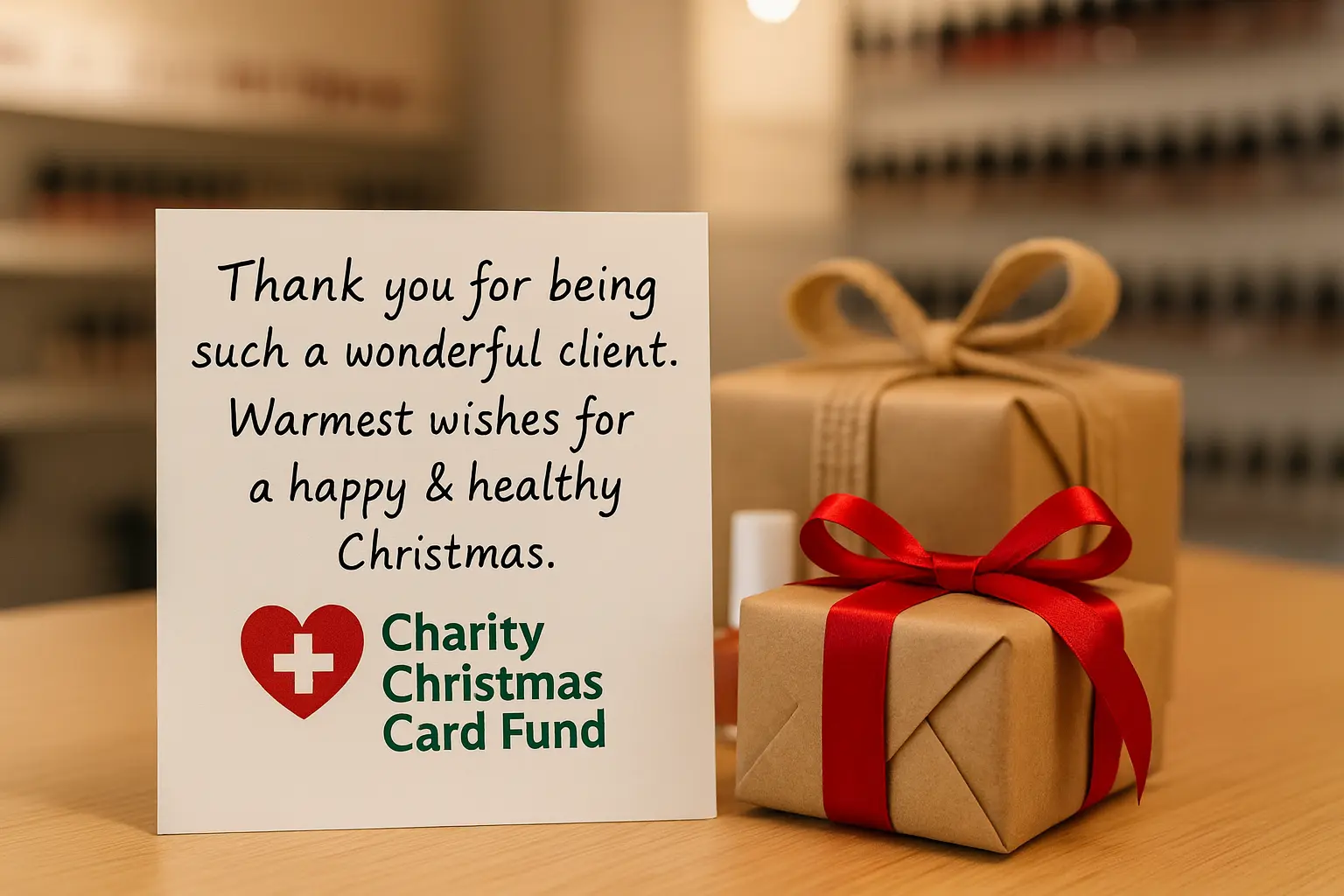
Evidence-based analysis of cost, retention impact, and the psychology behind why charity cards outperform traditional salon gifts Every December, nail technicians across the UK face the same question: What should I give my clients for Christmas? The standard approach involves purchasing small gifts—hand creams, candles, nail files, or curated goodie bags—typically costing £1-£5 per client. For a nail technician with 50 regular clients, this represents a December expenditure of £50-£250. However, emerging evidence from UK nail professionals suggests that handwritten charity Christmas cards may produce significantly better client retention outcomes whilst reducing costs by approximately 98%. This article examines the comparative effectiveness of traditional salon gifts versus personalized charity cards, analysing cost, psychological impact, retention metrics, and practical implementation strategies. The cost differential between traditional gifts and charity cards is substantial: Key Finding: Charity Christmas cards cost approximately 10 pence per client when purchased in packs of 10 cards for £1 from UK retailers such as Card Factory, Tesco, Asda, or Sainsbury’s. This represents a 90-98% cost reduction compared to traditional salon gifts whilst potentially producing superior retention outcomes. The effectiveness of handwritten cards over physical gifts is rooted in established psychological principles: Handwritten communication requires individual attention and cannot be mass-produced. Research in social psychology demonstrates that recipients perceive handwritten messages as more authentic and personally meaningful than purchased items, which can feel transactional. In an increasingly digital environment, handwritten cards represent a counter-trend gesture that signals genuine investment of time and thought. Consumer goods typically have short retention periods. Hand creams are used and discarded. Candles are burned. Nail files are lost. Handwritten cards, by contrast, often become keepsakes. Clients display them on mantlepieces, pin them to refrigerators, or keep them in visible locations. This extended visibility creates repeated exposure to positive sentiment associated with the nail technician. The reciprocity principle in social psychology suggests that individuals feel obligated to return gestures of goodwill. When a nail technician demonstrates thoughtful personal attention through a handwritten message, clients often reciprocate through increased loyalty, referrals, or positive word-of-mouth. Charity cards support registered UK charities. When clients see the charity logo, they form positive associations between the nail technician and ethical values. This alignment strengthens client-practitioner relationships by extending them beyond purely transactional interactions. Anecdotal evidence from UK nail technicians who have implemented charity card strategies reports the following outcomes: Case Example: One UK nail technician reported that a client who had attended only three appointments became visibly emotional upon receiving a personalized charity card. The client subsequently became a long-term regular and referred three new clients within six months. The initial card investment: 10 pence. For nail technicians interested in implementing this strategy, the following evidence-based approach is recommended: UK Suppliers (Verified 2025): Selection criteria: Choose designs that appear professional and elegant rather than overly festive or childish. Simple winter scenes, traditional designs, or subtle patterns work well for professional contexts. Effective personalization requires balancing authenticity with time efficiency. A systematic approach includes: Time efficiency note: Using a systematic template-based approach, 50 personalized cards can be completed in approximately 2 hours. Critical implementation detail: Cards should be handed personally at the end of December appointments, not posted. Personal handover creates significantly greater emotional impact than postal delivery. The face-to-face exchange allows clients to experience immediate recognition and appreciation, strengthening the psychological effect. To assess effectiveness, track the following metrics before and after implementation: The following video demonstrates the complete card-writing system, including supplier recommendations, message personalization techniques, and psychological principles: To support implementation, TheNailWiki provides complimentary access to a comprehensive template collection and systematic implementation guide. Access 22 message templates, personalization framework, UK supplier directory, and time-efficient batching system. Educational resource. No promotional content. Unsubscribe anytime. Template Collection Contents: 22 complete message structures organized by client relationship type (new clients, loyal regulars, referral champions, transformation stories, universal options), personalization insertion guide, UK charity card supplier recommendations with pricing, signature variation options, client matching matrix, systematic batching workflow for time efficiency. While evidence suggests charity cards produce superior retention outcomes, the following limitations should be considered: Practitioners with illegible handwriting may experience reduced effectiveness. In such cases, typed messages on quality cardstock may serve as an alternative, though handwritten communication generally produces stronger emotional response. While card-writing requires less time than gift-shopping and wrapping, it still represents a December time commitment. Practitioners with extremely high client volumes (100+ active clients) may need to implement selective distribution strategies. Not all clients observe Christmas. Practitioners serving diverse client bases should consider alternative seasonal greetings or year-end appreciation cards rather than explicitly Christmas-themed messages. Available evidence suggests that handwritten charity Christmas cards produce superior client retention outcomes compared to traditional salon gifts whilst reducing costs by 90-98%. The effectiveness appears to derive from four psychological factors: perceived authenticity of handwritten communication, extended keepsake retention creating repeated positive exposure, reciprocity principle activation, and positive association with charitable giving. For UK nail technicians seeking cost-effective client retention strategies, systematic implementation of personalized charity cards represents an evidence-based approach worth consideration. Future research would benefit from controlled comparative studies measuring specific retention metrics across larger sample sizes and diverse demographic contexts. Related Articles: Explore More Nail Education Resources
→ Browse Complete Nail Wiki Library
Why Handwritten Christmas Cards Build More Client Loyalty Than Salon Gifts
Overview
The Financial Case
The Psychology of Handwritten Communication
1. Perceived Effort and Authenticity
2. The Endowment Effect and Keepsake Value
3. Reciprocity Principle
4. Charitable Association
Evidence from UK Nail Professionals
Implementation Strategy
Step 1: Source Charity Cards
Step 2: Personalization System
Step 3: Delivery Method
Step 4: Outcome Measurement
Practical Demonstration
Free Message Templates and Implementation Guide
Download Free Template Collection
Comparative Analysis: Cards vs Traditional Gifts
Limitations and Considerations
Handwriting Legibility
Time Constraints
Cultural Considerations
Conclusion
Additional Resources
→ Professional Nail Training Courses
→ Find Certified Nail Professionals