
Green Nail Syndrome (Nail Greenies): What It Is, Why It Happens and How to Manage It
Author: Radina Ignatova, Professional Nail Expert & International Nail Educator | Last Updated: March 2026
Quick Summary
Green nail syndrome — also widely known in the nail industry as nail greenies — is the discolouration of the nail caused by colonisation of the nail unit by the bacterial pathogen Pseudomonas aeruginosa. In a nail salon context, it almost always occurs in the space created between a lifting nail product and the nail bed beneath — and is frequently and incorrectly referred to as nail mould.
It is not mould. Understanding what it actually is, why it happens, and how to manage it correctly is an essential piece of professional knowledge — both for protecting clients and for communicating accurately and confidently when it is encountered in the salon.
Contents
What Is Green Nail Syndrome?
Green nail syndrome — clinically referred to as chloronychia, and widely known in the nail industry as nail greenies — is a nail condition caused by colonisation of the nail unit by the bacterial pathogen Pseudomonas aeruginosa. This gram-negative bacterium is extremely common in the environment, found in soil, water, and on many surfaces. Under normal conditions it does not infect healthy, intact nails — it requires a pre-existing disruption of the nail unit to establish itself.
As the bacterium grows, it produces pigments — primarily pyocyanin and pyoverdine — which stain the nail bed and the underside of the nail plate green. The intensity of colour can range from a pale yellowish-green to a deep blue-green or almost black, depending on the extent of colonisation and how long it has been present.
Pseudomonas is a highly adaptable pathogen. Modern research has shown that it can survive in both oxygenated and low-oxygen environments and can form a protective biofilm — a structured layer that makes it more resistant to cleaning agents and environmental exposure. This is why simply exposing the nail to air, as older advice once suggested, is not sufficient. The underlying conditions that allowed it to colonise must be addressed.
It Is Not Mould — Why This Matters
The term “nail mould” is deeply embedded in nail industry language and is used routinely to describe any green discolouration found beneath a lifting nail product. It is categorically incorrect.
Mould is a fungal organism. It requires specific conditions to grow — including organic material to break down, adequate moisture, and typically a degree of warmth. While the space beneath a lifting nail product is warm and moist, the nail plate and nail bed do not provide the type of organic substrate that mould requires in the way that, for example, rotting wood or food does. Mould infection of the nail — onychomycosis — does exist, but it is a distinct condition with a different clinical presentation.
The green discolouration beneath lifting products is bacterial, not fungal. This distinction matters practically for two reasons. First, the management is different — a Pseudomonas stain requires a clean, dry environment to resolve as the nail grows out; antifungal treatments are ineffective against it. Second, telling a client they have mould on their nail is both inaccurate and unnecessarily alarming. Accurate communication is a professional standard, not optional.
The correct explanation to a client: “The green colour is caused by a type of bacteria called Pseudomonas that has been living in the gap where your nail product lifted. It is not mould, it is not dangerous in most cases, and it will grow out once we keep the area clean and dry and do not trap anything over it again.”
How It Happens
In most cases, nail greenies follow a very simple sequence — and it is almost always preventable:
- A nail enhancement or gel polish starts lifting — at the tip, a side, or near the cuticle
- The client does not return to the salon promptly to have it fixed or removed
- Water and bacteria get into the gap during everyday activities — washing hands, showering, doing dishes
- The bacteria settle into that warm, moist space under the lifted product and start to grow
- As they grow, they produce a green pigment that stains the nail
The product itself is not the problem — the gap created by the lifting is. A well-applied product that stays fully attached does not create this opportunity. This is why prompt maintenance and correct aftercare matter so much — not just for the look of the nails, but for the health of them. Read more: Nail Aftercare →
Green nail syndrome can also happen on natural nails with no product at all, wherever the nail plate has separated from the nail bed — a condition called onycholysis. It is particularly common in clients whose hands are frequently in water.
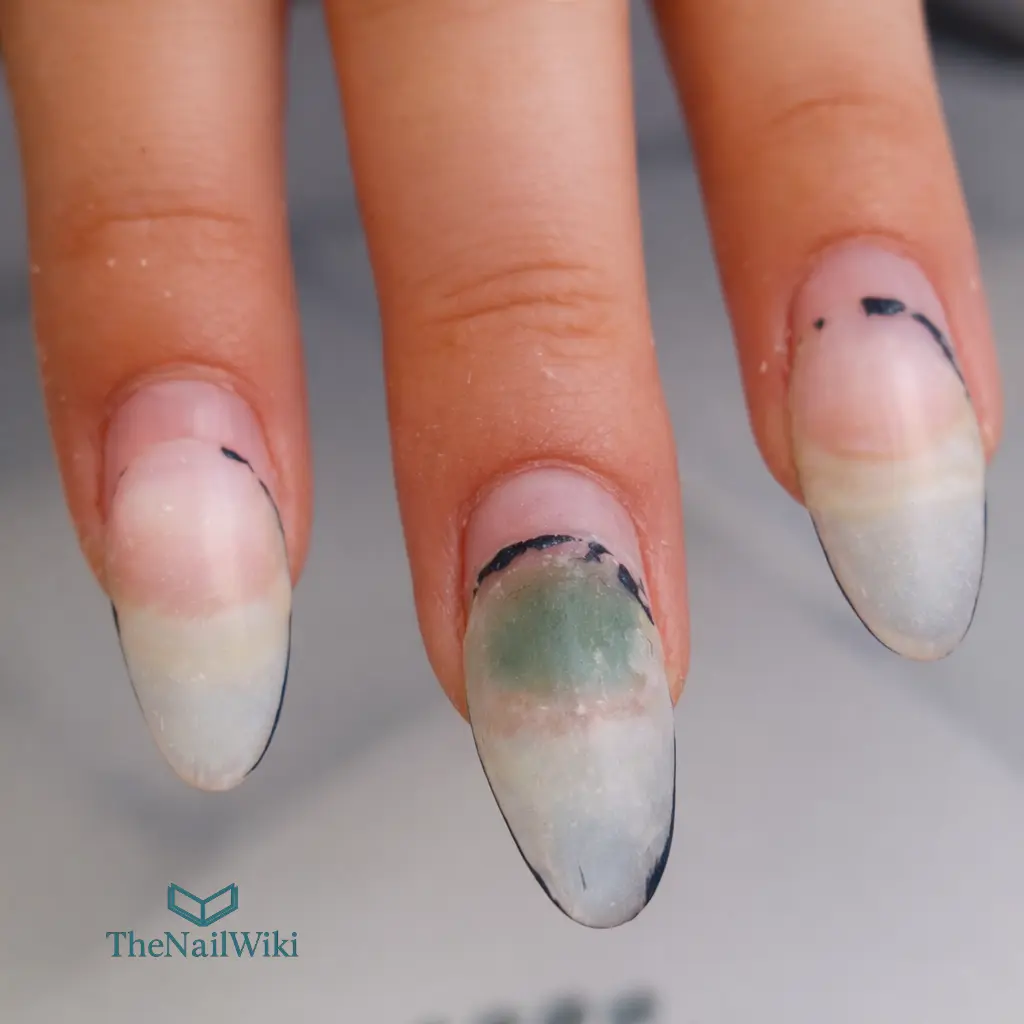
Recognition and Presentation
Green nail syndrome is typically discovered when a nail enhancement is removed and the nail plate beneath is inspected. The discolouration is on the nail plate surface that was in contact with the product, and on the nail bed beneath — it is not a surface stain that can be wiped away.
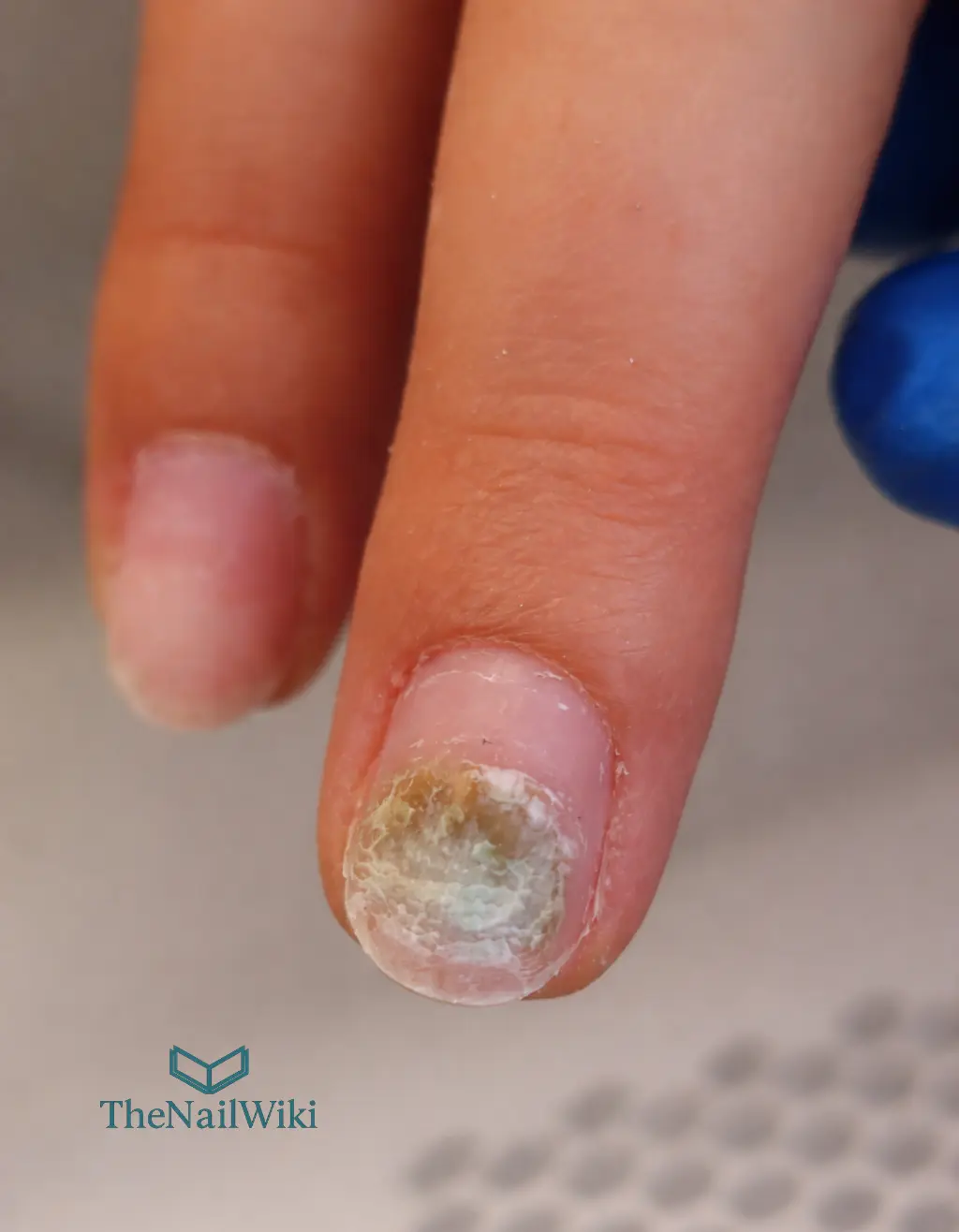
The green colour can vary considerably in intensity:
- Early stage: a pale yellowish-green tinge, easily missed if the nail is not inspected carefully
- Moderate: a clear green discolouration covering part of the nail bed, usually corresponding to the area of lifting
- Advanced: a deep blue-green or dark green stain across a significant portion of the nail, sometimes with an unpleasant odour indicating more substantial bacterial activity
The staining is typically painless. If a client reports pain, warmth, swelling, or discharge around the nail, this indicates a more active infection beyond a simple surface colonisation and requires medical referral.
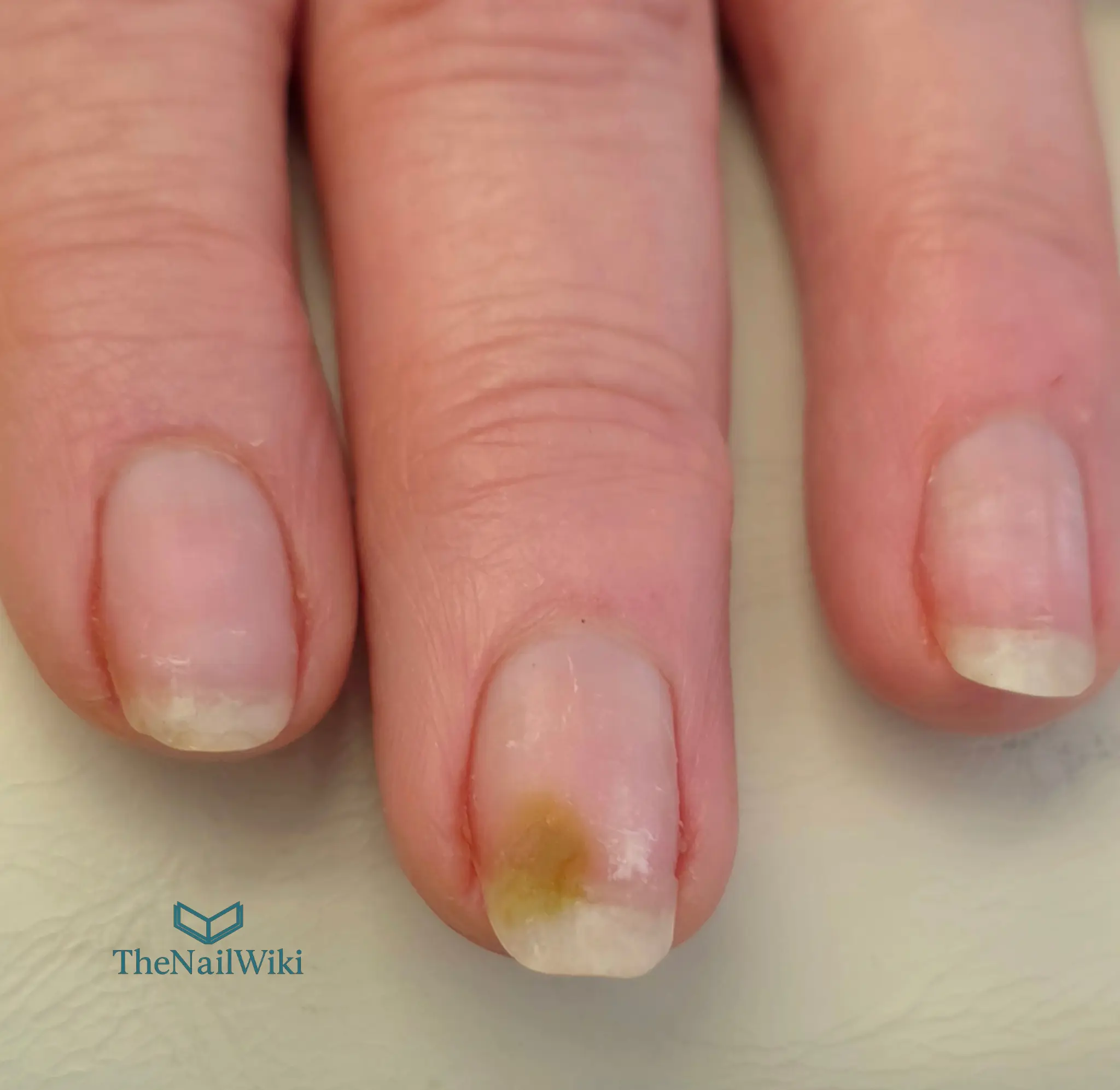
Distinguishing from fungal infection
Onychomycosis (fungal nail infection) typically presents with yellowing, thickening, and crumbling of the nail plate — usually beginning at the free edge and advancing proximally. The nail plate itself changes texture and structure. Green nail syndrome, by contrast, produces a stain on an otherwise structurally normal plate, without the thickening and crumbling characteristic of fungal infection. Both conditions can coexist, and in long-standing cases of onycholysis with secondary bacterial colonisation, a fungal infection may also be present.
Professional Management
The single most important rule: do not apply new product over a green nail under any circumstances. Doing so seals bacteria against the nail bed in a warm, moist environment and allows the infection to continue or worsen beneath the new product — completely out of sight until the next removal.
The correct professional response when green nail syndrome is discovered:
- Remove all product completely. Do not attempt to repair or infill over the affected area
- Trim the nail plate back to solid attachment if onycholysis is present in the affected zone
- Clean the area gently with a nail brush and soap, then dry thoroughly
- Advise the client that no new product should be applied until the green discolouration has completely grown out. Depending on how far up the nail the staining extends, this may take several months
- Keep the area clean and dry. Moisture prolongs the condition; a dry environment is the primary management strategy
- Document it in the client’s nail consultation record, including the extent of the staining and the advice given
The green stain in the nail plate itself is permanent — it will not fade or bleach out. The only resolution is for the stained section to grow out and be replaced by new, unstained plate from the nail matrix. This takes time and requires patience from both the professional and the client.
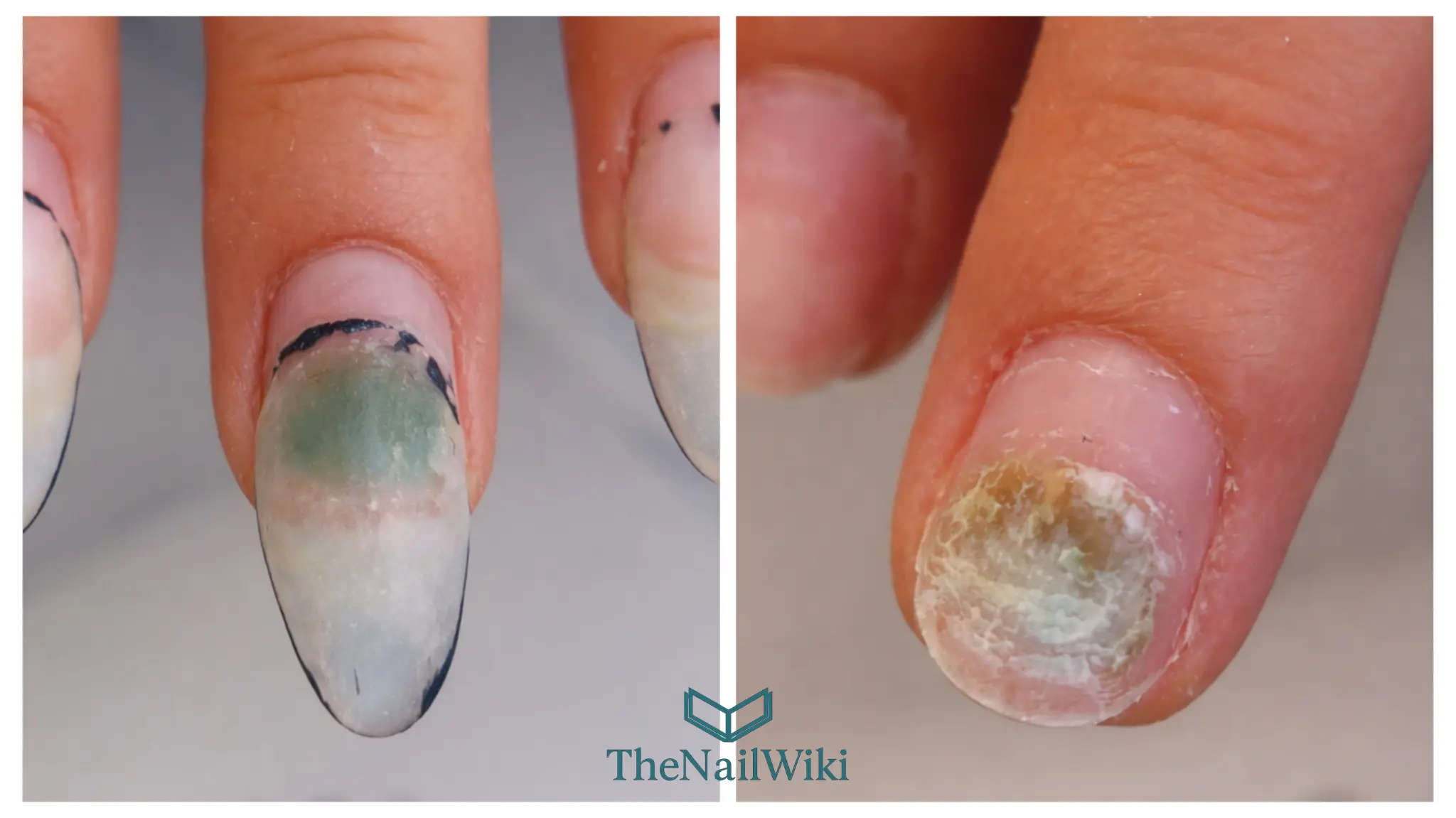
Supportive measures while the nail recovers
Pseudomonas does not tolerate acidic environments well. Diluted white vinegar soaks — used daily for a few minutes — create an environment less hospitable to bacterial activity in the separation space. This is a widely referenced supportive measure, not a medical treatment, but it has a rational basis. Alcohol or surgical spirit over 70% applied to the area can also help dehydrate the space and has antiseptic properties. Plentiful use of cuticle oil on the surrounding skin supports healthy nail growth and can help the nail grow out faster.
Across Eastern Europe, nail professionals have long used Monarda oil (also known as wild bergamot or bee balm oil) as a supportive measure for bacterial nail conditions. The oil contains active compounds — primarily thymol and carvacrol — which have demonstrated antimicrobial properties in laboratory studies, including activity against bacteria that commonly colonise the lifted nail space. This gives the traditional use a plausible biological basis.
Purchase Monarda Oil on Amazon →
Affiliate link — TheNailWiki may earn a small commission if you purchase through this link, at no extra cost to you. This does not influence the information on this page.
Disclaimer: The measures listed above are home remedies supported by research into Pseudomonas behaviour and referenced in dermatology literature — they are not the same as clinically proven medical treatments. They are intended as supportive measures only and are not a substitute for medical diagnosis or treatment. If you suspect an active infection, if symptoms are worsening, or if you have any underlying health conditions, seek advice from a pharmacist, GP, or dermatologist before trying any of these. They should always be used alongside — not instead of — keeping the nail trimmed back, dry, and free of product until recovery is complete.
Infection control in the salon
Everything that contacts the affected nail during the appointment must be disposed of without touching any other surface. This includes cotton pads, files, buffers, and any single-use items. Do not use the same cotton pad or tool on another nail. Do not return any brush or implement that has touched the affected nail to a shared product bottle. Reusable tools must go through full sterilisation before use on any other client.
Do not buff or file the green area in an attempt to remove the colour. Filing will not remove the stain — the pigment is in the nail plate, not on its surface — and buffing generates dust that contaminates the workspace, tools, surfaces, and everything nearby. The stain must grow out. Filing only compromises the remaining nail plate further.
When to Refer
Most cases of green nail syndrome in a nail salon context are self-limiting — they resolve with correct management as the nail grows out. However, medical referral is warranted in the following situations:
- Pain, swelling, redness, warmth, or pus around the nail — indicating active infection beyond surface colonisation
- The condition does not resolve after the stained section has grown out
- Recurring green nail syndrome on the same digit despite correct management
- The client has a compromised immune system, diabetes, or any condition affecting healing
- There is any uncertainty about the diagnosis — if the discolouration does not fit the typical presentation of green nail syndrome, or if additional nail or skin changes are present
Can Greenies Come Back?
Yes — and this is something many clients do not expect. If you have had a green nail before, you can get one again. This is a pattern that nail professionals see regularly in the salon, and it is supported by dermatology research.
The important thing to understand is that the bacteria does not stay permanently in the nail. Pseudomonas lives in the environment around us — in water, surfaces, and soil. It is not waiting inside your nail. What causes it to come back is the same conditions appearing again: lifting, trapped moisture, or nail separation. When those conditions return, the bacteria can move in again.
Why some clients are more prone to recurrence
- Their nails tend to lift easily — some clients naturally have weaker nail-to-bed attachment, meaning lifting happens more readily regardless of how well the product was applied
- They leave their nails too long between appointments — the longer a small lift is left unattended, the more time bacteria has to settle in
- Their hands are frequently in water — hairdressers, nurses, cleaners, and people who wash their hands a lot are at higher risk
- The nail was not fully grown out before product was reapplied — if the green section had not completely grown out, reapplying product can create the same conditions again
- Nail habits — picking at nails, trauma, or very long enhancements that create small pockets where water can sit
If you find yourself getting greenies repeatedly, the answer is not to stop having your nails done — it is to look at what is causing the lifting in the first place, come back to the salon more regularly, and follow proper aftercare between appointments. Read more: Nail Aftercare Guide →
Looking After Your Nails Between Appointments
Green nail syndrome is almost always the result of something going wrong between appointments — not in the salon. Nail coatings and enhancements look and last their best when they are looked after properly at home. Here is what every client wearing any nail product needs to know:
- Come back every 2–3 weeks. This is not just about the look — it is about the health of your nails. Leaving enhancements or gel polish for 5–6 weeks gives lifting time to develop and bacteria time to get in. Three weeks is the recommended maximum for most clients
- Never ignore lifting. If a nail lifts, do not leave it. Do not press it back down, seal it with glue, or hope it will re-adhere on its own. Contact your nail technician. A small lifting area left unattended can become a green nail within days
- Wear gloves for wet work. Washing up, cleaning, and prolonged contact with water are the main causes of lifting. Gloves are a simple and effective way to protect both the nail product and the nails underneath
- Use cuticle oil daily. Keeping the skin around the nail healthy and supple supports the nail product and helps your nails grow out in better condition
- Do not pick or force off product at home. Forcing off gel or enhancements damages the nail plate and can cause the separation that creates the perfect environment for bacterial colonisation
A professional nail service is a partnership between the technician and the client. The technician is responsible for correct preparation, application, and advice. The client is responsible for looking after their nails between appointments and coming back on time. When both sides of that are in place, conditions like green nail syndrome rarely happen. Read more: Nail Aftercare Guide →
Prevention
Green nail syndrome is entirely preventable with correct professional practice and informed client behaviour. The following measures significantly reduce the risk:
Professional measures
- Thorough nail preparation that removes all surface oils and moisture before product application — wet nails are the primary cause of early lifting
- Correct product application technique — avoiding flooding the sidewalls, cuticle area, or free edge underside with product
- Appropriate product selection for the client’s nail type and lifestyle
- Assessing nail bed integrity at every appointment before reapplication
Client education
- If a nail product lifts, contact the salon promptly — do not leave it. A lifting enhancement is not just a cosmetic issue, it creates the conditions for bacterial colonisation
- Wear gloves for prolonged water exposure, cleaning, and dishwashing
- Do not attempt to re-glue or seal lifting products at home
Common Misconceptions
Green nail syndrome is one of the most widely misunderstood conditions in the nail industry. Much of what circulates on social media — including from accounts with large followings — is inaccurate and in some cases actively harmful. These are the most common misconceptions.
❌ “It is nail mould”
Green nail syndrome is caused by Pseudomonas aeruginosa — a bacterium, not mould. Calling it nail mould is inaccurate, leads to incorrect management, and is unnecessarily alarming for clients. The correct terms are green nail syndrome, nail greenies, or clinically: chloronychia.
❌ “Use antifungal treatment to get rid of it”
Antifungal products target fungi. Pseudomonas aeruginosa is a bacterium — antifungal treatments have no effect on it. This is one of the most consequential errors in how green nail syndrome is managed, because clients and professionals alike reach for antifungal products assuming it is fungal, and are then confused when nothing improves. The management of green nail syndrome is not antifungal treatment — it is removing the cause, keeping the area clean and dry, and allowing the nail to grow out.
❌ “Applying new product over it will cover the problem”
This is one of the most harmful responses to discovering a green nail — and it is widely seen in salon content online. Applying new product seals bacteria against the nail bed in exactly the warm, moist, enclosed conditions that allowed it to colonise in the first place. The infection continues and worsens beneath the product, completely out of sight until the next removal. Do not cover a green nail with any product.
❌ “Just let it breathe and it will go away”
Older advice suggested that exposing the nail to air would resolve the problem. Modern research has shown that Pseudomonas aeruginosa can survive in both oxygenated and low-oxygen environments and can form a protective biofilm that makes it more resistant to its surroundings. Simply leaving the nail exposed without addressing the underlying lifting, dryness, and hygiene is not enough. Air alone does not resolve it.
❌ “File or buff the green colour away”
The green pigment is embedded in the nail plate — it is not a surface stain that can be filed or buffed off. Attempting to remove it by filing only thins and weakens the nail plate further without removing the stain. Worse, the dust generated by filing over an active Pseudomonas colonisation contaminates the surrounding workspace, tools, surfaces, and everything nearby. The stain must grow out. It cannot be filed away.
❌ “Tea tree oil will clear it”
Tea tree oil is widely promoted online as a remedy for green nails. It does have some general antimicrobial properties, but there is no reliable clinical evidence that it treats Pseudomonas nail infection specifically. It should not be presented as a solution or a primary treatment. If a client asks about it, the honest answer is that the evidence for it is not there — keeping the nail clean, dry, and product-free is what actually allows recovery.
❌ “Hydrogen peroxide will treat it”
Hydrogen peroxide circulates online as a home remedy for green nails. It is not a recognised or medically supported treatment for Pseudomonas nail infection. Dermatology references consistently point to diluted acetic acid, topical antibiotics, and keeping the nail dry as the management approach — not hydrogen peroxide. Do not recommend it to clients as a treatment.
❌ “The nail product caused it”
The product did not cause the green nail — the space created by the lifting product did. Pseudomonas is already present in the environment. What it needs is opportunity: a warm, moist, enclosed space where it can establish itself. A well-applied product that does not lift does not create this opportunity.
Frequently Asked Questions
Is green nail syndrome dangerous?
In most cases encountered in a nail salon, green nail syndrome is a superficial bacterial stain that resolves with correct management as the nail grows out. It is not typically dangerous in otherwise healthy individuals. However, in clients with compromised immunity, diabetes, or other health conditions, a Pseudomonas colonisation carries greater risk of progressing to active infection and warrants medical assessment.
How long does it take for a green nail to grow out?
It depends on how far up the nail the staining extends. Fingernails grow approximately 3 to 3.5 mm per month. A stain extending halfway up the nail may take three or more months to fully grow out. The bacteria must also be removed from the environment — if the nail is kept clean and dry and no new product is applied, the stain will grow out progressively with new plate.
Can I still have nail products after a green nail?
Not until the green discolouration has completely grown out and the nail bed has fully re-established its attachment to the nail plate in the affected area. Once the nail is healthy and fully attached, product can be reapplied — but thorough preparation and correct technique are essential to prevent recurrence.
Will antifungal treatment clear a green nail?
No. Antifungal treatments target fungi, not bacteria. Pseudomonas aeruginosa is a bacterium, not a fungal organism, and antifungal products have no effect on it. If treatment beyond keeping the area clean and dry is needed — in cases of active infection — this would require medical assessment and antibacterial treatment prescribed by a doctor.
Is it the nail professional’s fault if a client develops a green nail?
Not necessarily. Lifting can occur for many reasons — client lifestyle, moisture exposure, the natural characteristics of the client’s nails, or the client not following aftercare advice. However, if the product lifted due to inadequate preparation or incorrect application, the professional’s technique is a contributing factor. This is one reason that thorough preparation, correct application, and clear aftercare communication are all professional standards rather than optional practices.
Related Library Pages
Nail Conditions
Nail Anatomy
Professional Safety
Some linked pages are currently in development and will be published progressively.
Professional Disclaimer
The information on this page is provided for educational purposes and is intended to support the professional knowledge of nail technicians and nail educators. It does not constitute medical advice. Any client presenting with pain, swelling, or discharge around the nail, or with a green nail that does not resolve with standard management, should be advised to seek assessment from a qualified medical professional.
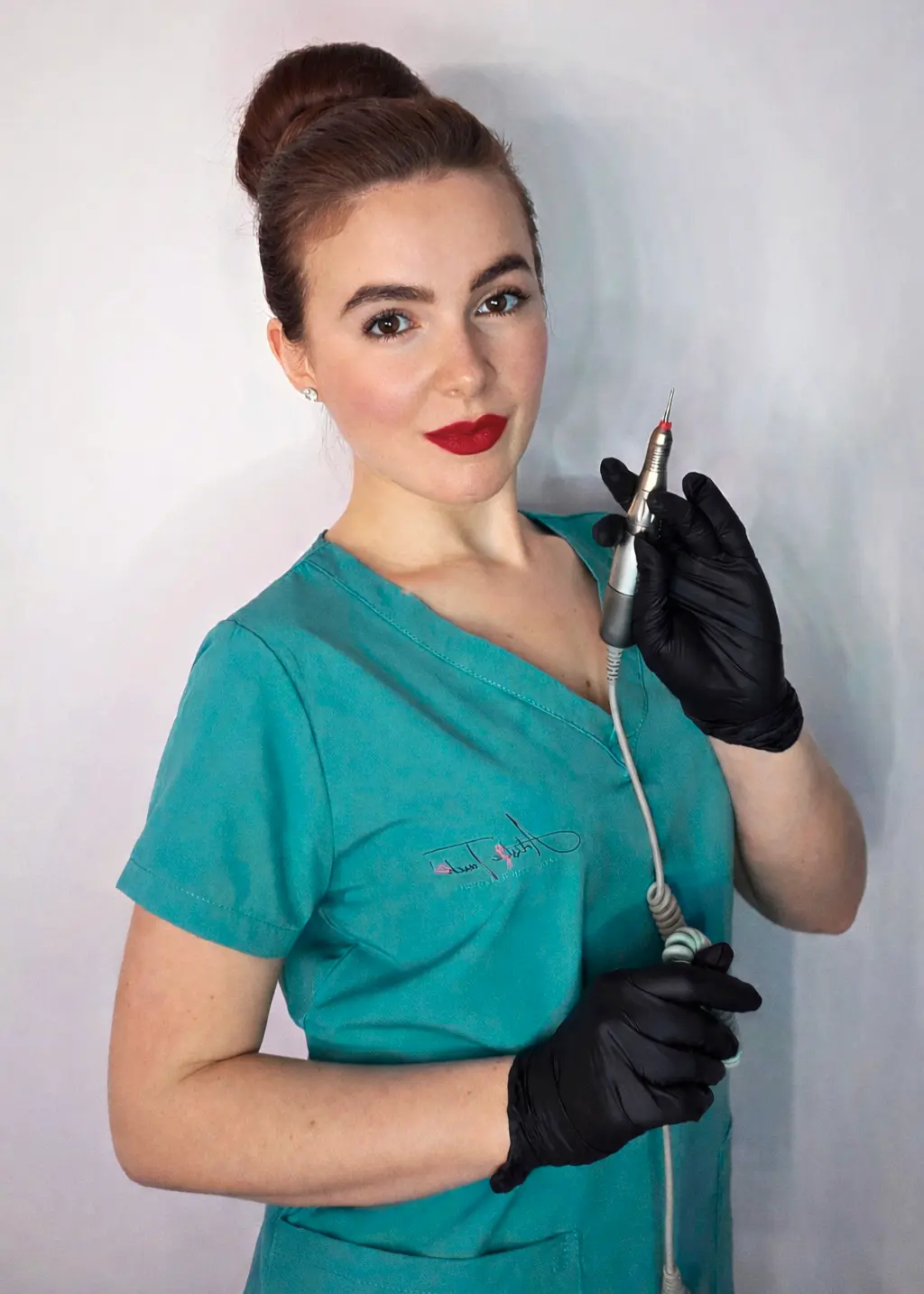
About the Author
Radina Ignatova
Professional Nail Expert since 2014 | International Nail Educator | Founder of TheNailWiki and Artistic Touch Nail Training Academy
Radina Ignatova is a Professional Nail Expert since 2014 and an International Nail Educator specialising in dual forms, gel systems, polygel application, advanced nail structure, E-File techniques and professional salon safety.
She founded TheNailWiki to provide clear, safety-led nail education accessible to everyone, and Artistic Touch Nail Training Academy to deliver structured professional online nail courses.
Her teaching philosophy is centred on honest education — demonstrating real salon challenges, practical corrections and performance-based techniques rather than presenting only polished results.
Based in Scotland, UK, Radina contributes to advancing professional standards within the nail industry through structured educational resources and technical training.
Read full bio →About TheNailWiki
TheNailWiki is an independent educational platform dedicated to providing accurate, safety-led and professionally informed nail care information to professionals and enthusiasts worldwide. All content is created by qualified nail industry professionals and reviewed for technical accuracy.
Our mission is to provide accurate, safety-focused and professionally informed nail education that is accessible to everyone. For structured professional training, advanced masterclasses, and specialist technique courses, visit Artistic Touch Nail Training Academy.
This library page is published by TheNailWiki — an independent nail education resource maintained by nail industry professionals. Content is safety-led and professionally informed.