Online Nail Courses: Complete Professional Guide
Quick Summary
Online nail courses provide structured professional training accessible worldwide without travel requirements, offering flexibility for nail technicians to learn advanced techniques including Russian Manicure, BIAB application, and E-File techniques at their own pace.
Quality courses teach why techniques work rather than simple step replication, prioritize safety protocols throughout instruction, demonstrate real mistakes and corrections, and provide ongoing educator support. Non-accredited masterclasses from experienced practicing technicians often deliver more current, practical training than outdated accredited programmes, though formal qualifications remain necessary for insurance eligibility in certain jurisdictions.
Table of Contents
- Introduction
- What Are Online Nail Courses?
- Types of Online Nail Courses
- Benefits of Online Nail Training
- What to Look For in Quality Online Nail Courses
- Common Mistakes When Choosing Online Nail Courses
- How to Choose the Right Online Nail Course
- Understanding Accreditation vs Quality Education
- Frequently Asked Questions
Introduction
Online nail courses have transformed professional nail education, offering nail technicians worldwide access to advanced training without geographical limitations. From beginner-friendly gel polish application to advanced techniques such as E-File Manicure and Russian Manicure, online nail training courses provide structured learning paths for every skill level.
The global shift towards digital education has created unprecedented opportunities for nail technicians to access high-quality training from international educators, learn specialized techniques not available locally, and build professional skills whilst maintaining existing work commitments. However, the rapid expansion of the online nail education market has also produced significant variation in course quality, teaching methods, and practical applicability.
This guide explores the types of online nail courses available, what distinguishes effective training from superficial content, and how to evaluate course quality before investment. Understanding these factors enables informed decisions that support genuine skill development rather than costly disappointment.
What Are Online Nail Courses?
Online nail courses are digital educational programmes that teach nail techniques, professional protocols, and business skills through video lessons, written materials, and practical assignments. Unlike traditional classroom-based training, online courses allow students to access content at their own pace from any location with internet connectivity.
Professional online nail courses typically include structured curricula covering technique demonstration, product knowledge, safety protocols, client consultation procedures, and troubleshooting common problems. High-quality programmes incorporate real-time explanation throughout video content rather than silent demonstrations with background music, ensuring students understand not only what to do but why specific approaches work.
The scope of online nail courses ranges from single-technique masterclasses (such as BIAB application) to comprehensive programmes covering multiple services, business management, and professional development. Some courses focus on specific product systems, whilst others teach transferable skills applicable across brands and materials.
Types of Online Nail Courses
Skill-Specific Masterclasses
These focused courses concentrate on mastering individual techniques or services. Examples include specialized training in Russian Manicure cuticle work, builder gel application, dual form extensions, or nail art methodologies. Masterclasses typically assume some foundational knowledge and target technicians seeking to refine existing skills or add new services to their offerings.
Quality masterclasses provide in-depth coverage of specific techniques, including common mistakes, correction methods, and adaptation for different nail types. They prioritize practical application over theoretical knowledge, demonstrating real salon scenarios rather than idealized conditions.
Comprehensive Foundation Programmes
Foundation programmes offer complete training for individuals entering the nail industry. These courses cover multiple techniques, product chemistry, contraindications and safety protocols, client consultation procedures, and business basics. Comprehensive programmes may span several months and include practical assessments.
The distinction between accredited and non-accredited foundation programmes significantly impacts insurance eligibility and professional recognition. Accredited programmes meet specific regulatory standards and typically include formal assessment, whilst non-accredited courses may offer superior practical training without official qualification status.
Product-Specific Training
Many gel polish and enhancement product manufacturers provide brand-specific training programmes. These courses teach proper application of particular product lines, system compatibility, and brand-recommended techniques. Product-specific training often serves as marketing for the manufacturer whilst providing valuable technical knowledge about system characteristics and optimal usage.
The quality of product-specific training varies considerably. Some programmes offer genuine educational value with detailed chemistry explanations and troubleshooting guidance. Others function primarily as promotional content with limited practical instruction.
Business and Marketing Courses
These programmes focus on the commercial aspects of nail services, including client acquisition, pricing strategies, social media marketing, and salon management. Business-focused courses may address legal requirements, insurance considerations, and financial planning for nail professionals operating independently or managing teams.
Benefits of Online Nail Training
Geographical Accessibility
Online courses eliminate travel requirements, making international education accessible to technicians in remote locations or areas lacking specialized training providers. Students can access instruction from educators worldwide without expenses related to accommodation, flights, or time away from work and family responsibilities.
This accessibility particularly benefits individuals with childcare commitments, full-time employment, or limited mobility. Traditional in-person training often requires weekend attendance or intensive multi-day programmes that conflict with existing obligations. Online formats accommodate diverse schedules and circumstances.
Self-Paced Learning
The ability to pause, rewind, and review content supports thorough understanding of complex techniques. Students can slow video playback during intricate demonstrations, practice on their own timeline, and revisit challenging sections as needed. This flexibility contrasts with classroom environments where pacing serves the group rather than individual learning requirements.
Lifetime access models allow students to return to course material months or years after initial completion, refreshing knowledge before performing infrequently requested services or reviewing updated content as industry practices evolve.
Cost Effectiveness
Online courses typically cost less than equivalent in-person training when factoring total expenses including travel, accommodation, and lost work time. The elimination of physical venue costs allows educators to price courses more accessibly whilst maintaining comprehensive content.
However, cost alone does not indicate value. Inexpensive courses lacking practical depth or educator support may prove more costly than premium programmes offering genuine skill development and ongoing guidance.
Diverse Educator Access
Online formats enable students to learn from multiple educators with different specializations, teaching styles, and cultural perspectives. This exposure to varied approaches enriches professional development and prevents the limitation of learning only one methodology.
What to Look For in Quality Online Nail Courses
Real Salon Experience, Not Just Teaching Credentials
The most critical factor in course quality is whether the educator maintains active salon practice with real clients. Instructors who exclusively teach often lose touch with current challenges, product performance in real-world conditions, and practical problem-solving requirements.
Educators working regularly with clients understand nail variations, time management pressures, client communication needs, and troubleshooting approaches that pure teachers cannot replicate. Look for evidence of ongoing salon work, client testimonials, and demonstration of work performed under typical salon conditions rather than ideal studio environments.
Explanation of Why Techniques Work
Superior courses explain the reasoning behind every technique, product choice, and procedural step. Understanding why apex placement affects enhancement durability, why certain builder gel formulations behave differently on various nail types, or why specific e-file bits suit particular applications enables adaptive problem-solving rather than mere replication.
Courses focusing solely on steps without underlying principles leave students unable to adjust techniques when client nails differ from demonstration models or when unexpected situations arise. Professional education teaches thinking processes alongside technical execution.
Comprehensive Safety Integration
Safety protocols should permeate every lesson, not appear as isolated modules. Quality courses integrate contraindication assessment, hygiene practices, product safety considerations, and client protection measures naturally throughout technique instruction.
Professional training emphasizes nail health preservation over aesthetic perfection, teaching students to recognize potential damage before it occurs and prioritize long-term nail integrity. Courses highlighting only beautiful results without addressing health implications or risk management provide incomplete education.
Demonstration of Mistakes and Corrections
The most valuable learning occurs when educators show what happens when techniques go wrong and how to correct problems. Courses displaying only flawless execution fail to prepare students for real salon challenges including product lifting, crack repair, uneven application, and client-specific complications.
Honest education demonstrates actual mistakes, explains why they occurred, and shows correction methods. This approach builds genuine confidence and practical competence rather than unrealistic expectations based on perfect demonstrations.
Proper Professional Terminology
Professional nail education employs precise technical language rather than simplified or casual terms. Understanding correct terminology enables effective communication with suppliers, other professionals, and educational resources. Courses using vague or incorrect language indicate superficial knowledge and hinder professional development.
European nail education traditions particularly emphasize proper technical terminology, anatomical accuracy, and scientific understanding of product chemistry. This foundation supports advanced learning and professional credibility.
Ongoing Support and Community
Quality courses provide student support beyond initial content access. This may include educator feedback on student work, peer community interaction, question answering forums, or scheduled live sessions. The availability of guidance when problems arise distinguishes educational programmes from mere content libraries.
Lifetime access without ongoing support limits value compared to programmes offering continuous educator interaction and material updates as industry practices evolve.
Professional Training Resources
Comprehensive training covering e-file safety protocols, BIAB application techniques, and professional client consultation procedures is available through structured masterclass programmes designed for real salon application.
Common Mistakes When Choosing Online Nail Courses
Prioritizing Accreditation Over Quality
Accreditation status indicates regulatory compliance but does not guarantee teaching quality or practical relevance. Many accredited programmes teach outdated techniques, provide minimal hands-on guidance, or focus on theoretical knowledge unsuitable for modern salon practice.
Non-accredited masterclasses from experienced educators often deliver superior practical training, current techniques, and real-world applicability compared to dated accredited curricula. The most effective approach involves assessing course content, educator credentials, and student outcomes rather than accreditation alone.
Judging Quality by Social Media Presentation
Instagram-perfect nail images and polished marketing content do not indicate teaching ability or course quality. Many educators excel at creating beautiful demonstration work under ideal conditions but lack ability to explain techniques, troubleshoot problems, or teach effectively.
Evaluate free content samples, read detailed student reviews, and examine course curricula before judging based on social media aesthetics. Effective teaching requires different skills than creating visually appealing nail art.
Choosing Based on Price Alone
The least expensive option rarely provides best value. Quality education requires significant educator time investment in content creation, student support, and material updates. Courses priced substantially below market rates often lack comprehensive content, professional support, or current information.
However, high pricing does not guarantee quality either. Evaluate what each course includes—content depth, support availability, resource materials, community access—relative to cost rather than using price as a quality indicator.
Expecting Instant Results Without Practice
No course, regardless of quality, replaces dedicated practice time. Unrealistic expectations that watching video content alone will develop professional competence lead to disappointment. Effective learning requires applying techniques repeatedly, analyzing results, troubleshooting problems, and seeking feedback.
Quality courses provide the knowledge foundation and guidance necessary for skill development, but students must commit to practice and continuous improvement.
How to Choose the Right Online Nail Course
Assess Your Current Skill Level
Match course difficulty to your existing knowledge. Foundation programmes suit complete beginners, whilst masterclasses target technicians with basic competence seeking specialized skills. Enrolling in advanced courses without prerequisite knowledge wastes resources and creates frustration.
Honest self-assessment prevents both underwhelming beginners’ content for experienced technicians and overwhelming advanced material for those lacking foundations.
Define Your Learning Goals
Clarify whether you seek to add specific services to your offerings, improve existing technique quality, understand product chemistry better, or develop business skills. Different courses serve different purposes, and clear goals enable targeted selection.
Consider whether you need insurance-eligible qualifications or prioritize practical skill development without formal certification requirements.
Research the Educator Thoroughly
Investigate educator backgrounds, professional experience, teaching approach, and student outcomes. Review available free content on YouTube, blogs, or social media to evaluate teaching style and knowledge depth. Experienced educators demonstrate expertise through consistent quality across multiple platforms.
Contact the provider with specific questions about content, support, and outcomes. Responsive, detailed answers indicate genuine commitment to student success.
Read Student Reviews Critically
Look for detailed testimonials describing specific learning outcomes, support quality, and practical application rather than generic praise. Reviews mentioning concrete skill improvements, problem-solving confidence, or successful service implementation provide more insight than vague positive comments.
Be skeptical of exclusively perfect reviews lacking specific details or courses without any accessible student feedback.
Verify Course Content Details
Examine full course curricula, lesson lists, and included materials before enrollment. Comprehensive descriptions indicating specific topics, techniques, and outcomes suggest well-structured programmes. Vague course descriptions or refusal to provide content details warrant caution.
Understand what support is included—lifetime access duration, question answering procedures, feedback availability, and community features—rather than assuming based on course title.
Important Considerations
Before enrolling in any online nail course, verify refund policies, safety protocol coverage, and whether the programme teaches current industry-standard techniques. Courses teaching outdated or unsafe practices can undermine professional development and client safety.
Understanding Accreditation vs Quality Education
The relationship between accreditation and educational quality in nail training is complex and often misunderstood. Accreditation indicates that a programme meets specific regulatory standards, typically including curriculum requirements, assessment procedures, and administrative processes. However, accreditation does not measure teaching quality, content currency, or practical relevance.
Many accredited nail programmes teach techniques unchanged for decades, ignore modern product developments, or prioritize theoretical knowledge over practical competence. The accreditation process often moves slowly, preventing rapid incorporation of industry innovations or contemporary best practices.
Non-accredited masterclasses from experienced practicing technicians frequently offer more current, practical, and immediately applicable training than accredited programmes from institutions lacking active salon engagement. The distinction matters primarily for insurance requirements and formal qualification recognition rather than actual skill development.
When choosing between accredited and non-accredited options, consider your specific needs. If insurance eligibility or regulatory qualification requirements matter for your jurisdiction, accreditation may be necessary regardless of quality concerns. If practical skill development and current technique mastery are priorities without formal qualification needs, educator expertise and course content become more important than accreditation status.
Frequently Asked Questions
Quality online nail courses provide excellent value when chosen carefully. They eliminate travel costs, offer lifetime access for repeated review, and provide flexibility for learning around existing commitments. However, not all online courses deliver equivalent value. Courses from experienced educators with real salon practice, comprehensive support, and detailed technique explanation justify their cost through genuine skill development. Conversely, superficial content lacking educator support wastes resources regardless of price.
This depends on your jurisdiction’s insurance and regulatory requirements. Some regions accept online qualifications for insurance eligibility, whilst others mandate in-person assessment or practical examination. Non-accredited online masterclasses can develop professional competence without formal qualification status. Verify local insurance requirements before relying solely on online training for official qualification purposes. Many successful technicians combine online skill development with minimal in-person assessment for insurance compliance.
Evaluate educator credentials by examining their professional experience duration, evidence of ongoing salon practice with real clients, teaching approach demonstrated through free content, student testimonials with specific outcomes, and willingness to answer detailed questions before enrollment. Formal teaching qualifications matter less than practical expertise and ability to explain complex techniques clearly. Educators maintaining active salon work whilst teaching provide more current, relevant instruction than pure academics.
Accredited courses meet regulatory standards and typically qualify for insurance recognition, whilst non-accredited courses lack formal qualification status. However, accreditation does not guarantee quality teaching, current content, or practical relevance. Many non-accredited masterclasses from experienced practicing technicians offer superior practical training compared to dated accredited programmes. Choose based on your specific needs: formal qualification requirements favor accredited options, whilst practical skill development priorities may be better served by high-quality non-accredited courses from expert educators.
Significant practice is essential regardless of course quality. Most technicians require 20-50 repetitions of techniques on practice hands or willing models before achieving competent execution on paying clients. Complex techniques like Russian Manicure or builder gel application may require 100+ practice sessions for confident mastery. Online courses provide the knowledge foundation, but skill development depends on dedicated practice time, critical self-assessment, and willingness to troubleshoot problems independently.
General technique courses teaching transferable skills across product brands provide more versatile foundations than brand-specific training. Understanding why techniques work enables adaptation to any product system. However, product-specific training can be valuable after mastering general principles, particularly for complex systems with unique application requirements. Prioritize general education first, then supplement with product-specific training as needed.
Quality courses provide ongoing educator interaction through question answering, work feedback, or community forums. Minimum acceptable support includes responsive communication when students encounter problems and clear guidance on applying techniques. Premium courses offer video feedback on student work, live group sessions, peer community access, and lifetime material updates. Courses providing only content access without support limit value significantly compared to programmes with active educator engagement.
Online and in-person training each offer distinct advantages. Online courses provide flexibility, lifetime access for review, ability to learn from international educators, and elimination of travel costs. In-person training offers immediate hands-on correction, tactile learning experiences, and direct educator interaction. The best approach often combines online theoretical and technique learning with minimal in-person assessment or correction sessions. Neither format is inherently superior; effectiveness depends on course quality, student learning style, and specific training goals.
Professional Disclaimer: The information provided in this article is for educational purposes and reflects professional observation and industry experience. Online nail course selection should consider individual circumstances, local regulatory requirements, and specific learning goals. Verify insurance eligibility requirements with your provider before relying on online qualifications. Safety protocols and contraindication assessment should always prioritize client health over aesthetic outcomes.
About the Author
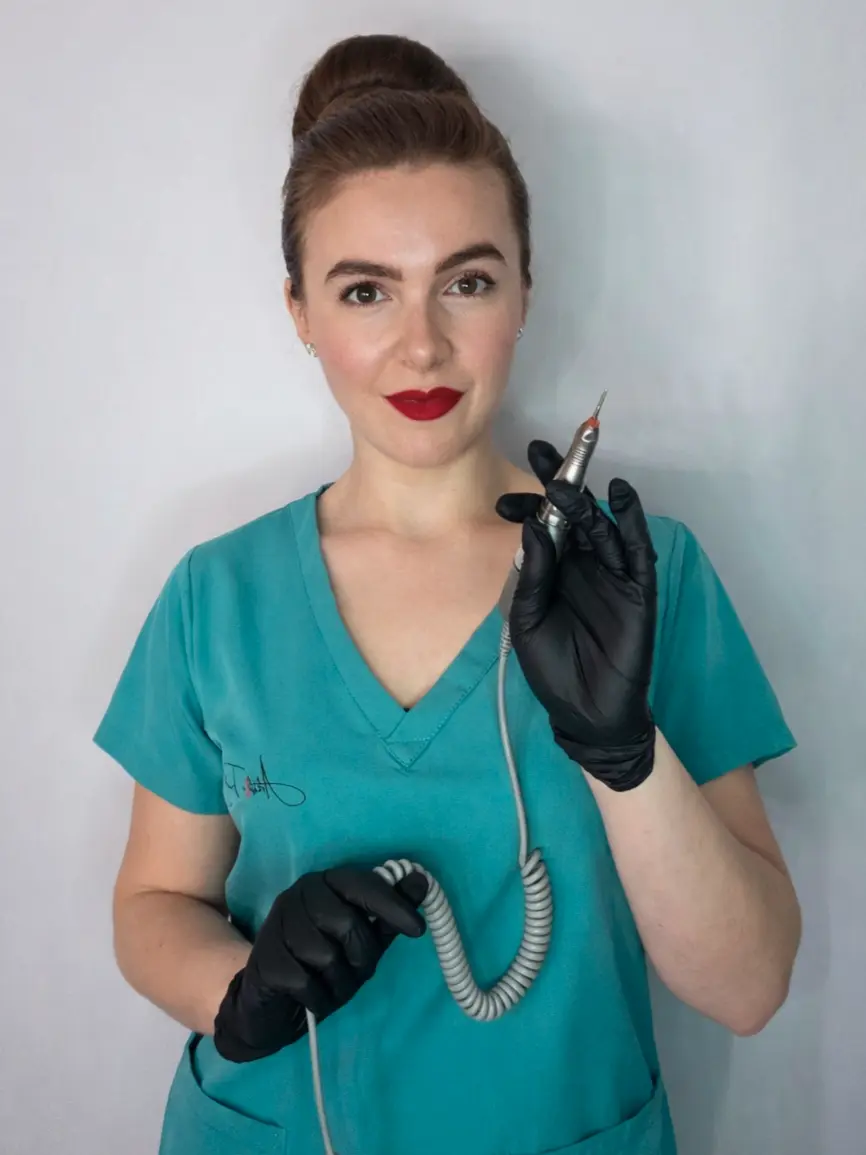
Radina Ignatova
Professional Nail Expert since 2014 | International Nail Educator | Founder of TheNailWiki and Artistic Touch Nail Training Academy
Radina Ignatova is a Professional Nail Expert since 2014 and an International Nail Educator specialising in dual forms, gel systems, polygel application, advanced nail structure, E-File techniques and professional salon safety.
She founded TheNailWiki to provide clear, safety-led nail education accessible to everyone, and Artistic Touch Nail Training Academy to deliver structured professional online nail courses.
Her teaching philosophy is centred on honest education — demonstrating real salon challenges, practical corrections and performance-based techniques rather than presenting only polished results.
Based in Scotland, UK, Radina contributes to advancing professional standards within the nail industry through structured educational resources and technical training. Read full bio.
About TheNailWiki: TheNailWiki is an independent educational platform dedicated to providing accurate, safety-led and professionally informed nail care information to professionals and enthusiasts worldwide. All content is created by qualified nail industry professionals and reviewed for technical accuracy.
Our mission is to provide accurate, safety-focused and professionally informed nail education that is accessible to everyone. For structured professional training, advanced masterclasses, and specialist technique courses, visit Artistic Touch Nail Training Academy.