
Russian Manicure: Complete Guide to Dry Manicure Technique
Author: Radina Ignatova, Professional Nail Expert & International Nail Educator | Last Updated: March 2026
Quick Summary
Russian Manicure is an advanced dry nail preparation technique that uses e-file equipment exclusively to create an exceptionally clean nail bed through detailed cuticle work, dead cuticle removal, and nail fold cleaning — without water soaking.
This meticulous preparation method takes approximately 30 minutes for the manicure itself (60–90+ minutes with gel polish or enhancements), enables nail coatings to last 3–5 weeks without lifting, and requires specialised professional training and cuticle powder for safe execution.
Contents
What is Russian Manicure?
Russian Manicure, also known as dry manicure or hardware manicure, is an advanced nail preparation technique that originated in Russia and Eastern Europe. Unlike traditional manicures that soften the cuticle area with water before pushing back cuticles, Russian Manicure uses e-file equipment exclusively to perform all nail preparation work on completely dry nails.
The technique involves using various diamond and ceramic e-file bits to meticulously clean the cuticle area, remove dead cuticle from the nail plate, clean the lateral nail folds, and create an immaculately prepared surface for nail coatings. This precision work creates a clean, polished nail bed that extends the visible nail plate and allows gel polish or other coatings to adhere directly to clean nail with no gaps or lifting points.
Origins and Evolution
Russian Manicure technique developed in Russia and surrounding Eastern European countries where nail technicians refined e-file methods over decades. The technique emerged from a combination of advanced e-file technology, meticulous attention to detail characteristic of Eastern European beauty standards, and a focus on creating long-lasting results in climates where frequent salon visits might be impractical.
The method gained international recognition in the 2010s as nail technicians worldwide observed the superior longevity and aesthetic results of Russian Manicure compared to traditional preparation methods. Today, Russian Manicure represents the gold standard for nail preparation when maximum coating longevity and aesthetic perfection are priorities.
Key Characteristics of Russian Manicure
- Completely dry preparation — No water soaking at any stage
- E-file exclusive — All work performed with electric nail file equipment
- Detailed cuticle work — Meticulous cleaning of cuticle area and nail folds
- Dead cuticle removal — Complete removal of dead skin adhered to nail plate
- Special cuticle powder — Professional powder used to absorb oils and prevent bit clogging
- Efficient service time — Approximately 30 minutes for manicure (60–90+ with coatings)
- Superior longevity — Enables 3–5 week coating wear without lifting
Why “Dry” Manicure?
The defining characteristic of Russian Manicure is the complete absence of water during preparation. Traditional manicures soak nails in water to soften cuticles, making them easier to push back and remove. However, this water exposure causes the nail plate to temporarily swell and expand.
When gel polish or other coatings are applied to this swollen nail plate, the nail subsequently contracts as it dries and returns to its natural state. This contraction creates microscopic gaps between the coating and nail plate — the primary cause of premature lifting and shortened wear time.
Russian Manicure eliminates this issue by working exclusively on dry nails that are in their natural, contracted state. Coatings applied to properly prepared dry nails adhere perfectly to the nail’s true surface without the complications of post-application nail contraction.
The Russian Manicure Technique
Russian Manicure follows a systematic process using specialised e-file bits to achieve comprehensive nail preparation. Whilst specific techniques vary slightly between practitioners, the core methodology remains consistent.
Step-by-Step Process Overview
1. Initial Assessment and Preparation
The technician examines nail condition, cuticle thickness, skin sensitivity, and any contraindications. Nails are cleaned of any oils or debris using a dry method. Previous nail coatings are removed using coarse ceramic or carbide e-file bits if necessary.
2. Proximal Fold Opening
The skin around the nail (proximal fold) is gently pushed back to open the cuticle area. This essential step exposes the cuticle line and allows access for detailed cleaning. The proximal fold must be properly opened before proceeding with further preparation work.
3. Cuticle Powder Application
Professional cuticle powder is applied to the nail surface and cuticle area. This specialised powder (not baby powder, which clogs bits) serves three critical functions:
- Absorbs natural nail oils for better bit grip and visibility
- Prevents e-file bit clogging by absorbing moisture and debris
- Prevents natural nail over-filing by providing tactile feedback
4. Dead Cuticle Removal and Cleaning
Using fine-grit diamond bits (typically flame or ball shapes), the technician carefully works around the cuticle line to remove dead cuticle adhered to the nail plate. The cuticle powder allows smooth bit movement whilst preventing over-filing. This work extends the visible nail bed by exposing clean nail previously covered by dead skin buildup.
5. Lateral Nail Fold and Surrounding Skin Work
The technician uses tapered or flame-shaped diamond bits to clean the lateral nail folds (sides of the nail) and extends this work onto the surrounding skin around the entire nail. This removes dead skin buildup in these tight spaces and exfoliates the skin surrounding the nails, creating clean lines and smooth skin texture. This comprehensive skin work prevents future lifting from common problem areas and creates a polished appearance. Clients who pick at their skin find this technique particularly excellent, as it removes the dry, lifted skin they would typically pick at, breaking the picking cycle.
6. Precise Cutting and Eponychium Work
Using professional cuticle nippers, the technician makes precise cuts to remove any lifted or excess dead skin. In European nail technique and Russian manicure, working on the eponychium is standard accepted practice — the difference between good and poor work in this zone is anatomy knowledge, correct tools, and trained technique. These cuts are made strategically where needed rather than routinely cutting all cuticles.
7. Cutting and Skin Polishing
After cutting, the skin edges are refined and polished using appropriate diamond bits or other specialist polishing bits. This step smooths any rough edges from cutting, creates seamless transitions between skin and nail, polishes the surrounding skin for a refined finish, and ensures no lifted skin remains. The skin polishing extends around the entire nail perimeter, creating smooth, exfoliated skin. The result is smooth, polished skin around the entire nail with no rough or lifted areas.
8. Nail Shaping and Final Preparation
Free edge shaping, length adjustment, and final surface preparation are completed using appropriate e-file bits or manual files. Remaining cuticle powder is brushed away. The prepared nails are now ready for gel polish, builder gel, nail enhancements, or other coating application.
Required Equipment and Materials
Russian Manicure requires professional-grade e-file equipment and specialised materials:
- Professional e-file machine: Minimum 35-watt motor with precise speed control (5,000–25,000 RPM range)
- Diamond bits: Fine-grit flame, ball, and tapered shapes for cuticle work
- Ceramic bits: For any product removal needed
- Safety bits: Rounded-tip designs that minimise injury risk
- Professional cuticle powder: Specialised powder (not baby powder) that absorbs oils, prevents bit clogging, and prevents over-filing
- Professional cuticle nippers: For precise cutting where needed
- Proper lighting: Essential for seeing fine details during meticulous work
⚠️ Important: Never Use Baby Powder
Professional cuticle powder is specifically formulated for Russian Manicure. Baby powder should never be used as it clogs e-file bits, creates a paste when mixed with oils, and does not provide the proper protection against over-filing. Only use powder specifically designed for professional nail preparation.
⚠️ Professional Training Required
Russian Manicure should never be attempted without proper professional training. The technique involves working with sharp, rotating tools very close to living tissue. Improper technique can cause cuts, burns, nail damage, or infection. Consumer-grade e-files lack the precision and power needed for safe Russian Manicure execution.
Benefits and Results of Russian Manicure
Properly executed Russian Manicure delivers distinct advantages over traditional nail preparation methods, particularly for clients prioritising longevity and aesthetic perfection.
Extended Coating Longevity
The primary benefit of Russian Manicure is dramatically extended wear time for nail coatings. Gel polish applied over Russian Manicure preparation typically lasts 3–5 weeks without lifting, chipping, or significant tip wear — approximately 50–100% longer than traditional manicure preparation.
- Perfect adhesion surface: Complete dead cuticle removal creates direct coating-to-nail contact with no gaps
- No water swelling: Dry preparation eliminates nail expansion and subsequent contraction
- Clean nail folds: Removing dead skin from lateral folds prevents common lifting initiation points
- Extended coverage area: Cleaning exposes more nail plate, allowing coating to extend closer to cuticle
Aesthetic Improvements
Visual Benefits
- Longer-appearing nail beds: Removing dead cuticle exposes more natural nail
- Cleaner cuticle lines: Precise e-file work creates sharp, defined edges
- Smooth, polished look: Complete dead skin removal creates refined appearance
- Fully exfoliated skin: The eponychium itself — and the surrounding skin around the entire nail perimeter — can be fully exfoliated. This level of refinement is one of the results clients notice most immediately and cannot be replicated with manual preparation
- Excellent for skin pickers: Removes all loose, dry, lifted skin that triggers picking behaviour
- Professional finish: Meticulous preparation visible in final result quality
- Uniform nail beds: Consistent preparation across all nails creates cohesive look
Nail Health Benefits
- Reduced moisture exposure: Dry preparation avoids nail weakening from water absorption
- Better coating adhesion: Superior seal prevents moisture and bacteria from reaching nail bed
- Less frequent services: Extended wear time means fewer removal and reapplication cycles
- Thorough cleaning: Complete dead skin removal reduces bacterial and fungal growth risk
- Anatomy-informed technique: Understanding the nail matrix, eponychium, and surrounding structures enables skilled, intentional work
⚠️ Results Depend on Proper Technique
All stated benefits apply only to Russian Manicure performed by properly trained technicians using correct technique and equipment. Improper Russian Manicure can cause significant damage including nail thinning, cuticle injury, and increased infection risk. Always verify technician training and experience before receiving this advanced service.
Cost-Effectiveness Over Time
Whilst individual Russian Manicure services typically cost more than traditional manicures (£40–£80 versus £25–£40), the extended longevity often makes Russian Manicure more economical:
Traditional manicure: £30 every 2 weeks = £780 annually (26 services)
Russian Manicure: £60 every 4 weeks = £780 annually (13 services)
The extended wear time also saves time spent in salons — approximately 13 hours annually compared to 26 hours for traditional manicures requiring twice-monthly maintenance.
Russian Manicure vs Traditional Manicure
Understanding the differences between Russian and traditional manicure methods helps clients make informed decisions about which technique best suits their needs, lifestyle, and priorities.
Learn Professional Russian Manicure Technique
Master the dry manicure method including e-file bit selection, proper speeds and pressure, cuticle preparation, and safety protocols for long-lasting results.
View E-File Manicure Course →Safety and Contraindications
Russian Manicure safety depends entirely on proper technique execution by trained professionals. Whilst the method is safe when performed correctly, improper technique poses significant risks.
Potential Risks of Improper Technique
⚠️ Risks of Improper Russian Manicure
- Cuts and abrasions: E-file bits can cut skin if used with incorrect angles or excessive pressure
- Heat burns: Insufficient movement or excessive pressure generates heat that burns skin or nail
- Nail thinning: Working on the natural nail plate instead of dead skin weakens the plate
- Cuticle zone damage: Working on living tissue without proper training or appropriate technique can cause injury — the key distinction is skilled, controlled work versus incorrect angles, excessive pressure, or inadequate training
- Infection risk: Breaking the skin barrier introduces bacteria or fungi
- Nail matrix damage: Aggressive work too close to the proximal nail fold can damage the nail matrix and affect nail growth
Signs of Proper vs Improper Technique
✓ Proper Technique Indicators
- No pain during service
- Minimal heat sensation
- No bleeding or skin breaks
- Smooth, clean result
- No prolonged redness
- Comfortable experience
✗ Warning Signs
- Sharp pain or burning
- Significant heat buildup
- Bleeding from cuticle area
- Cuts or abrasions
- Excessive redness lasting hours
- Swelling or tenderness
Any warning signs indicate an immediate need to stop the service and assess whether technique adjustment is needed or whether the client may not be a suitable candidate for Russian Manicure.
Contraindications and Cautions
Certain conditions require avoiding Russian Manicure or proceeding with extra caution. For a full list of nail service contraindications, see: Nail Contraindications →
Absolute Contraindications (Avoid Russian Manicure)
- Active nail or skin infections (bacterial, fungal, viral)
- Open wounds or cuts in treatment area
- Severe inflammation or swelling
- Extremely thin, damaged, or peeling nails
- Uncontrolled diabetes with neuropathy
- Severe blood clotting disorders
Relative Contraindications (Proceed with Caution)
- Very thin or sensitive skin
- History of keloid scarring
- Immunosuppression or immunocompromise
- Taking blood thinning medications
- Pregnancy (technique modification may be needed)
- Recent injuries or trauma to nail area
- Nail psoriasis or eczema in treatment area
Clients with relative contraindications should consult both their healthcare provider and nail technician to determine whether Russian Manicure can be safely modified for their situation or whether alternative methods are more appropriate. A thorough nail consultation before every service is essential.
Who Should Get Russian Manicure
Russian Manicure suits specific client profiles and priorities. Understanding ideal candidates helps set appropriate expectations and ensures client satisfaction.
Russian Manicure Works Best For:
- Clients prioritising longevity: Those wanting maximum time between salon visits
- Gel polish wearers: Clients who exclusively wear gel coatings
- Busy professionals: Those preferring monthly over bi-weekly appointments
- Thick cuticle growth: Clients with substantial dead cuticle buildup
- Previous lifting problems: Clients experiencing premature gel polish failure — read more: Onycholysis →
- Those seeking extended nail bed appearance: Clients wanting nails to appear longer
When Russian Manicure May Not Be Ideal
- Budget priority: Clients needing lowest per-visit cost
- Relaxation focus: Those viewing manicures primarily as relaxation time
- E-file apprehension: Clients uncomfortable with mechanical tools near cuticles
- Very sensitive skin: Those prone to irritation from e-file work
- Natural nail wearers: Clients not using gel or long-lasting coatings
- Frequent colour changes: Those wanting different colours weekly
- Time constraints: Unable to spare 75–90 minutes for appointments
First-Time Russian Manicure Expectations
First Appointment
- Longer duration: First visit typically takes 60–90+ minutes with substantial dead cuticle buildup
- Unfamiliar sensations: E-file vibration and warmth may feel unusual initially
- Dramatic visible difference: Significantly extended nail bed appearance after dead cuticle removal
- Consultation importance: Thorough discussion of technique, expectations, and aftercare
- Adjustment period: Cuticles may feel “naked” initially as you adapt to the cleaner appearance
Maintenance Appointments
- Reduced time: Maintenance visits typically 30 minutes for manicure (60–90+ with coatings) once initial dead cuticle is cleared
- Easier maintenance: Less work needed with regular upkeep
- Consistent results: Each appointment maintains the same high standard
- Growing comfort: Familiarity with sensations increases comfort level
Finding a Qualified Russian Manicure Technician
Selecting a properly trained Russian Manicure technician is crucial for safety and satisfactory results. The advanced nature of this technique makes technician qualifications particularly important.
What to Ask Potential Technicians
- Specific Russian Manicure training: Not just general e-file experience
- Training source and certification: Completed formal course from a recognised educator
- Years of Russian Manicure experience: Minimum 1–2 years recommended
- Number of Russian Manicure clients served: Substantial practice volume indicates experience
- Professional insurance coverage: Appropriate liability protection for services offered
- Hygiene and sanitisation protocols: Proper bit sterilisation and infection control
⚠️ Red Flags to Avoid
- Cannot clearly explain training background or certification
- Claims to be “self-taught” in Russian Manicure technique
- No before/after photos of actual client work
- Unusually low pricing (significantly below market rate)
- Does not discuss contraindications or assess suitability
- Rushes through service in under 45 minutes
- Uses consumer-grade e-file equipment
- Cannot explain the difference between dead cuticle and the eponychium
During the Service: Quality Indicators
- Thorough consultation: Discusses your goals, examines nail condition, explains process
- Comfort checks: Regularly asks about comfort level and adjusts as needed
- Methodical approach: Works systematically through each nail rather than rushing
- Appropriate equipment: Professional-grade e-file with quality bits
- Proper technique: Light pressure, constant movement, appropriate speeds
- Clean environment: Organised workspace with visible sanitisation practices
- Aftercare education: Explains what to expect and how to maintain results
Frequently Asked Questions About Russian Manicure
Is Russian Manicure safe?
Russian Manicure is safe when performed by properly trained technicians using correct technique, appropriate equipment, and following safety protocols. The technique itself is not inherently dangerous — safety depends entirely on technician skill and training. Properly executed Russian Manicure should not cause pain, bleeding, or injury. However, improper technique can cause significant damage including cuts, burns, nail thinning, or infection. Always verify your technician has completed formal Russian Manicure training and maintains appropriate professional insurance.
Does Russian Manicure hurt?
Russian Manicure should not hurt when performed correctly. Clients may feel e-file vibration, gentle pressure, or slight warmth from the rotating bits, but sharp pain or burning indicates improper technique. Properly trained technicians use appropriate speeds, light pressure, and constant movement to prevent discomfort. Some clients with very sensitive skin may experience more sensation than those with thicker skin, but the service should never be painful. If you experience pain during Russian Manicure, inform your technician immediately so they can adjust technique or stop the service if needed.
How long does Russian Manicure last?
Gel polish or other coatings applied over Russian Manicure preparation typically last 3–5 weeks without lifting, chipping, or significant tip wear. Some clients with optimal nail conditions achieve 6+ weeks of perfect wear. This longevity significantly exceeds the 2–3 weeks typical for traditional manicure preparation. The dry preparation method eliminates nail swelling from water exposure, creating superior adhesion that dramatically extends coating life.
How much does Russian Manicure cost?
Russian Manicure typically costs £40–£80 per service in the UK, compared to £25–£40 for traditional manicures. The higher per-visit cost reflects the advanced training required, longer service time (75–90 minutes), and specialised equipment needed. However, Russian Manicure often proves more economical long-term because extended wear time (4–5 weeks) means fewer annual appointments.
Can I do Russian Manicure at home?
Russian Manicure should not be attempted at home without professional training. The technique requires advanced e-file skills, understanding of nail anatomy, ability to distinguish dead cuticle from the living eponychium, and experience managing speeds and pressure to prevent injury. Consumer-grade e-files lack the precision, power, and control needed for safe Russian Manicure execution.
What is the difference between Russian Manicure and a regular manicure?
The primary differences are preparation method and results longevity. Russian Manicure uses dry preparation with e-file equipment exclusively, removing water soaking entirely. Traditional manicures soak nails in water to soften cuticles before using manual tools. Russian Manicure involves more detailed cuticle work, completely removing dead cuticle from the nail plate and cleaning lateral nail folds thoroughly. This meticulous preparation enables coatings to last 3–5 weeks compared to 2–3 weeks with traditional methods. It requires specialised professional training and takes 30 minutes for the manicure itself (60–90+ minutes with gel polish, BIAB, or enhancements), whilst traditional manicures take 45–60 minutes total including polish.
References and Further Reading
- Professional Beauty Association — Advanced Nail Technique Standards
- British Association of Beauty Therapy & Cosmetology (BABTAC) — E-File Safety Guidelines
- E-File Manicure: Complete Guide — TheNailWiki comprehensive e-file resource
- The Eponychium and Cuticle — TheNailWiki anatomy guide
- The Nail Matrix — TheNailWiki anatomy guide
- UK Health and Safety Executive — Workplace Safety for Beauty Professionals
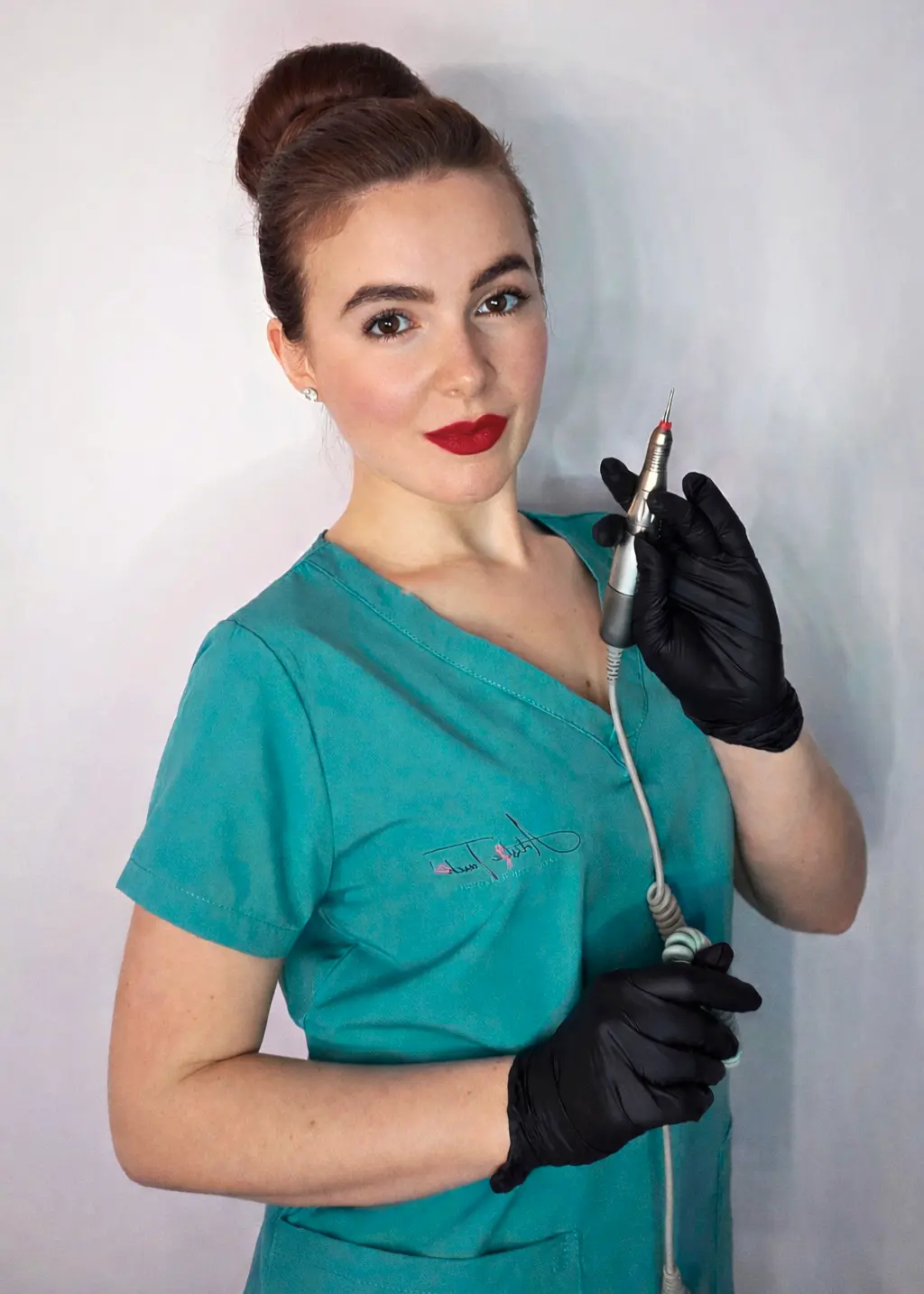
About the Author
Radina Ignatova
Professional Nail Expert since 2014 | International Nail Educator | Founder of TheNailWiki and Artistic Touch Nail Training Academy
Radina Ignatova is a Professional Nail Expert since 2014 and an International Nail Educator specialising in Russian Manicure, BIAB application, advanced e-file techniques, and nail safety protocols. Based in Dundee, Scotland, UK, she operates a professional salon whilst teaching nail technicians internationally through online courses.
Her teaching philosophy is centred on honest education — demonstrating real salon challenges, practical corrections and performance-based techniques rather than presenting only polished results.
Her teaching approach prioritises comprehensive technical training paired with deep understanding of why techniques work, enabling students to adapt methods appropriately for individual client needs whilst maintaining safety as the paramount concern.
Read full bio →E-File Manicure & Gel Polish Course
Master Russian Manicure preparation methods including dry manicure technique, e-file bit selection, proper speeds and pressure control, detailed cuticle work, dead cuticle removal, nail fold cleaning, and comprehensive safety protocols for creating long-lasting gel polish results. Suitable for nail technicians committed to advancing their skills with professional Russian Manicure training.
About TheNailWiki
TheNailWiki is an independent educational platform dedicated to providing accurate, safety-led and professionally informed nail care information to professionals and enthusiasts worldwide. All content is created by qualified nail industry professionals and reviewed for technical accuracy.
For structured professional training, advanced masterclasses, and specialist technique courses, visit Artistic Touch Nail Training Academy.
This library page is published by TheNailWiki — an independent nail education resource maintained by nail industry professionals. Content is safety-led and professionally informed.