
Proximal Nail Fold: Anatomy, Function, and Role in Nail Services
Author: Radina Ignatova, Professional Nail Expert & International Nail Educator | Last Updated: May 2026
Quick Answer: The proximal nail fold is the fold of skin at the base of the nail — the visible ridge of skin just above where the nail plate begins. It sits directly over the nail matrix and its primary role is to protect the matrix from trauma, infection, and chemical contact. The undersurface of the proximal nail fold produces the eponychium — the thin layer of living skin that seals against the nail plate surface. In Russian manicure and e-file manicure, the proximal nail fold is the primary working zone at the cuticle area.
Contents
Anatomy of the Proximal Nail Fold
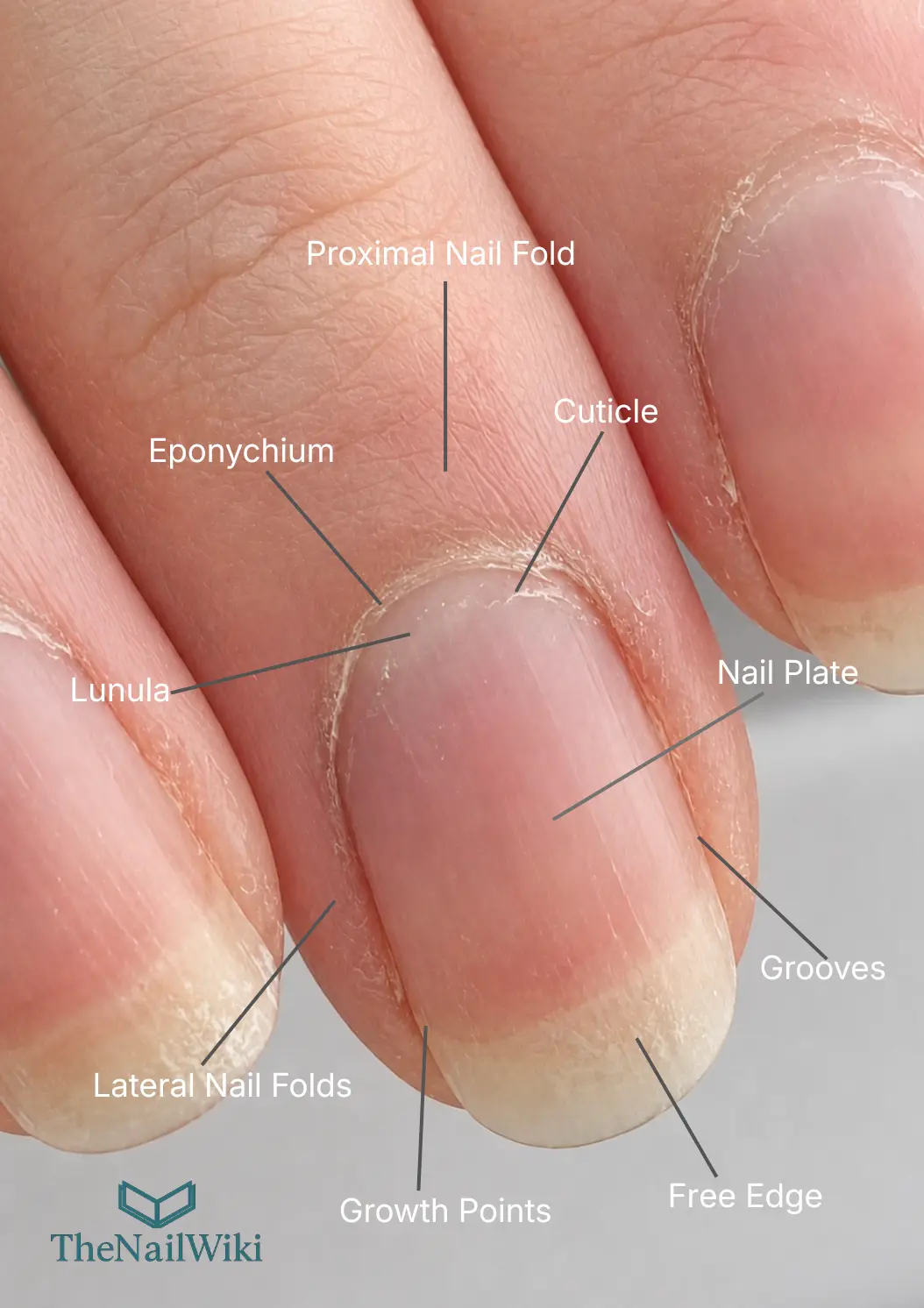
Where the fold turns back on itself, it creates the nail sinus — a shallow pocket into which the proximal portion of the nail plate is tucked as it emerges from the matrix and grows forward. The nail matrix sits directly beneath this fold, entirely protected from external contact. This makes the proximal nail fold the primary anatomical barrier between the matrix and the outside environment.
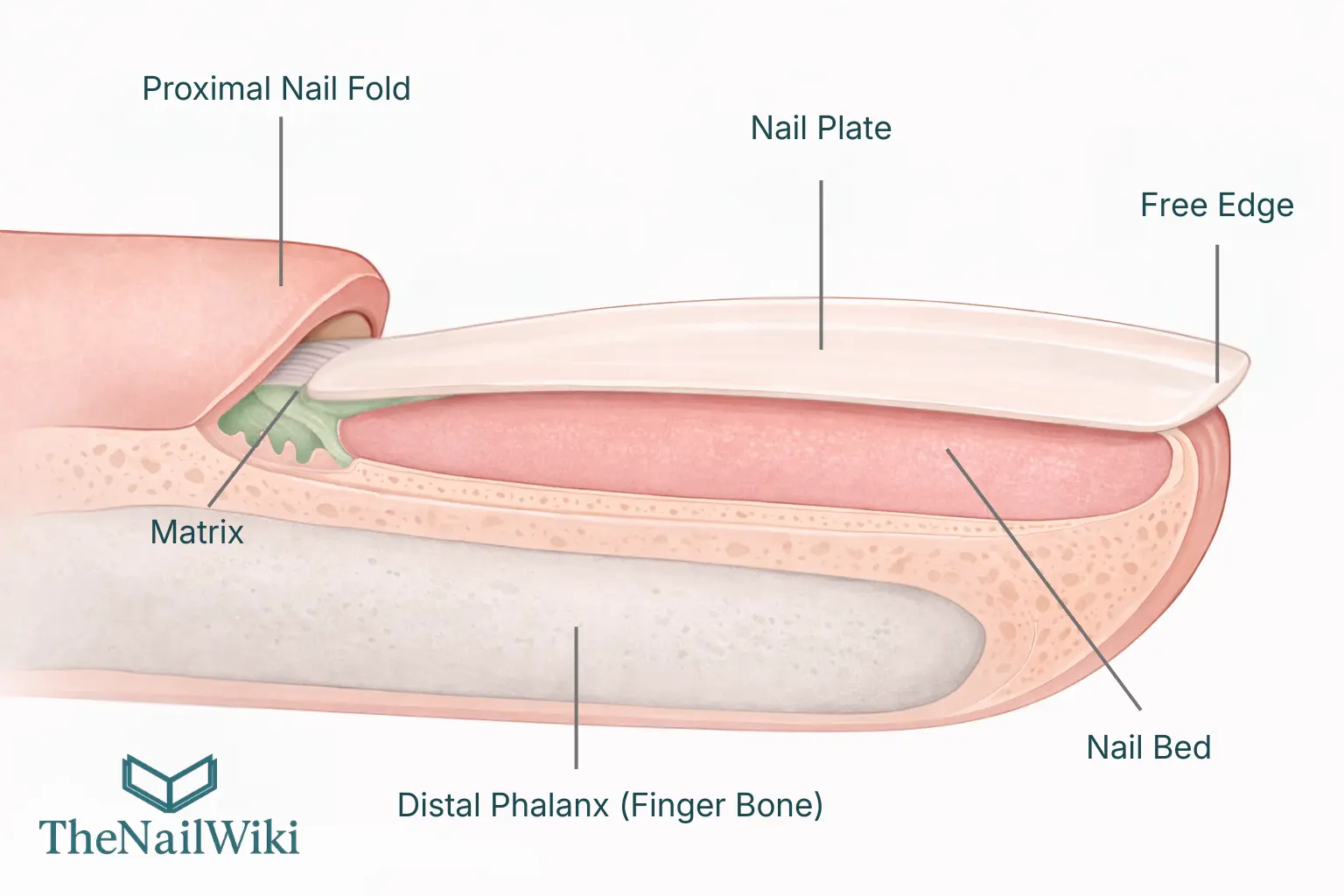
© TheNailWiki
The proximal nail fold is part of the nail fold system — the group of skin structures that border and protect the nail plate on three sides. The other two folds are the lateral nail folds, which run along the sides of the nail plate.
Function and Protective Role
Protecting the nail matrix
The nail matrix is the structure responsible for producing the nail plate. Any permanent damage to the matrix results in permanent changes to the nail plate it produces — abnormal growth, ridging, thinning, or complete loss of the nail in severe cases. Because the proximal nail fold sits directly over the matrix, it acts as the first line of defence against the mechanical forces, chemicals, and micro-organisms that the nail unit encounters daily.
This is why trauma to the proximal nail fold — whether from aggressive cuticle work, incorrect e-file technique, or repeated picking — can have consequences beyond the visible skin surface. Inflammation or damage transmitted through the fold to the matrix beneath can alter the nail plate being produced, producing ridges, white spots, or pitting that appear weeks later as the affected nail plate grows forward.
Sealing the nail unit
The proximal nail fold creates a physical seal at the base of the nail, closing the nail pocket from external contaminants. The risk to this seal comes from unskilled or uncontrolled work — not from professional technique performed with correct training and appropriate tools.
Guiding nail plate emergence
The nail plate exits the nail pocket from beneath the proximal nail fold as it grows forward. The position and integrity of the fold influences the angle and direction of the emerging nail plate. Chronic distortion of the proximal nail fold — for example from habitual picking at the cuticle area or repeated trauma — can gradually alter the growth direction and surface characteristics of the nail plate.
Relationship to the Eponychium and Cuticle
The proximal nail fold and the eponychium are closely related but distinct. The proximal nail fold is the fold of skin itself — the visible structure at the base of the nail. The eponychium is the thin layer of living skin produced by the ventral (inner) surface of the proximal nail fold, which extends a short distance forward onto the surface of the nail plate.
The cuticle — which is often confused with both of these structures — is the non-living remnant of the eponychium that adheres to the nail plate surface as it grows forward. The cuticle is dead tissue. The eponychium and the proximal nail fold are living tissue. Every professional can decide how they choose to approach this zone. In European nail technique and premium Russian manicure services, working on the eponychium is a standard part of the service. The depth and precision of that work is a matter of the technician’s training, technique, and the standard of service they are delivering.
For the full breakdown of these structures and how they relate to each other, see: Eponychium and Cuticle →
Role in Professional Nail Services
The proximal nail fold is the central focus of cuticle work in professional nail services — particularly in Russian manicure and e-file manicure. The depth and precision of cuticle and eponychium work in these services depends on the technician’s training and the standard of service being delivered. In premium e-file and Russian manicure services, full refinement of the cuticle zone — including the eponychium — produces the clean, defined result that sets this level of service apart. Every professional decides how they approach this zone based on their training and the result they are working towards.
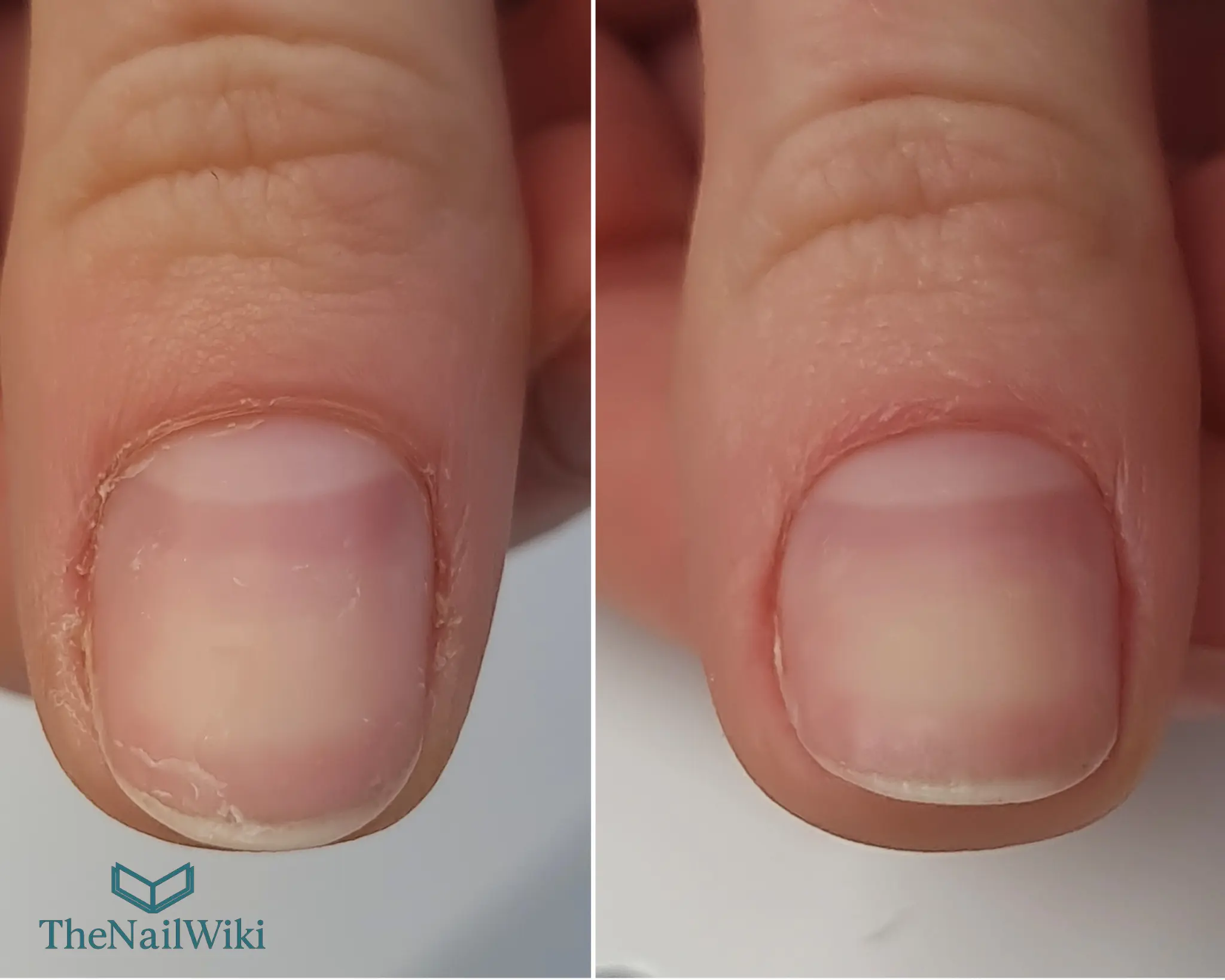
© TheNailWiki
Working on the proximal nail fold — key principles
- Work on the proximal nail fold requires training, precision, and correct technique — it is not beginner work
- The e-file must be used at the correct low speed with appropriate bits — primarily diamond bits for skin work
- Forcing or rushing this area risks transmitting trauma to the matrix beneath
- Any bleeding must be treated as a signal to reassess technique, pressure, or speed — not to continue regardless
In nail plate preparation before gel application, the proximal nail fold area is the zone where product flooding is most likely to occur. Product that flows onto the living skin of the fold — and remains in contact uncured — is one of the primary pathways to contact sensitisation. Precise application technique that keeps product off this structure is both a quality and a safety requirement.
Conditions Affecting the Proximal Nail Fold
Paronychia
Infection of the proximal nail fold — most commonly bacterial — presenting as redness, swelling, warmth, and sometimes pus at the base of the nail. Acute paronychia is a contraindication to nail services. See: Paronychia →
Pterygium unguis
In conditions such as nail lichen planus, the proximal nail fold skin can adhere to and advance over the nail plate — a condition called pterygium unguis. This is an irreversible change caused by scarring of the matrix beneath and must not be manipulated in the salon.
Habit tic deformity
Repeated picking or rubbing of the proximal nail fold — typically with the opposing thumb — causes chronic low-level trauma to the fold and the matrix beneath. The result is a characteristic central ridge or washboard pattern running the length of the nail plate. See: Habit Tic Deformity →
Ragged or overgrown cuticle
When the cuticle — the non-living remnant of the eponychium — is not regularly maintained, it accumulates on the nail plate surface and the proximal nail fold can appear thickened and unkempt. This is the most common presentation seen in salon clients and is entirely addressable through professional cuticle work. See: Eponychium and Cuticle →
Frequently Asked Questions
What is the difference between the proximal nail fold and the cuticle?
The proximal nail fold is the living fold of skin at the base of the nail. The cuticle is the non-living, dead skin that the fold sheds onto the nail plate surface. The fold is a structural component of the nail unit. The cuticle is a surface deposit that can be safely removed in professional nail services.
Why is the proximal nail fold important in Russian manicure?
Russian manicure focuses on producing a clean, defined cuticle area by removing dead cuticle from the nail plate surface and refining the skin around the proximal nail fold. The fold sits directly over the nail matrix — the structure that produces the nail plate — so precision and control in this zone are critical. Trauma to the proximal nail fold can affect the nail matrix beneath it and alter future nail growth.
Can the proximal nail fold be worked on?
Yes — working on the proximal nail fold is a standard part of professional e-file manicure and Russian manicure. It requires proper training, correct bit selection, appropriate low speed, and controlled technique. The proximity of the nail matrix beneath the fold means that precision matters — but the fold is a working area in professional nail services, not an untouchable zone.
What happens if the proximal nail fold is damaged?
Damage to the proximal nail fold disrupts its protective seal over the nail matrix. Inflammation or trauma transmitted to the matrix can alter the nail plate being produced — resulting in ridges, pitting, white spots, or abnormal growth appearing weeks later as the affected plate grows forward. Repeated damage over time can cause lasting changes to nail plate quality.
Professional training in nail anatomy and technique
Nail anatomy, cuticle work, e-file technique, and Russian manicure are taught as part of structured professional courses at Artistic Touch Nail Training Academy.
Related Library Pages
Nail Anatomy
- → Nail Plate
- → Nail Matrix
- → Nail Bed
- → Eponychium and Cuticle
- → Lateral Nail Folds
- → Lateral Nail Grooves
- → Hyponychium
- → Lunula
Services
Some linked pages are currently in development and will be published progressively.
Professional Disclaimer
The information on this page is provided for educational purposes and is intended to support the professional knowledge of nail technicians and nail educators. It does not constitute medical advice.
About the Author
Radina Ignatova
Professional Nail Expert since 2014 | International Nail Educator | Founder of TheNailWiki and Artistic Touch Nail Training Academy
Radina Ignatova is a Professional Nail Expert since 2014 and an International Nail Educator specialising in advanced nail preparation, e-file techniques, and professional salon safety. Based in Scotland, UK.
Read full bio →© 2026 TheNailWiki — an independent nail education resource. Content is safety-led and professionally informed.