
BIAB, Builder Gel and Structured Manicures: What the Terms Actually Mean
© TheNailWiki
Quick Summary
BIAB — short for “builder in a bottle” — is a brush-on builder gel that adds a thin, shaped layer of external structure over the natural nail. It sits between gel polish and hard gel: stronger and thicker than colour gel, yet more flexible and usually easier to remove than traditional hard gel. Most BIAB is soakable off in acetone, although harder file-off versions now exist.
The key point: BIAB, builder gel, hard gel and “structured manicure” are related but not interchangeable. One is a product format, one is the wider category, one describes strength and removal, and one is a service you perform with the product.
What Is BIAB?
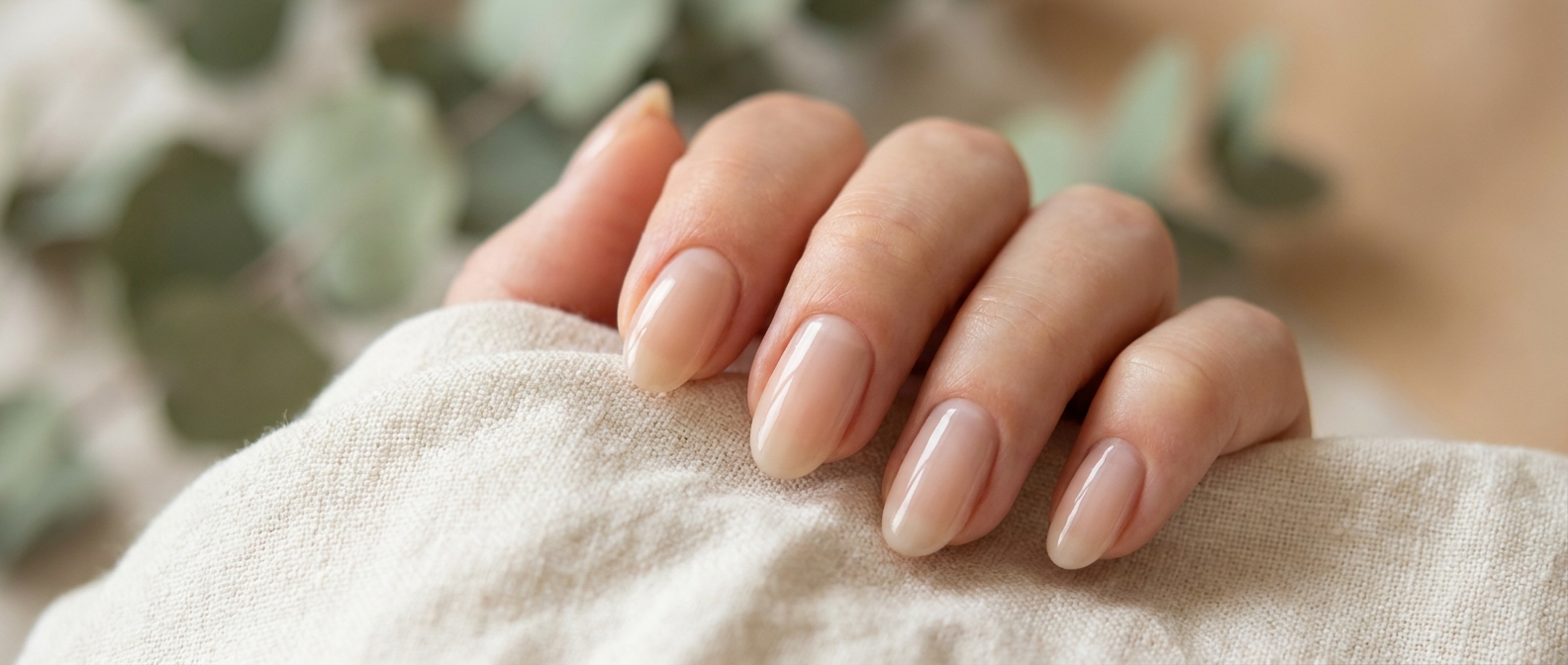
BIAB stands for “builder in a bottle”. It is a brush-on builder gel—thicker than standard gel polish—that is applied over the natural nail to create a reinforcing overlay, usually with a slight apex (a raised arch down the centre of the nail) that helps distribute pressure. In most formulations it is a soft, soakable gel, meaning it can be removed by soaking in acetone rather than filing.
Because it applies straight from a bottle with a brush, BIAB offers much of the strength of traditional builder gel with the convenience of gel-polish-style application. That combination is why it became so widely used for natural-nail overlays and “strengthening” manicures.
It is worth being precise from the start: BIAB reinforces the nail from the outside. It does not chemically change or biologically strengthen the natural nail plate—once the overlay is removed, the nail returns to its own baseline strength. That distinction is explained more fully in the library entry on what BIAB is and what it can realistically do.
Where the Term “BIAB” Comes From
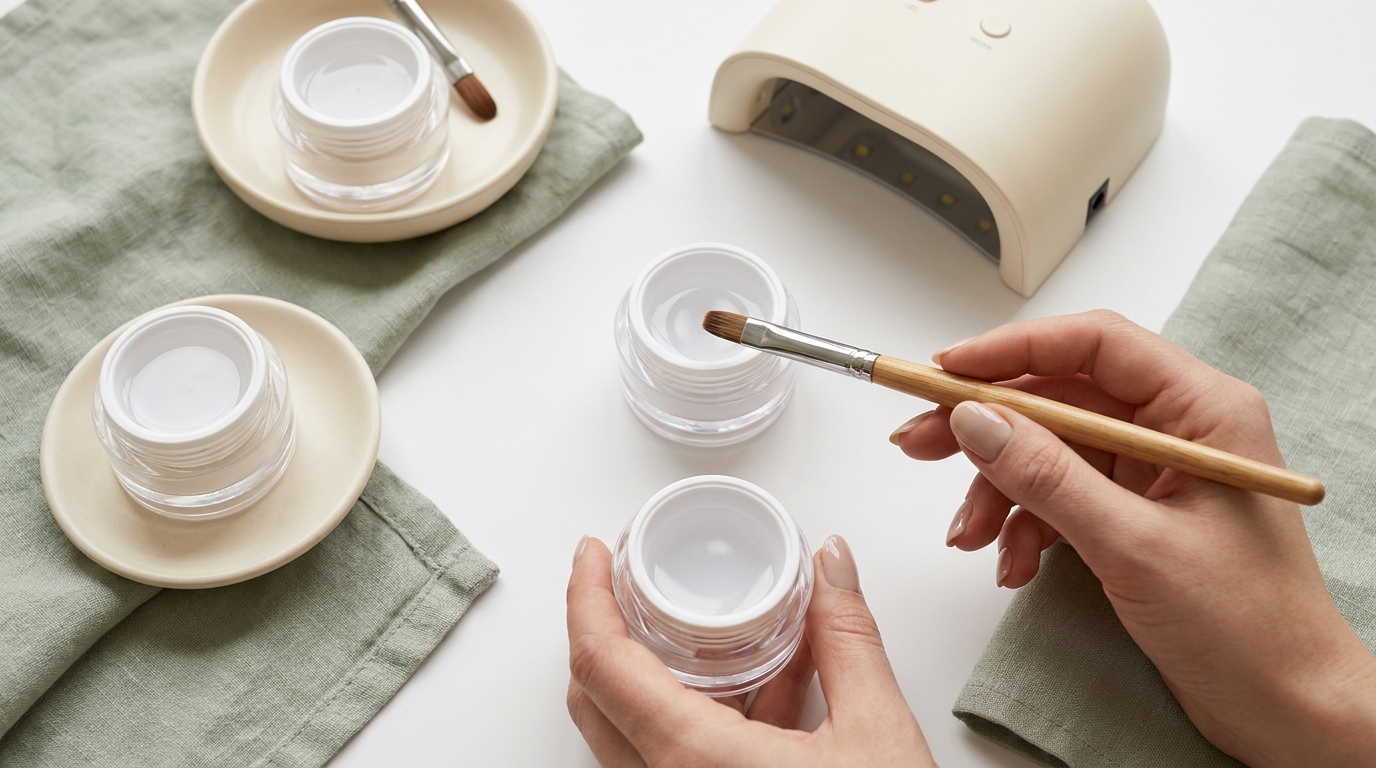
“BIAB” began as a brand name. Builder in a Bottle™ was introduced by the UK company The GelBottle Inc, and the abbreviation caught on so widely that it is now used generically for almost any brush-on builder gel—much as “Shellac” became shorthand for gel polish despite being a specific CND product.
This matters because “BIAB” does not describe one fixed chemistry. Different brands’ builder-in-a-bottle products vary in flexibility, wear time, whether they contain HEMA, and—importantly—how they are removed. The word tells you the format (a brush-on builder gel) and the general purpose (reinforcement), but not every technical detail. For cure times and removal method, the manufacturer’s own instructions remain the reliable source.
A quick definition
BIAB is a brush-on builder gel used to create a reinforcing overlay on the natural nail. It is a product format and a category of use—not a single recipe—so two products both called “BIAB” can behave quite differently.
Builder Gel: The Wider Category
Builder gel is the umbrella term. It refers to any gel used to build structure, thickness or reinforcement on the nail, as opposed to thin colour gel. BIAB is one type of builder gel—specifically, the brush-on, usually soakable kind. All BIAB is builder gel, but not all builder gel is BIAB.
Builder gels vary along several independent lines, which is why the single word “builder gel” can describe products that handle very differently:
- Consistency: from self-levelling gels that flow and settle on their own (most BIAB) to thick, sculptable gels that hold their shape (many pot gels).
- Format: supplied in a bottle with a brush, or in a pot applied with a brush or spatula. The container does not determine strength.
- Removal: soft/soakable (removed with acetone) or hard/file-off (reduced by controlled filing).
- Flexibility and length: some are designed for overlays and very short extensions; others are more rigid and made for longer extensions.
Because these characteristics vary independently, the name signals purpose rather than a full specification. This is the single most common source of confusion between BIAB, builder gel and hard gel: people treat one word as if it answered every question about a product, when it does not.
Hard Gel and Where It Differs
Hard gel is a builder gel that does not soften in acetone and must be filed off. It cures to a rigid, low-flex finish and can support longer extensions and a stronger apex than most BIAB.
The practical trade-off is straightforward. Hard gel offers maximum durability and length but requires filing for removal and more advanced application skill. Most BIAB, by contrast, is more flexible, soaks off, and is aimed at overlays and very short extensions—typically no more than 2–3mm. Some brands now make “hard BIAB” variants that file off like hard gel, which is a further reason to confirm the removal method rather than assume it from the name alone.
⚠️ Do not assume removal from the name
“BIAB” usually means a soak-off product, but hard-BIAB and hard-gel formulations must be filed off. Attempting to soak off a file-off gel wastes time and can tempt picking or peeling, which strips layers of the natural nail. Always check the specific product’s instructions, or ask which system your technician is using and how it should be removed.
What a “Structured Manicure” Actually Means
A structured manicure—sometimes called a builder-gel manicure or a structured overlay—is a service, not a product. It describes applying a builder gel, very often BIAB, over the prepared natural nail to create a reinforcing overlay with a defined apex, without adding meaningful length.
The word “overlay” is the key idea. Product is laid over the natural nail (or over a tip) to strengthen and protect it, rather than to extend it. A structured manicure therefore aims to reinforce the client’s own nails as they grow, giving a groomed, natural finish that is more durable than gel polish alone.
So the terms sit at different levels. BIAB and hard gel are products; a structured manicure is what you do with a builder gel. You can perform a structured manicure with BIAB or with another builder gel, and the result is an overlay rather than an extension. Understanding that difference is what lets you describe a service accurately, both to yourself and to a client.
BIAB vs Builder Gel vs Hard Gel
The table below compares the products most often confused. Remember that BIAB is itself a form of builder gel; it is separated out here because it is the specific brush-on, usually soakable version people mean when they say “BIAB”.
*A note on removal: most BIAB is soak-off, but “hard BIAB” variants exist that must be filed off like hard gel. The name does not confirm removal method on its own—always check the specific product.
Talking About These Terms Honestly
Clear language protects both nail health and client trust. Social media has blurred these terms considerably, so part of a professional’s job is gentle, accurate explanation. A few honest framings help most:
Explain that BIAB protects rather than permanently strengthens
BIAB shields the nail while it is worn and can help nails grow out with fewer breaks, but it does not biologically change the nail plate. If a client could not grow long, strong nails naturally before BIAB, removing it will reveal that same baseline. Framing it as protection, not a cure, prevents disappointment later.
Match the term to the length
BIAB is designed for overlays and very short extensions. When a client wants significant added length, that is a job for hard gel, polygel or acrylic—not a failing of BIAB, simply a different structural need. Naming the right system upfront sets realistic expectations about strength and wear.
Be clear about removal, and discourage picking
Confirm whether the product is soak-off or file-off, and explain why picking or peeling any builder gel damages the nail. Even when nails feel strong under an overlay, peeling removes layers of natural keratin. Where relevant, note that any gel can sensitise skin over time; HEMA-free options lower the risk but do not remove it, so patch testing has its place.
Continue in the Library
For definitions of these systems alongside nail anatomy, preparation and safety, browse the wider TheNailWiki library.
Frequently Asked Questions
What does BIAB stand for?
BIAB stands for “builder in a bottle”. The name describes the format: builder-gel strength packaged in a polish-style bottle with a brush, so it can be applied without spatulas or pot-gel handling.
Is BIAB the same as builder gel?
Not quite. BIAB is a type of builder gel—the brush-on, usually soakable kind. “Builder gel” is the wider category, which also includes thick sculptable pot gels and rigid file-off hard gels. All BIAB is builder gel, but not all builder gel is BIAB.
Is BIAB the same as gel polish?
No. Gel polish is a thin colour coat with no structural role. BIAB is thicker, builds a reinforcing overlay with a slight apex, and generally lasts longer. BIAB can also be used underneath gel polish to create a stronger, smoother foundation.
What is the difference between BIAB and hard gel?
Most BIAB is more flexible, soaks off in acetone, and suits overlays and very short extensions. Hard gel is rigid, must be filed off, and supports longer extensions with a stronger apex. “Hard BIAB” products blur this line, so always confirm the removal method for the specific product.
Does BIAB strengthen your nails?
BIAB provides structural strengthening from the outside—it forms a protective shell that resists flexing and breakage—but it does not biologically improve the nail plate. Once removed, the natural nail returns to its original strength, which is why ongoing overlays are needed for continued protection.
Can BIAB be used to make nails longer?
Only slightly. BIAB is intended for overlays and very short extensions of roughly 2–3mm. For medium to long added length, hard gel, polygel or acrylic provide the rigidity required; using BIAB beyond its design limits leads to breakage.
What is a structured manicure?
A structured manicure is a service in which a builder gel—often BIAB—is applied as a reinforcing overlay with a defined apex, without meaningfully extending the nail. It is a technique performed with a product, not a product in itself.
How do I know if my BIAB is soak-off or file-off?
Do not assume from the name. Most BIAB is soak-off, but hard-BIAB variants must be filed off. Check the manufacturer’s instructions or ask your technician which system was used, so removal is done correctly and safely rather than by picking or peeling.
Professional Disclaimer
This guide provides educational information on nail terminology and gel systems. It does not constitute professional training, certification, or medical advice. Nail technicians should complete comprehensive training and follow each manufacturer’s instructions for application, curing and removal before performing services on clients. When in doubt about any nail or skin condition, refer clients to qualified medical professionals for diagnosis and treatment.
Note: This article explains commonly-confused nail terminology for educational purposes. Product characteristics vary between brands, so always follow each manufacturer’s instructions. TheNailWiki is an independent educational resource and maintains editorial independence from all commercial interests.