
How Clients Choose a Nail Technician (and What It Means for Your Work)

© TheNailWiki
Quick Summary
Clients choose a nail technician mainly on trust signals they can assess before they ever sit in your chair. The biggest factors are visible hygiene and safety standards, a clear and honest portfolio, responsive communication, and dependable reliability.
The deciding factor is often practical: being easy to find and verify. When a client can locate your work, confirm you are qualified, and understand what you offer without effort, interest turns into a booking.
What Clients Actually Weigh
When someone decides how to choose a nail technician, they are rarely comparing acrylic systems or cuticle theory. They are looking for reassurance. Most clients cannot evaluate your technical structure or your product knowledge directly, so they judge you on the signals they can read: how clean your space looks, how consistent your work appears, how clearly you communicate, and how easy you are to find in the first place.
Understanding this shifts the question from "how do I get more clients?" to "what does a good client already look for, and am I making that easy to see?" The five factors below are the ones that repeatedly influence a decision, listed roughly in the order clients tend to weigh them.
Definition: Client trust signals are the observable cues — hygiene, portfolio, communication, reliability, and verifiability — that a potential client uses to predict the quality and safety of a service before they experience it.
Hygiene and Safety Signals Come First
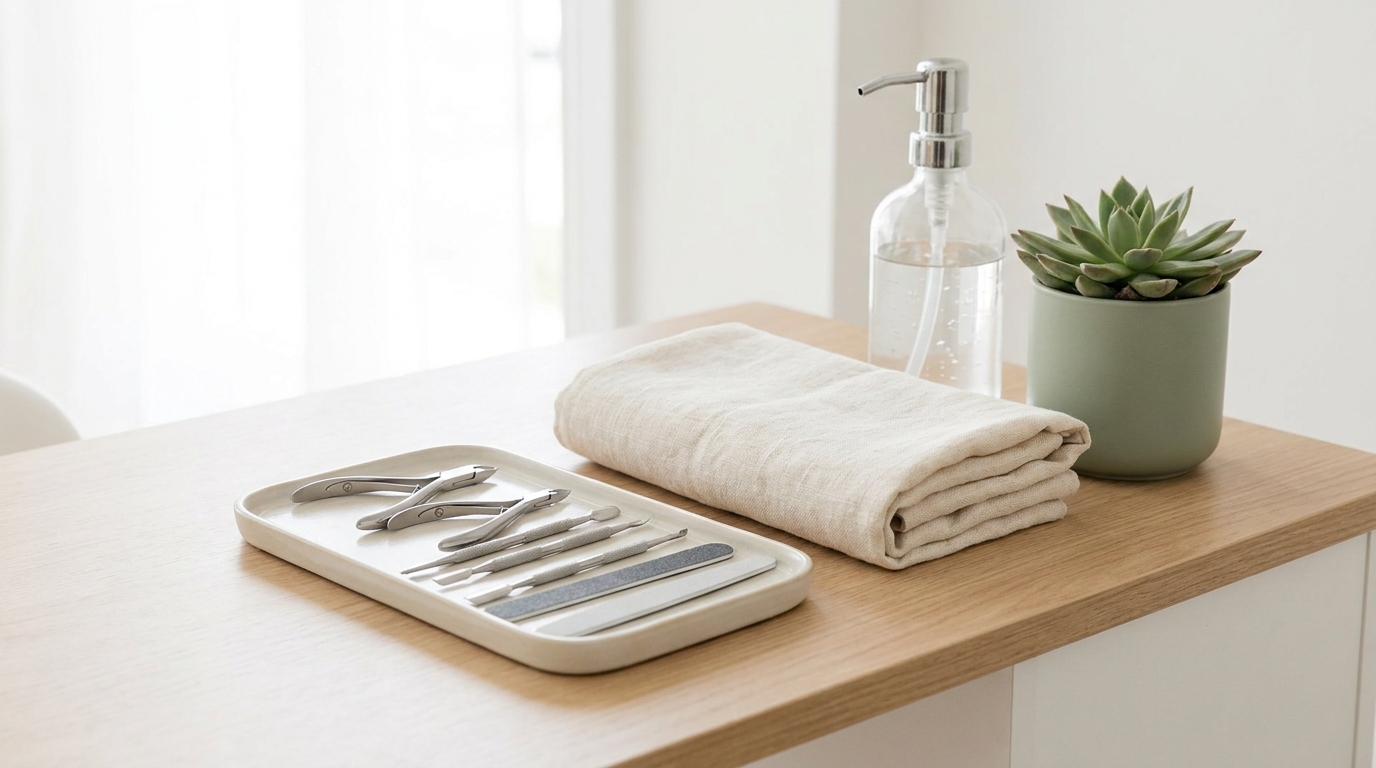
Hygiene is the first thing a thoughtful client notices and the fastest way to lose one. Increasingly, clients arrive already aware of the risks associated with poor sanitation, over-filing, and cutting living tissue, and they watch for how carefully those risks are managed. A technician who visibly prioritises safety signals competence in everything else.
The reassuring signals are usually small and cumulative:
- Visible sanitation: Implements taken from sealed pouches or disinfected in front of the client, single-use files where appropriate, and a clean, uncluttered workstation.
- Careful cuticle work: Softening and gently pushing back rather than aggressive cutting of living tissue, which clients increasingly recognise as a red flag.
- Honest contraindication checks: A willingness to pause or decline a service when a nail or skin condition needs medical attention builds more trust than pushing ahead.
- Comfort during the service: Attentiveness to heat spikes under gel, filing pressure, and skin contact tells a client their wellbeing matters more than speed.
Clients may not use the vocabulary of infection control, but they feel the difference between a rushed, careless service and a considered one. Safety is not a marketing angle; it is the foundation everything else rests on.
A Clear, Honest Portfolio
Once a client trusts that a technician is safe, they want to know whether the work suits them. A portfolio is where that decision is made — and an honest one converts better than an idealised one. Clients are looking for evidence that you can produce the result they want on hands like theirs.
What Makes a Portfolio Persuasive
Volume is less important than clarity and consistency. A focused portfolio that shows your genuine style, on real clients, in honest lighting will reassure far more than a large collection of heavily edited or borrowed images.
- Consistency across a set: Clean lines, even application, and symmetrical shaping across all ten nails matter more than one spectacular feature nail.
- Real hands and true colour: Natural light and unfiltered images let a client judge finish and tone accurately, which reduces disappointment later.
- A defined style: Showing the work you actually want to do helps the right clients self-select and quietly filters out mismatched requests.
- Structure over decoration: Well-photographed side profiles and apex shots reassure discerning clients that your foundations are sound, not just your art.
An honest portfolio also protects you. It sets accurate expectations, attracts clients who want your style, and reduces the friction of clients arriving with references that do not match what you offer.
Communication and Consultation
Communication is where many clients quietly make or break their decision, and it starts long before the appointment. A prompt, clear reply to an enquiry signals reliability. Vague pricing, slow responses, or a chaotic booking process all read as risk, no matter how good the work is.
During the service, the consultation is the moment that separates a confident professional from a technician who simply executes requests. Clients value a technician who listens, asks about lifestyle and nail history, and offers honest guidance — including saying when a requested length or design is not realistic for their nails.
Why the consultation matters
A thorough consultation does two things at once: it protects the client by surfacing contraindications and setting realistic expectations, and it demonstrates expertise. Clients remember feeling understood, and that feeling is what turns a one-off appointment into a loyal, returning relationship.
Clear communication after the appointment matters too. Simple aftercare guidance, honest advice on wear expectations, and a straightforward approach to rebooking all reinforce that the client made a sensible choice.
Reliability and Professionalism
Skill earns a first booking; reliability earns the second and every one after it. Clients are choosing someone they can depend on for months or years, so the unglamorous professional habits carry enormous weight in that decision.
- Punctuality and consistent timing: Running to schedule respects a client's day and signals a well-run business.
- Consistent results: Delivering the same standard every visit, not just on a good day, is what clients quietly test for.
- Transparent, stable pricing: Clear costs stated up front avoid the awkwardness that quietly loses clients.
- A calm approach to fixes: Handling the occasional lift or breakage without defensiveness builds more trust than pretending problems never happen.
Professionalism is cumulative. Each dependable appointment adds to a client's confidence, and that confidence is what generates the personal recommendations most technicians rely on to grow.
Being Easy to Find and Verify
All the trust signals above only matter if a client can find them. A technician who is genuinely excellent but effectively invisible loses out to one who is merely good but easy to discover, assess, and book. In practice, being findable and verifiable is often the deciding factor between two comparable professionals.
Clients increasingly do a small amount of research before booking, and they are reassured by anything that lets them confirm you are a real, qualified professional rather than taking it on faith. That verification instinct is growing, particularly for services involving skin and nail health.
This is one reason a searchable, verified profile can help. A neutral listing — such as a directory of verified nail professionals — gives a prospective client an independent place to confirm your credentials and see your work, separate from your own social media. For a client weighing up an unfamiliar name, that kind of third-party confirmation quietly lowers the perceived risk of booking.
The practical point stands regardless of where a client looks: the easier you make it to find your work, understand your services, and confirm you are qualified, the more often interest becomes a booking.
What This Means for Your Work
Seeing your practice through a client's eyes is a useful discipline. Most of these factors are within your control and cost little beyond attention and consistency. A few small shifts tend to make the largest difference:
- Make your hygiene visible. Do not just maintain high standards — let clients see them. Open sealed implements in view and keep your workstation calm and clean.
- Curate for honesty, not perfection. Show real, consistent work that reflects the style you want more of, in true light.
- Answer enquiries promptly and clearly. Treat the first message as part of the service, because to the client it is.
- Protect your reliability. Build buffers into your schedule so consistency is realistic, not aspirational.
- Make yourself easy to verify. Ensure a client who searches your name can quickly confirm you are qualified and see your work.
None of this replaces technical skill — it makes your skill legible to the people deciding whether to trust you with their hands. The best technician in an area is not always the busiest; the most choosable one often is.
Key Takeaways
- Clients decide on trust signals they can read before booking, not on technical detail they cannot assess.
- Visible hygiene and safety are the foundation; careless sanitation is the fastest way to lose a client.
- An honest, consistent portfolio converts better than an idealised one and attracts better-matched clients.
- Prompt communication and a genuine consultation turn first-time clients into loyal ones.
- Reliability earns repeat bookings and the personal recommendations that sustain a practice.
- Being easy to find and verify is frequently the deciding factor between two comparable technicians.
Related Articles
Frequently Asked Questions
What is the most important thing clients look for in a nail technician?
Hygiene and safety consistently come first. Clients may not use technical language, but they notice clean workstations, properly sanitised or single-use implements, and careful cuticle work. Visible safety standards reassure clients that a technician is competent and considerate, which underpins every other decision they make.
How much does a portfolio really influence a client's choice?
A great deal, because it is often the only evidence a client has before booking. A clear, honest portfolio that shows consistent work on real hands in true light is more persuasive than a large but idealised collection. It sets accurate expectations and helps the right clients recognise your style.
Does communication affect whether a client books?
Yes, frequently before the appointment even happens. Prompt, clear replies and transparent pricing signal reliability, while slow or vague responses read as risk. During the service, a genuine consultation that listens and offers honest guidance is often what turns a first-time client into a returning one.
Why does being easy to find and verify matter so much?
Because trust signals only work if a client can locate them. Many clients research a name before booking and are reassured by anything that confirms a technician is real and qualified. A searchable, verified profile provides independent confirmation that lowers the perceived risk of booking someone new.
How can a nail technician become more choosable without lowering prices?
Focus on the signals clients actually read: make hygiene visible, curate an honest portfolio, reply promptly, protect your reliability, and make yourself easy to verify. These cost attention rather than money and make your existing skill legible to the people deciding whether to trust you.
Professional Note
This article offers editorial guidance on client decision-making and professional practice. It does not constitute business, legal, or medical advice. Local licensing, insurance, and hygiene regulations vary; nail technicians should follow the requirements and professional standards applicable in their own area.
Note: This article reflects professional experience and general nail industry practice. TheNailWiki is an independent educational resource and maintains editorial independence from all commercial interests.