
Building a Nail Portfolio That Earns Trust
Quick Summary
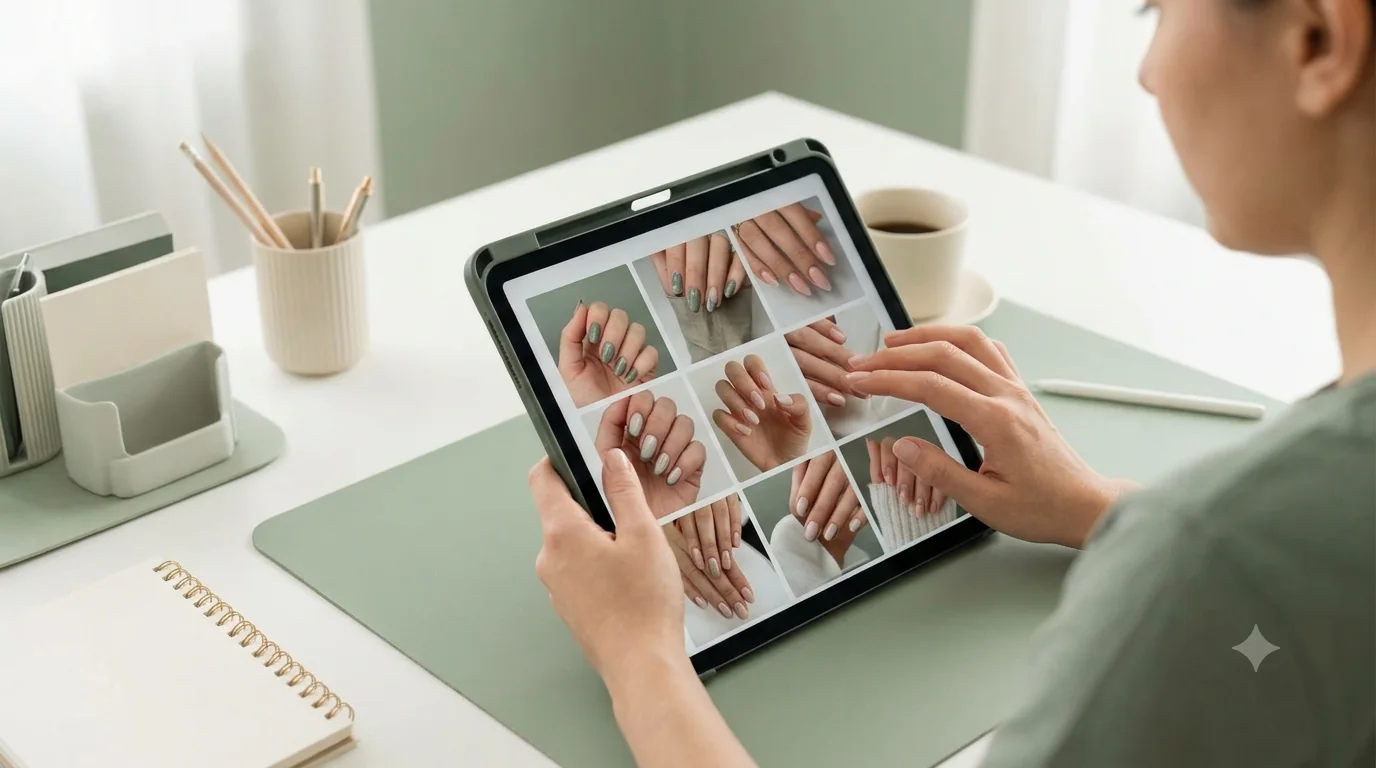
You build a strong nail portfolio by making it answer one honest question: what will this client actually get if they book you? Document real work in true light, show consistency across a full set rather than only your most eye-catching nail, and keep the collection current so it reflects your standard today.
The quality that matters is trust, not volume. A focused, honest portfolio that sets accurate expectations converts better than a large, idealised one — because it lets the right client recognise your work and picture their own hands in it.
What a Portfolio Is Really For
A nail portfolio is often treated as a highlight reel — a collection of your most impressive sets, gathered to prove how far your skill can reach. That instinct is understandable, but it quietly misreads the audience. A prospective client is not scrolling to be dazzled. They are trying to answer a practical, slightly anxious question before they part with their time and money: if I book this person, what will my hands actually look like?
Seen that way, a portfolio is not a trophy cabinet. It is a promise. Its job is to reduce the uncertainty a client feels about an unfamiliar name, and to let the right person recognise their own taste in your work. The most useful portfolios are built for clarity and honesty rather than spectacle, because those are the qualities that turn a curious browser into a confident booking.
Definition: A nail portfolio is a curated, visual record of a technician's work that a potential client uses to predict the finish, style, and standard they can expect before experiencing the service themselves.
Document the Work Honestly
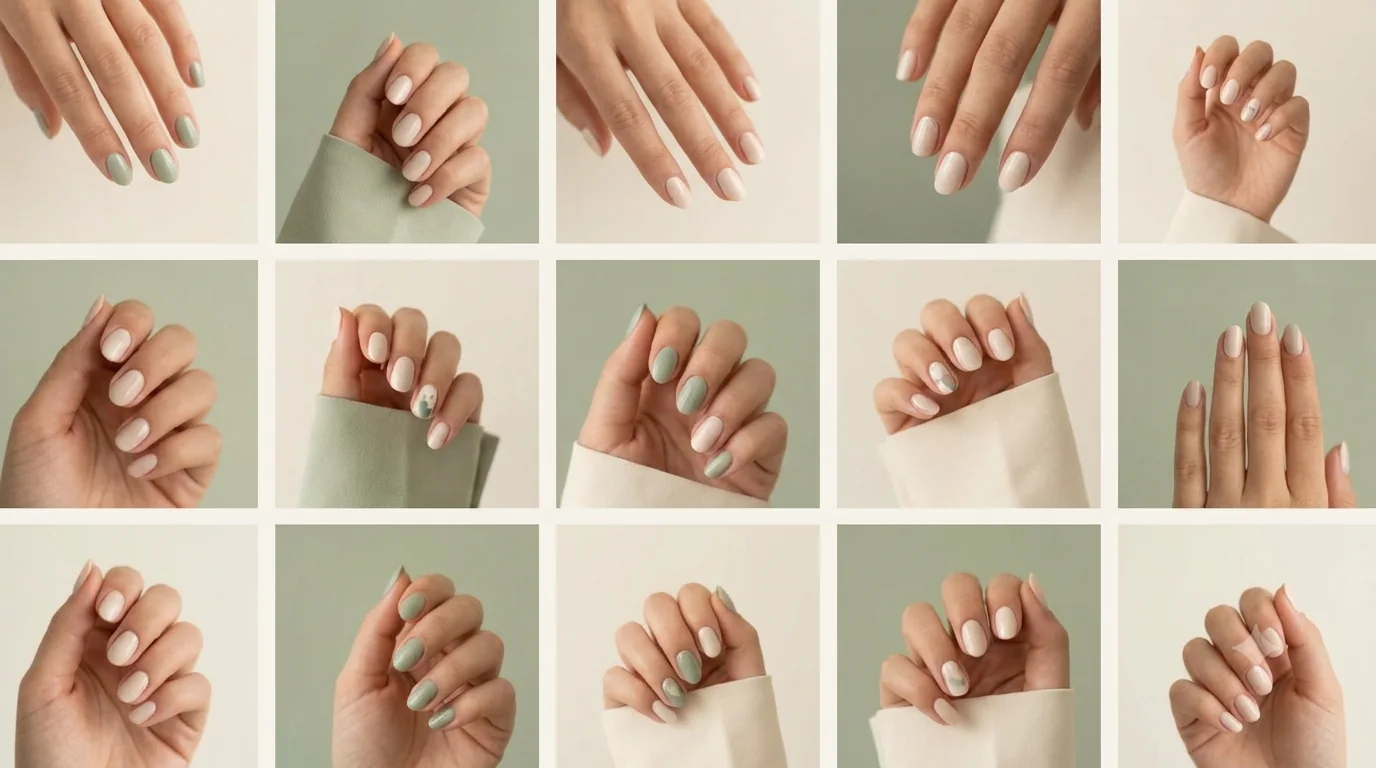
Trust is built or broken in the gap between a photograph and the real result. Heavy filters, borrowed images, and flattering angles may earn a moment's admiration, but they set an expectation the appointment cannot meet — and a disappointed client is far more expensive than a cautious one. Honest documentation is the single most important habit behind a portfolio that earns trust rather than buys attention.
Honesty here is largely a matter of consistent, unglamorous practice:
- True light and true colour: Natural or neutral lighting lets a client judge finish and tone accurately. Warm filters and colour correction may look appealing on screen, but they misrepresent what the client will wear.
- Real client hands: Work photographed on a range of genuine hands — different skin tones, nail beds, and finger lengths — reassures far more than a single idealised hand model. Clients look for someone who looks like them.
- Only your own work: Every image should be a set you created. Reposting inspiration or trainer demonstrations as your own erodes trust the moment a client notices the finish does not match.
- Minimal retouching: Tidying a stray reflection is reasonable; smoothing away cuticle lines, reshaping nails, or erasing the natural texture of skin quietly turns a record into a fiction.
An honest portfolio also protects you. When the photograph is truthful, the client who books already knows what they are choosing, arrives with realistic expectations, and is far more likely to leave satisfied. Accuracy is not a limitation on your marketing — it is the mechanism that makes it work.
Range vs Consistency
One of the hardest judgements in building a portfolio is how much variety to show. Too narrow, and a client cannot tell whether you can adapt to them. Too broad, and your identity blurs into a scrapbook of every trend you have ever attempted. The resolution is to think about range and consistency as two different signals, each doing a specific job.
What Consistency Proves
Consistency is the more important of the two, and the more overlooked. A discerning client is reassured less by one spectacular feature nail than by seeing that all ten nails in a set are even, cleanly finished, and symmetrically shaped — and that the same standard repeats across different sets. Consistency is what tells a client that a good result was not luck.
- Whole sets, not single nails: Photograph the full hand so a client can see uniformity across all ten nails, not just your best one.
- Structure on show: Side profiles and apex shots reassure clients who care about longevity that your foundations are sound, not only your surface finish.
- A repeatable standard: Several sets at a similar level of finish say more about what a client can expect than one outlier ever could.
What Range Should — and Shouldn't — Do
Range exists to show adaptability within your identity, not to prove you will do anything. A portfolio that leans clearly towards, say, natural structured overlays and soft everyday colour tells the right clients they have found their technician — and quietly filters out mismatched requests. Showing a defined style is not a limitation; it is how the clients you actually want learn to recognise you.
A practical way to balance the two is to let consistency carry the bulk of the portfolio and use range as accents. Most of what you show should represent the work you do most often and want more of. A smaller number of pieces can demonstrate reach — an intricate design, a longer set, a seasonal look — without shifting the centre of gravity away from your signature.
What to Leave Out
Curation is as much about subtraction as selection. Every weak or off-brand image dilutes the average impression a client forms, and clients judge a portfolio by its weakest visible work as readily as its strongest. Removing the wrong pieces often improves a portfolio more than adding new ones.
Worth removing
Blurred or poorly lit photographs, sets that no longer reflect your current standard, heavily filtered images, work in a style you no longer wish to attract, and anything you did not create yourself. If a piece would make you hesitate to say "this is representative of my work," it belongs out of the portfolio.
There is also a quieter category worth leaving out: work that photographs well but sits outside the service you genuinely want to be booked for. Including it may attract enquiries, but they will be the wrong enquiries — clients expecting something you would rather not do, at a price that no longer suits you. A portfolio is a filter as much as a showcase, and what you exclude shapes the bookings you receive.
Keeping a Portfolio Current
Skill develops, and a portfolio that stops moving quietly misrepresents you. Work from two or three years ago rarely reflects a technician's current standard, and a client cannot tell that the dated set at the top of your feed is not the level you would deliver today. Keeping a portfolio current is less about constant novelty and more about steady honesty.
A light, regular routine keeps it accurate without becoming a burden:
- Photograph consistently: Capture a few sets a week under the same conditions, so you always have recent, honest images to draw from.
- Review periodically: Every few months, retire images that no longer match your standard and promote stronger recent work in their place.
- Let it follow your direction: As your style or the services you offer shift, allow the portfolio to move with them rather than clinging to older work out of sentiment.
A current portfolio does something subtle but valuable: it signals an active, working professional. Recent, dated work reassures a client that you are practising regularly and that the standard they are looking at is the standard they will actually receive.
Where Your Portfolio Lives
A portfolio only earns trust if the person deciding whether to book can actually find it, view it in one place, and read it in context. Scattered across a busy social feed, your best work competes with reposts, personal updates, and the algorithm's own priorities. A client trying to assess you has to dig for the evidence — and effort at that stage quietly costs bookings.
This is why it helps to have a settled home for your work: a professional profile where your portfolio, your qualifications, and a clear description of your services sit together, presented as a considered whole rather than an endless scroll. A structured verified professional profile gives your portfolio a stable place to live and be found, and pairs the visual evidence with independent confirmation that you are a real, qualified professional. For a client weighing an unfamiliar name, seeing the work and the credentials side by side does more to lower the perceived risk of booking than either could alone.
Wherever it lives, the principle holds: the easier you make it to view your work as a coherent body, understand your style, and confirm you are qualified, the more reliably an honest portfolio does its job — turning quiet interest into a confident decision.
Key Takeaways
- A portfolio is a promise, not a trophy cabinet — its job is to show a client what they will actually get.
- Honest documentation in true light on real hands earns more trust than filtered or borrowed images ever will.
- Consistency across full sets proves your standard is reliable; range should show adaptability within a defined style.
- Clients judge a portfolio by its weakest visible piece, so what you remove matters as much as what you add.
- Keeping the collection current signals an active professional working at the standard shown.
- Giving your portfolio a settled, findable home lets it be viewed and verified in one place.
Related Articles
Frequently Asked Questions
How many photos should a nail portfolio have?
There is no fixed number, and volume is the wrong target. A focused portfolio of strong, consistent sets that clearly represent your style is more persuasive than a large collection of uneven quality. It is better to show fewer pieces you are genuinely confident in than to pad the count with work that dilutes the overall impression.
Should I only show my most impressive nail art?
No. Most clients are trying to picture their own everyday hands, so a portfolio weighted only towards elaborate art can misrepresent what you mainly do. Lead with the work you do most often and want more of, and use standout pieces as occasional accents that show range rather than as the whole story.
Is it acceptable to use filters on portfolio photos?
Light, neutral editing to correct exposure is reasonable, but heavy filters that alter colour, smooth texture, or reshape nails are best avoided. They set an expectation the appointment cannot meet, and the gap between the image and the result is exactly where client trust is lost. True colour and true light serve you better in the long run.
How often should I update my nail portfolio?
A light routine works best: photograph a few recent sets regularly and review the collection every few months, retiring anything that no longer reflects your current standard. This keeps the portfolio accurate as your skill develops and signals that you are an active professional working at the level shown.
Where is the best place to keep a nail portfolio?
Wherever a prospective client can view it as a coherent whole rather than digging through a busy feed. A settled home — such as a professional profile that presents your work, qualifications, and services together — makes your portfolio easy to find and easy to verify, which is often what turns interest into a booking.
Professional Note
This article offers editorial guidance on portfolio building and professional practice. It does not constitute business, legal, or medical advice. When photographing clients' hands, obtain appropriate consent, and follow the licensing, insurance, and hygiene requirements applicable in your own area.
Note: This article reflects professional experience and general nail industry practice. TheNailWiki is an independent educational resource and maintains editorial independence from all commercial interests.