
How to Get Your Nail Work Noticed and Featured
Quick Summary
Getting your nail work noticed comes down to producing a consistent body of work, documenting it clearly, and putting it in front of the right audiences — clients, peers, editors, and competition judges — through steady, honest effort rather than gimmicks. Visibility follows credibility, not the other way around.
The most reliable routes are practical: photograph your sets well, submit genuine news and features to industry outlets, enter competitions, and build real professional relationships over time. None of these require luck or a large following — they reward technicians who show up consistently.
What Getting Noticed Really Means
Most technicians who ask how to get their nail work featured are really asking two things at once: how to be seen, and how to be taken seriously. Those are related but not identical. Being seen is about reach; being taken seriously is about credibility. Lasting visibility is built when the two grow together, so that the people who discover your work also have a reason to trust it.
It helps to be honest about what a feature actually is. Editors, competition judges, and directory reviewers are not looking for the loudest account — they are looking for work that is clean, consistent, and genuinely their own. A single striking image rarely earns a feature. A recognisable standard maintained across many sets does.
Definition: Getting featured means having your work selected and shown by a third party — a magazine, an industry outlet, a competition, or a verified directory — rather than only shared by you. That external selection is what carries weight, because it signals that someone with no obligation to promote you chose to.
Build a Consistent Body of Work
Before you think about where your work appears, it is worth making sure the work itself is ready to be seen. A body of work is not a scattered collection of your best-ever nails — it is a coherent set that shows what you reliably do, in a style that is recognisably yours. Consistency is the quality that editors and judges notice first, because it is the hardest to fake.
Aim to develop and document work that demonstrates the following:
- A defined style: A clear point of view — whether that is precise minimalist structure, detailed hand-painted art, or a particular finish — helps people remember and describe your work, which is what leads to referrals and features.
- Sound structure, not just decoration: Clean apex placement, even application, and symmetrical shaping across all ten nails read as professional competence. Well-shot side profiles reassure knowledgeable viewers that your foundations are solid.
- Range within focus: Show that you can execute your style across different lengths, shapes, and skin tones without losing quality, rather than repeating one identical design.
- Volume over time: A steady stream of considered work signals reliability. One exceptional set can be a fluke; fifty consistent ones are a standard.
Treat this as a long game. The technicians who eventually get featured are usually the ones who were quietly building a consistent portfolio long before anyone was watching.
Document and Photograph Your Work Properly
Excellent nails photographed badly will not get featured, because the person selecting can only judge what they can see. Documentation is not vanity — it is the medium through which your skill travels. For most technicians, improving how they capture their work has a bigger effect on visibility than any change to the work itself.
Photography Fundamentals
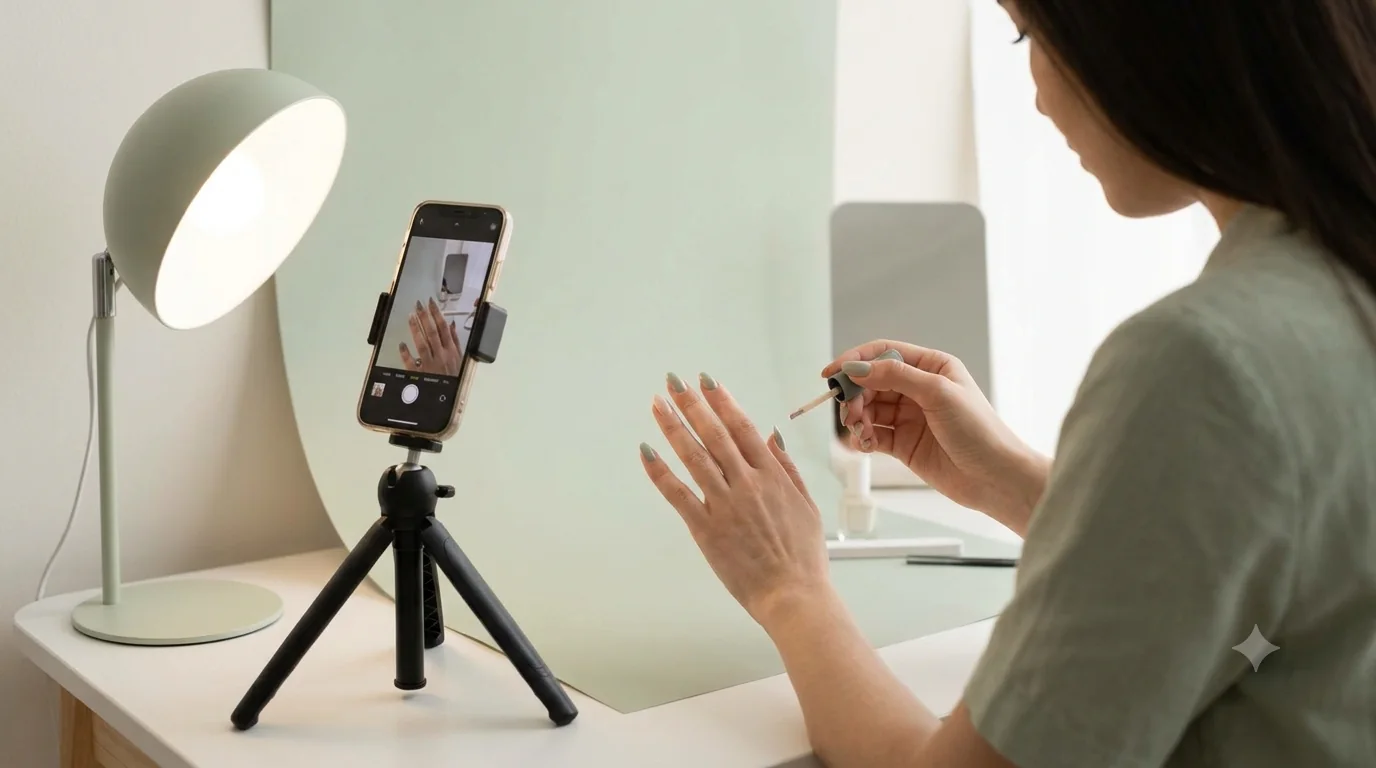
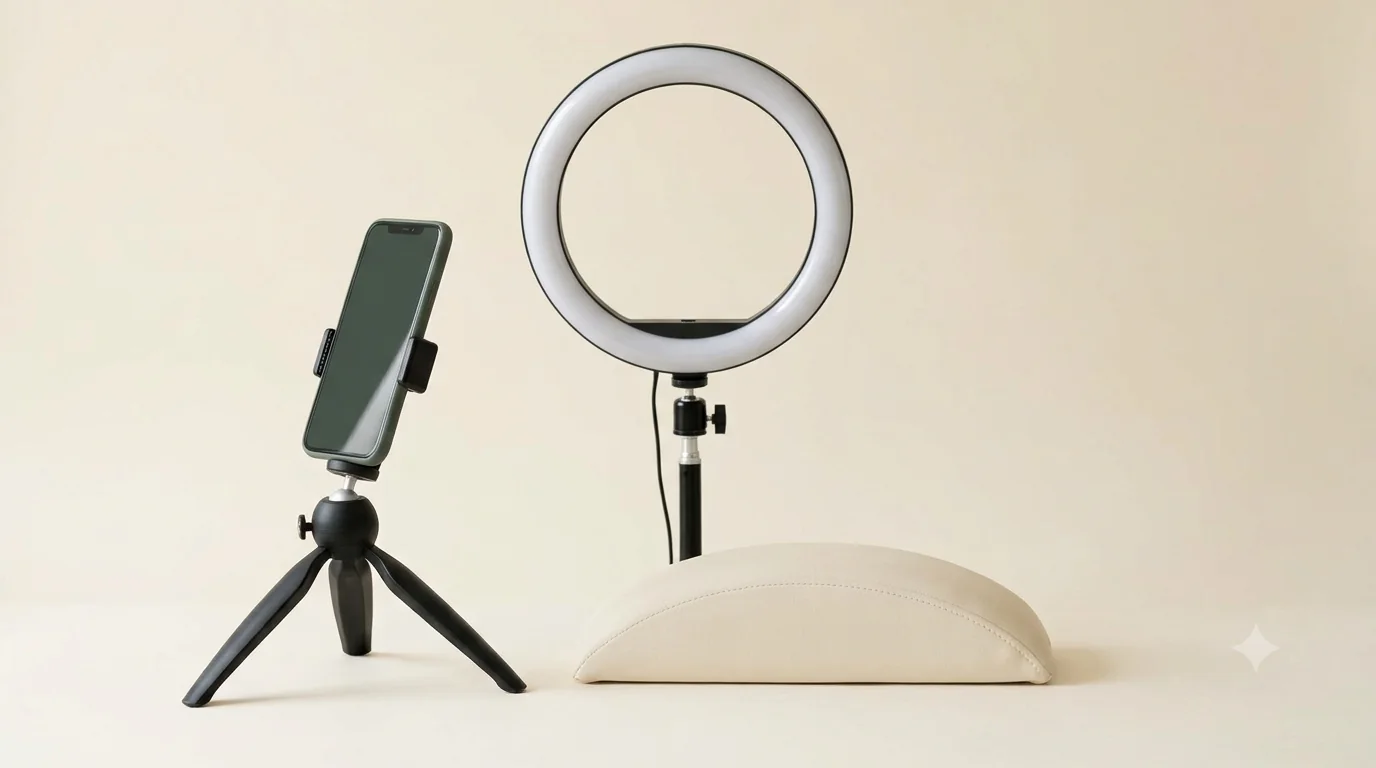
You do not need professional equipment. Consistent, honest images taken with care will serve you far better than heavily filtered ones. The priorities are simple and repeatable:
- Even, natural light: Soft daylight shows true colour and finish. Avoid harsh direct light and heavy artificial tints that misrepresent the result.
- Clean, uncluttered backgrounds: A plain, neutral surface keeps attention on the nails and looks consistent across a set of images.
- Multiple angles: Top-down, side profile, and a relaxed hand pose let viewers assess shape, structure, and finish together.
- Sharp focus and tidy cuticles: Clean surrounding skin and a crisp image signal care. Publications rarely feature work where the detail is lost.
- Minimal editing: Correct brightness and framing if needed, but avoid smoothing that erases texture. Editors value images that reflect what a client would actually receive.
Keep an Organised Archive
Opportunities to submit often arrive with short notice, and the technicians who respond are the ones who already have material ready. Keep your best images organised, in high resolution, and grouped by style or technique. Where relevant, retain before-and-after shots and note the products or methods used, so you can describe a set accurately if a feature calls for context.
A note on client permission
Always confirm that a client is happy for images of their hands to be shared or submitted publicly, ideally in writing as part of your consultation process. Respecting consent is both good practice and a mark of the professionalism that makes people comfortable working with you and featuring you.
Submit Your Work to Industry News and Features
A common misconception is that features happen to you. In practice, a great deal of coverage begins with a technician putting their work forward. Editors and industry outlets are continually looking for material, and many genuinely useful stories go unnoticed simply because no one submitted them. Learning to pitch your own work, professionally and without exaggeration, is one of the most underused routes to visibility.
You do not need a dramatic announcement to be worth featuring. Relevant, honest submissions might include a distinctive technique you have refined, a competition result, a genuine industry observation, or a well-documented set that illustrates a current trend. When you do reach out, make it easy for the recipient: a clear, concise message, accurate context, and a small selection of your strongest, correctly sized images.
If you want a straightforward starting point, industry platforms that accept technician submissions are a natural place to share genuine news and features — TheNailWiki, for example, has a page for submitting nail industry news. Treat any outlet the way you would treat a client: be honest about what you are offering, and let the quality of the work speak.
What makes a submission easy to say yes to
A clear subject line, a two or three sentence explanation of why the work is relevant now, high-resolution images that need no rescuing, and accurate credits. The less work you create for the person reviewing, the more likely your submission is to be used.
Enter Competitions and Industry Events
Competitions are one of the most credible ways to have your work recognised, because the judging is independent and the standard is public. Even where you do not place, entering pushes your technique forward and produces polished, well-documented pieces you can use elsewhere. A competition result is also exactly the kind of concrete, verifiable achievement that outlets are happy to feature.
Approach competitions as professional development first and visibility second:
- Read the criteria carefully: Entries are judged against a defined brief. Understanding exactly what is being assessed matters as much as raw skill.
- Start with accessible formats: Photo-based and online competitions lower the barrier to entry and let you build confidence before larger live events.
- Use feedback: Where judges provide notes, treat them as free expert guidance on where your work can improve.
- Attend industry events: Trade shows and educational events are where much of the profession's networking and recognition quietly happens, in person.
Recognition earned in front of impartial judges tends to carry further than self-promotion, precisely because you did not award it to yourself.
Build Genuine Professional Relationships
A surprising amount of visibility travels through people rather than platforms. Educators, brand representatives, editors, and fellow technicians talk to one another, and they recommend work they respect. These relationships cannot be rushed or transacted, but they can be built steadily by being generous, reliable, and genuinely interested in the craft.
Engage with the wider profession honestly: share what you have learned, credit others properly, support peers, and take part in the community without expecting an immediate return. Technicians who are known as decent, knowledgeable, and dependable are the ones who come to mind when someone is asked to recommend work for a feature. Reputation, in this sense, is simply the sum of how you show up over time.
Being easy to find and verify supports all of this. When someone wants to point to your work, a clear, professional presence — including a verified profile in a reputable directory of nail professionals — makes it simple for them to confirm who you are and see what you do.
Common Mistakes That Hold Technicians Back
Talented technicians often struggle to get noticed not because of their work, but because of avoidable habits around how they present and share it. A few recurring patterns are worth naming honestly.
- Chasing gimmicks over substance: Attention won through novelty rarely converts into lasting credibility. Editors and judges can tell the difference between a trick and a technique.
- Over-editing images: Heavy filtering may look striking, but it undermines trust and sets expectations you cannot meet on real hands.
- Waiting to be discovered: Assuming good work will be found on its own means missing the submissions, entries, and introductions that actually create features.
- Inconsistency: Sporadic bursts of activity followed by long silences make it hard for anyone to form a clear impression of your standard.
- Neglecting the basics: Poor lighting, cluttered backgrounds, or untidy surrounding skin can quietly disqualify excellent work before it is even considered.
None of these require talent to fix — only attention. Removing them is often the fastest way to let existing skill be seen clearly.
Key Takeaways
- Visibility follows credibility — a consistent, recognisable body of work is what earns lasting attention.
- How you photograph and document your work often affects your visibility more than the work itself.
- Many features begin with a technician submitting their own work; honest, well-prepared pitches are rarely made and often welcomed.
- Competitions offer independent, credible recognition and produce polished material you can share elsewhere.
- Genuine professional relationships and an easily verified presence quietly drive much of the industry's recognition.
- Avoid gimmicks, over-editing, and inconsistency — they obscure good work rather than promote it.
Related Articles
Frequently Asked Questions
Do I need a large social media following to get my nail work featured?
No. A large following can help work travel, but it is not what editors, judges, or directory reviewers select for. They look at the quality and consistency of the work itself and how clearly it is presented. Many technicians with modest audiences are featured because they submitted strong, well-documented work at the right moment.
How do I approach an outlet about featuring my work?
Keep it professional and concise. Explain briefly why the work is relevant now, attach a small selection of your strongest high-resolution images, and include accurate context and credits. Make it as easy as possible for the recipient to use your submission. Honesty matters more than persuasion — never overstate what the work is.
Are nail competitions worth entering if I am unlikely to win?
Yes. Competitions are professional development as much as recognition. Working to a defined brief sharpens your technique, produces polished pieces you can use elsewhere, and any feedback from judges is valuable guidance. Placing is a bonus; the improvement and the material you gain are worthwhile regardless of the result.
How important is photography for getting noticed?
Very. Photography is the medium through which your work is judged by anyone who cannot see it in person. Even and natural lighting, clean backgrounds, sharp focus, and minimal editing usually make a bigger difference to your visibility than any single change to the nails themselves. You do not need expensive equipment, only consistency and care.
How long does it take to get your nail work noticed?
There is no fixed timeline, and it is best treated as a long game. Recognition tends to build gradually as you accumulate a consistent body of work, document it well, and put it forward steadily through submissions, competitions, and genuine professional relationships. The technicians who are eventually featured are usually those who were quietly building their standard long before.
Professional Note
This article offers editorial guidance on building visibility and getting nail work featured. It does not constitute business, legal, or marketing advice, and it makes no guarantees about coverage or results. Individual outcomes vary; nail technicians should follow the submission requirements, consent practices, and professional standards applicable in their own area.
Note: This article reflects professional experience and general nail industry practice. TheNailWiki is an independent educational resource and maintains editorial independence from all commercial interests.