Why Being Found Locally Matters for Nail Techs
Quick Summary
Local visibility matters because nail appointments are, by nature, local decisions. Most people looking for a manicure want someone close to home or work, so the majority begin with a location-based search — typing something like "find a nail tech near me" — long before they compare skill or style.
The practical takeaway: clients find a nail tech near them through search engines, maps, social media, and directories. If your name, location, and services show up consistently in those places, you are in the running; if they do not, excellent work alone rarely closes the gap.
Why Local Visibility Matters
A nail appointment is a local decision before it is anything else. However good your work is, a client is not going to travel across the country for it — they want someone within a comfortable distance of home, work, or the school run. That single fact shapes how almost every new client finds you: they start with location, then narrow down on trust and style.
This is why local visibility carries so much weight. A technician who is genuinely excellent but hard to find nearby quietly loses bookings to one who is merely good but easy to discover on a map or in a search. Being findable is not a substitute for skill, but it is the thing that lets your skill be chosen in the first place.
Definition: Local visibility is how easily a nearby client can discover you, confirm where you are based, and understand what you offer — through search engines, maps, social media, and directories — without already knowing your name.
How Clients Search for a Nail Tech Nearby
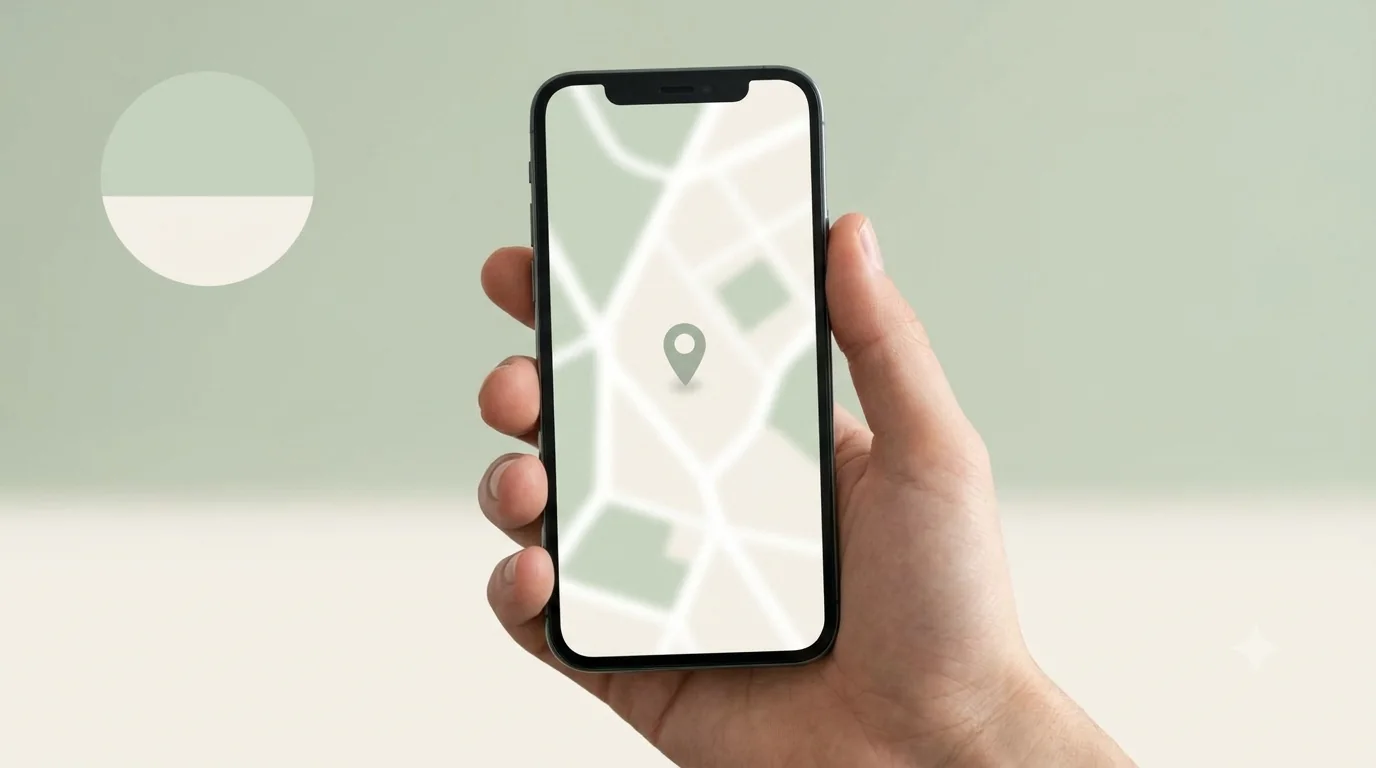
Understanding how someone actually looks for a nail tech makes the rest of this straightforward. Most searches follow a familiar pattern: a location-led query, a quick scan of what comes back, and a short shortlist. People rarely scroll for long — they choose from the first handful of options that look nearby, professional, and easy to book.
In practice, a prospective client tends to find a nail tech near them through a small number of routes:
- Search engines and maps: Typing something like "gel nails near me" or "nail technician [town name]" and picking from the local results and map pins that appear.
- Social media discovery: Browsing location tags and hashtags on Instagram or TikTok, or being shown a nearby account by the platform itself.
- Directories and listings: Using a searchable directory that lets them filter by area and see who is listed and verified close to them.
- Personal recommendations: A friend's suggestion — which almost always ends with the client searching your name to check you online before booking.
Notice that even a word-of-mouth recommendation usually loops back to a search. The client hears your name, looks you up, and decides based on what they find. So whether a client discovers you cold or by referral, the moment of decision is the same: can they find you, place you locally, and quickly see that you are a real, qualified professional?
Keep Your Name and Location Details Consistent
The single most overlooked part of being found locally is boringly simple: consistency. Search engines, maps, and directories all try to work out which listings refer to the same real business. When your details match everywhere, that job is easy and you look trustworthy. When they clash, you can end up scattered across several half-right listings, none of which ranks well.
The Details That Should Always Match
Pick one version of each of the following and use it identically wherever you appear online:
- Business or trading name: The exact same spelling and formatting every time, rather than a slightly different version on each platform.
- Location: A consistent town or area, and the same address where you list one. Even mobile and home-based techs benefit from naming the area they serve clearly.
- Contact details: One reliable phone number, email, and booking link, kept the same across your profiles.
- Services and hours: A clear, current description of what you offer and when, so a client is never comparing outdated information.
This costs nothing but attention, and it quietly does two jobs at once. It helps search tools connect your listings into one confident result, and it reassures a client that the person they found on a map is the same person they found on social media. Mismatched details create small doubts, and small doubts lose bookings.
Be Listed Where People Already Look
You cannot control where a client chooses to search, so the practical answer is to be present in the places they already use. A single account on one platform is fragile; a client who does not use that platform simply never finds you. Appearing in a few well-chosen places widens the number of routes that lead back to you.
A searchable directory is a useful part of that mix because it matches exactly how many clients look: browse an area, filter, and pick someone nearby. Being listed in a directory clients use to find a nail professional near them — or to find a salon in their town — gives a prospective client a neutral, structured place to discover you and confirm you are qualified, separate from your own social feed. For someone weighing up an unfamiliar name, that kind of independent listing quietly lowers the perceived risk of booking.
Beyond a directory, the same principle applies to a business profile on the major search and map services, an up-to-date social account with your location tagged, and any local community pages relevant to your area. The aim is not to be everywhere at once, but to be genuinely present and consistent in the handful of places your particular clients actually turn to.
Local Search Basics, Without the Jargon
Local search sounds technical, but the underlying idea is plain: the tools people search with try to show the most relevant, trustworthy option that is genuinely near them. You do not need to master algorithms to benefit — you mostly need to make it obvious what you do and where you do it.
The plain-English version
Local search rewards three things: relevance (does what you offer match what they typed?), proximity (are you near them?), and trust (do your details line up and do others vouch for you?). Everything practical below is just a way of making those three things clearer.
With that in mind, a few habits do most of the work:
- Name your area in plain words. Include your town or district in your profiles and captions, so it is obvious where you are based rather than left to guesswork.
- Describe your services the way clients say them. Use the everyday terms people actually search for — "gel nails", "BIAB", "nail art" — rather than only insider language.
- Keep listings current. Update hours, prices, and availability when they change, because stale information reads as a business that may no longer be active.
- Invite genuine reviews. Honest reviews from real clients are one of the strongest local trust signals, and gently asking happy clients to leave one is entirely reasonable.
None of this requires paid advertising or technical expertise. It is simply the online equivalent of a clear sign, an honest shop window, and a good local reputation — the same things that have always helped a nearby client choose you.
What Findability Looks Like in Practice
It helps to picture a real client. Someone new to your area opens their phone and searches for a nail tech nearby. If you are findable, they see your name in the local results, recognise your town, glance at consistent details and a few honest photos, notice you are listed and verifiable, and book — all within a couple of minutes and without ever meeting you first.
If you are not findable, that same client never reaches any of your excellent work. They simply choose from whoever did appear. The difference between the two outcomes is rarely talent; it is whether the trail of information leading to you is clear, consistent, and present where they happened to look.
Seen this way, local visibility is not marketing noise. It is basic professional housekeeping: making sure the people who would love your work can actually find it, place you on a map, and trust that you are real before they commit to sitting in your chair.
Key Takeaways
- Nail appointments are local decisions, so most new clients begin with a location-based search.
- Even word-of-mouth recommendations usually end with a client searching your name to check you online.
- Consistent name, location, and contact details help search tools and reassure clients at the same time.
- Being present in a few well-chosen places — including a searchable directory — widens the routes that lead to you.
- Local search simply rewards relevance, proximity, and trust; making those three clear does most of the work.
- Findability is not a substitute for skill — it is what lets a nearby client choose your skill in the first place.
Related Articles
Frequently Asked Questions
How do clients find a nail tech near them?
Most begin with a location-based search on a search engine or map, browse social media location tags, or use a directory that lets them filter by area. Personal recommendations play a big part too, but they nearly always end with the client searching your name to check you online before booking.
Does location really matter if my work is excellent?
Yes, because clients want someone reasonably close to home or work and rarely travel far for a manicure. Excellent work keeps clients once they arrive, but being easy to find nearby is what determines whether they discover you at all. The two work together rather than one replacing the other.
Do I need a website to be found locally?
Not necessarily. A website can help, but many technicians are found perfectly well through a consistent social profile, a business listing on the major search and map services, and a searchable directory. What matters most is that your details are consistent and present wherever your particular clients tend to look.
What details should I keep consistent everywhere I am listed?
Your business name, location or service area, contact details, and a clear description of your services and hours. Choose one version of each and use it identically across every profile. Matching details help search tools treat your listings as one trustworthy business and reassure clients they have found the right person.
I work from home or mobile — how do I get found locally?
Name the area you serve clearly and consistently, even if you do not publish a full address. Describe your travel radius or the towns you cover in plain words, keep your listings current, and appear in the directories and profiles local clients use. Being clear about where you operate matters more than having a fixed shopfront.
Professional Note
This article offers editorial guidance on local visibility and professional practice. It does not constitute business, legal, or marketing advice. Search platforms, directories, and local requirements vary and change over time; nail technicians should follow the guidance and professional standards applicable in their own area.
Note: This article reflects professional experience and general nail industry practice. TheNailWiki is an independent educational resource and maintains editorial independence from all commercial interests.