
Why the Nail Sinuses Are So Easy to Catch: Pocket, Curve and Contact Point
Quick Answer: Why Does the Sinus Keep Getting Caught?
The nail sinus is usually caught because of how the pocket was prepared and how the bit meets the tissue, not because of the bit itself. Three causes account for most cases: the cuticle pocket was not opened before rotating work began, the angle of the bit did not follow the curve of the nail, and the tip of the bit rather than its body was doing the work. Each is a matter of anatomy and control, so changing the bit or slowing down seldom solves it.
Why it matters: the sinus is one of the most sensitive and most frequently injured areas in e-file work, and the corner it forms is also where gel and enhancements most often lift.
Why This Small Area Causes So Much Difficulty
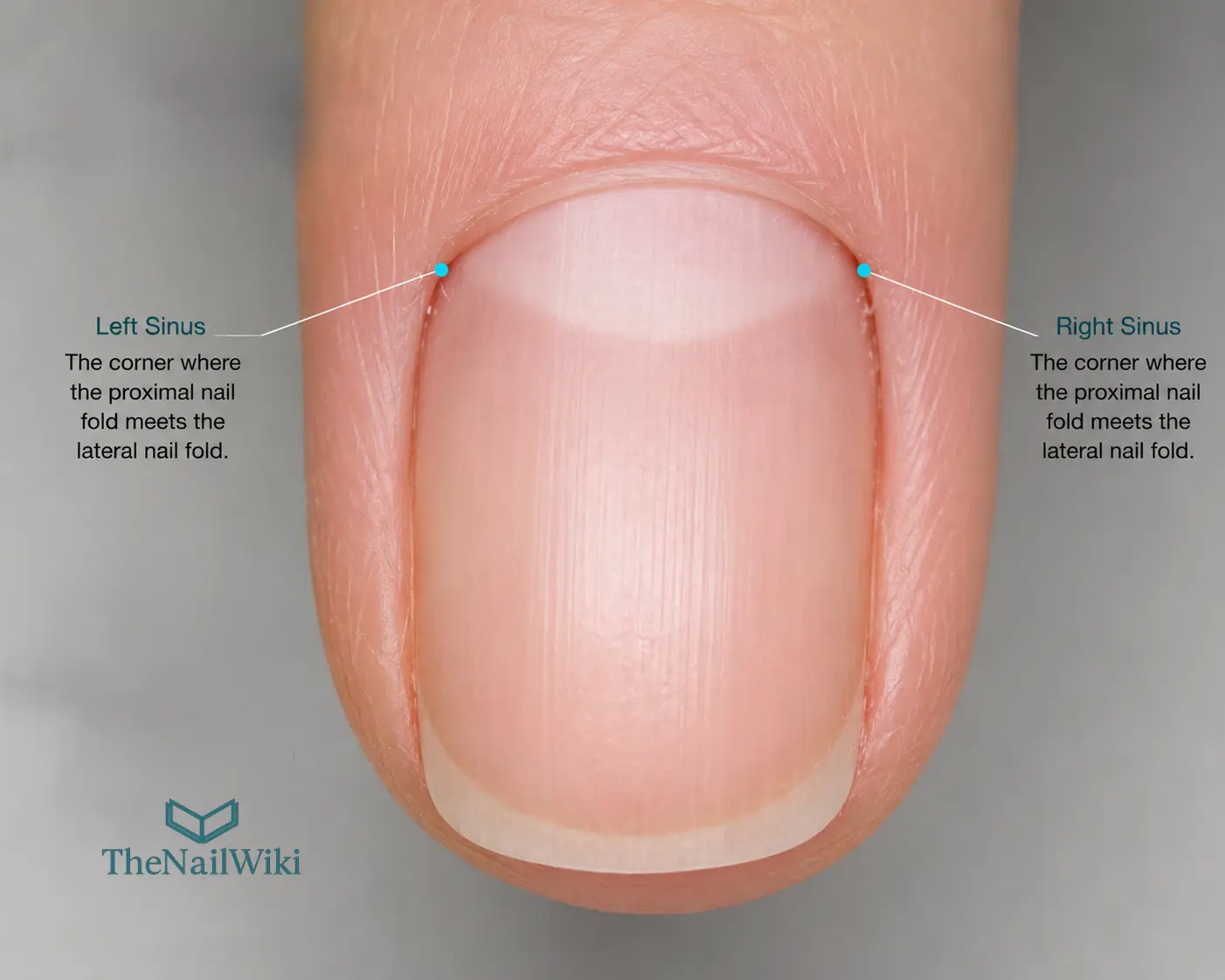
Each sinus is a corner where the skin of the proximal nail fold turns sharply into the skin of the lateral fold and curves steeply against the plate. Three structures meet at this point: the proximal fold, the lateral fold and the nail surface. It is the hardest part of the nail to see clearly, the hardest to reach, and the place where debris collects most readily.
The skin inside the sinus is thinner and more delicate than the surrounding fold skin, and the nerve endings here are dense, which gives an early warning of trouble. A minor error is therefore noticed quickly by the client, and it can cause an injury out of proportion to the size of the area. The depth of the sinus also varies. A client with a pronounced C-curve has a deeper and tighter sinus because the plate curves more steeply into the corner, whereas a flatter nail has a shallower sinus that is easier to reach.
Cause One: The Pocket Was Not Opened
When the pocket is closed, or only partly open, the bit has no clear path. A rotating bit used in an unopened sinus will move into live tissue or dig into the plate at the corner instead of working along the groove. This is described as the most common cause of bleeding at the sinus. The pocket needs to be opened before any rotating work begins, using a manual tool worked at an angle into the pocket rather than pressed straight down into the corner.
Cause Two: The Angle Did Not Follow the Curve
Seen from the front, the nail is curved, so the angle of the bit cannot stay fixed as it moves across the nail. The wrist needs to follow the curve with each pass. A bit dragged in a straight line, at a constant angle, meets the tissue at the wrong point somewhere along the curve, and the sinus is where that error shows first. This is the same principle that applies to curvature in other parts of nail work: the curve of the nail sets the geometry that the hand must follow.
Cause Three: The Wrong Part of the Bit Was Working
A flame bit has a tip and a body, and they are used differently. The tip is sharp and can damage living tissue easily if it is pointed at the skin. Around the sides, the body of the bit is generally the part used. As the bit moves along the curve, the part in contact should change as well, so no area is treated at the same angle and with the same movement throughout. For background on tools, see e-file bits and the article E-File Glove Catches, which covers a related issue of bit position.
Three Questions Before Entering the Sinus
A quick check that prevents most injuries
- Is the pocket open?
- Am I following the curve of the nail?
- Is the body of the bit doing the work, not the tip?
If the answer to any of these is no, stop, reposition and continue.
Visibility and Position Matter as Much as the Bit
When the sinus is hard to see, the instinct is to go deeper or press harder. This does not address the cause, which is usually visibility or positioning. A closed pocket, an awkward finger position or the wrong angle all reduce what the technician can see. It is more productive to open the pocket further, reposition the client's hand, or change the angle than to increase pressure. Clients who tense their finger or angle it away can also block the view, and asking them to relax the finger helps. The same principle applies throughout e-file work: behaviour depends on several variables acting together, not on speed alone.
Recognising That the Work Has Gone Too Far
The Library lists signs that sinus work has exceeded what the tissue tolerates:
- redness or pinkness at the corner during or after the service;
- a burning or stinging sensation when product is applied near the corner;
- visible abrasion or raw skin;
- bleeding at the corner;
- sensitivity lasting more than a few hours after the service.
Compromised sinus skin absorbs nail chemicals more quickly than intact skin, which produces stinging and contributes to contact sensitisation. If any of these signs appear, the area should be left alone for the rest of the service.
Why the Sinus Matters for Lifting
An incompletely cleaned sinus is one of the main reasons that gel and enhancements lift at the corners. True cuticle and debris collect in the corner, and product applied to the adjacent plate bonds to that layer instead of to the plate. When the debris loosens, the product lifts with it. This lifting typically begins as a small bubble or gap at the proximal corner and extends inwards, and clients often report that it "always lifts in the same corner". Moisture and debris trapped beneath it can create conditions for infection, including green nail syndrome. For other causes of lifting at the corners, see Why the Corners of the Nail Lift.
⚠️ Bleeding or persistent soreness
Treat bleeding at the sinus as a signal to reassess angle, pressure and position, not as a reason to carry on. Redness, swelling or pain that persists after a service should be reviewed, and signs of infection call for referral to a medical professional.
Frequently Asked Questions
Why do I keep catching the nail sinus?
The most common reasons are a pocket that was not opened, an angle that did not follow the curve of the nail, and the tip of the bit rather than the body doing the work.
Do I need a smaller or finer bit to avoid the sinus?
Not necessarily. The same bit can work safely for one technician and cause injury for another, because the difference lies in anatomy and control.
Why is the sinus so sensitive?
The skin is thin and the nerve endings are dense, which protects the nearby matrix by giving an early warning of trouble.
Why does gel always lift in the same corner?
The sinus on that side is probably not being cleaned thoroughly. Debris left in the corner prevents the product from bonding to the plate.
Related Library Pages
- Nail Sinuses
- Proximal Nail Fold
- Eponychium and Cuticle
- Lateral Nail Grooves
- C-Curve — Transverse Arch
- E-File Bits
- E-File Machine
- Green Nail Syndrome