
What the Proximal Nail Fold Shows: Reading Irritation, Infection and Habit Damage
Quick Answer: What Can the Proximal Nail Fold Tell a Technician?
The proximal nail fold lies directly over the nail matrix, so its condition shows both how the skin is coping now and what the nail has been through. Four presentations account for most of what is seen: a ragged or overgrown cuticle, damage from habitual picking, infection of the fold (paronychia), and skin that has adhered to the plate (pterygium). The first can be addressed in a service. The second needs a conversation about habits. The last two call for caution or referral rather than work in the area.
Why it matters: the fold is the first line of defence for the matrix. Irritation or injury here can be transmitted to the tissue that forms the nail, and the effect appears weeks later.
Why the Fold Matters Beyond the Skin
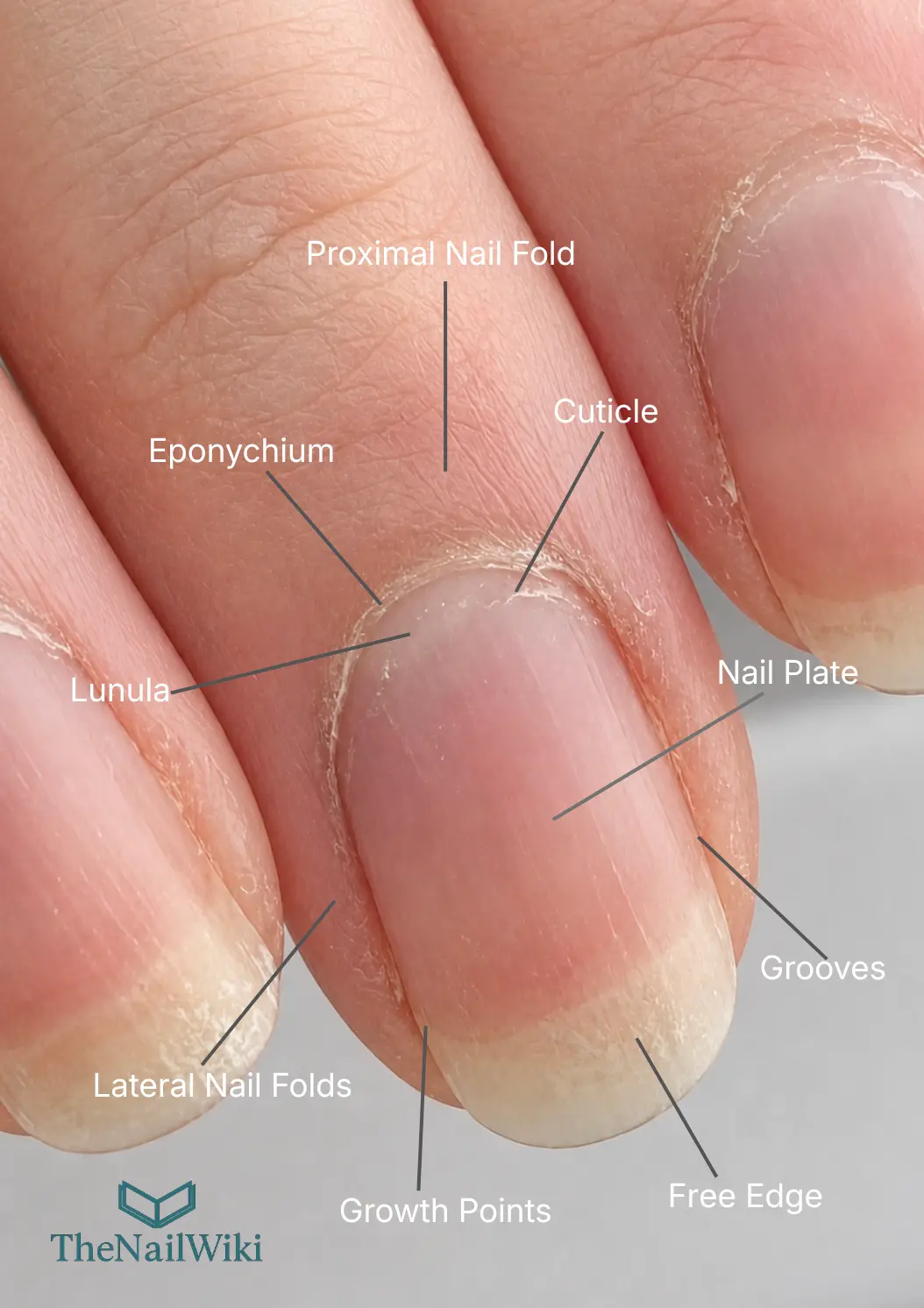
The fold protects the nail matrix from trauma, infection and chemical contact, seals the base of the nail unit, and influences how the plate emerges. Because it lies directly over the matrix, inflammation or damage at the fold can pass through to the tissue beneath and alter the plate being produced. The results, such as ridges, white spots or pitting, appear later as the affected section grows forward. The article Why Damage at the Nail Matrix Shows Up on the Nail Weeks Later explains the timeline.
Chronic distortion of the fold, for example from habitual picking, can also gradually change the growth direction and surface of the plate. A technician who reads the fold carefully before a service is therefore reading part of the nail's history, as well as deciding what to do that day.
Four Presentations at the Fold
1. Ragged or overgrown cuticle
When the cuticle is not maintained regularly, the non-living remnant accumulates on the plate and the fold looks thickened and untidy. It is the finding technicians meet most often, and professional cuticle work deals with it. The distinction between the fold, the living eponychium and the true cuticle governs what is appropriate, and the practical rules are set out in The Proximal Nail Fold and Safe Cuticle Work.
2. Damage from habitual picking or rubbing
Repeated picking or rubbing of the fold, often with the opposing thumb, causes chronic low-level trauma to the fold and to the matrix beneath. The characteristic result is a central ridge or washboard pattern running along the length of the plate. A client who bites or picks at the base of the nail may also present with a damaged fold and torn side folds.
- What it indicates: repeated injury, not a fault of a product or service.
- What to do: work gently, explain the link between the habit and the pattern in the nail, and avoid adding further irritation.
- What to expect: the pattern clears only as the nail grows out, and only if the habit stops. The matrix page explains how long growth takes.
3. Infection of the fold (paronychia)
⚠️ Redness, swelling, warmth or pus at the base of the nail
Infection of the proximal nail fold, most commonly bacterial, presents as redness, swelling, warmth and sometimes pus at the base of the nail. Acute paronychia is a contraindication to nail services. Do not work on the area. Record what you see, explain why the service cannot proceed and refer the client to a medical professional. See contraindications in nail services.
4. Skin that has adhered to the plate (pterygium)
In conditions such as nail lichen planus, the skin of the fold can adhere to and advance over the plate. This is called pterygium unguis. It is an irreversible change caused by scarring of the matrix beneath, and it must not be manipulated in the salon. The appropriate response is to leave the area alone, work around it, and suggest that the client seeks medical advice if they have not already done so.
Recognising Irritation From Products
Not every red or sore fold is infection or habit. The fold is also the place where product is most likely to flood onto living skin during preparation and application. Product that flows onto the fold and stays in contact while uncured is one of the main routes to contact sensitisation. A fold that is repeatedly red or itchy after services should prompt questions about product contact and technique, and a cautious approach for clients with a history of reactions. See nail patch testing.
A Quick Way to Decide
Match what you see to the response
- Calm skin, ragged or overgrown cuticle: proceed with appropriate cuticle work for the client's tissue.
- Calm skin, central ridge from picking: proceed gently, discuss the habit, set realistic expectations about regrowth.
- Persistent redness or soreness with no clear cause: ask about products, cleaning and habits; avoid working the area; reassess.
- Redness, swelling, warmth, pus or pain: stop and refer.
- Skin advancing over the plate: do not manipulate; refer for medical advice.
Talking to a Client About a Picking Habit
Clients with this pattern are often embarrassed. A factual, non-judgemental approach works best. Explaining that the fold protects the tissue that makes the nail, and that repeated injury shows up in the plate later, gives the client a reason to change the habit that is not simply a criticism. Where the habit is linked to anxiety, being supportive and suggesting appropriate help if the client wishes is more useful than advice about the nails alone.
Frequently Asked Questions
What is the difference between the proximal nail fold and the cuticle?
The fold is the living skin at the base of the nail. The cuticle is the non-living layer attached to the plate surface. The fold is part of the nail unit's structure, while the cuticle can be removed in a professional service.
Why does picking the skin at the base of the nail cause ridges?
The fold lies over the matrix, so repeated injury is transmitted to the tissue forming the plate. The result is a ridge or washboard pattern that appears as the affected section grows forward.
Can a technician work on an infected nail fold?
No. Acute infection at the fold is a contraindication to nail services, and the client should be referred to a medical professional.
Can skin that has grown onto the nail be pushed back?
Pterygium is an irreversible change caused by scarring and should not be manipulated in the salon.