
Why the Cuticle Keeps Coming Back: Regrowth, Maintenance and What Clients Should Expect
Quick Answer: Why Does the Cuticle Return After a Manicure?
The true cuticle returns because it is shed continuously from the underside of the proximal nail fold onto the surface of the nail plate, and the plate carries it forward as the nail grows. Removing it clears the plate for now, but fresh tissue is deposited as the nail emerges from beneath the fold, so some regrowth is normal and is not a sign that the earlier work failed. How quickly it becomes noticeable depends on how the nail is maintained.
Why it matters: residual cuticle on the plate prevents product from bonding directly, so regrowth is one of the reasons gel and enhancements lift at the base. Explaining this to clients helps them understand why maintenance appointments matter.
Where the Cuticle Comes From
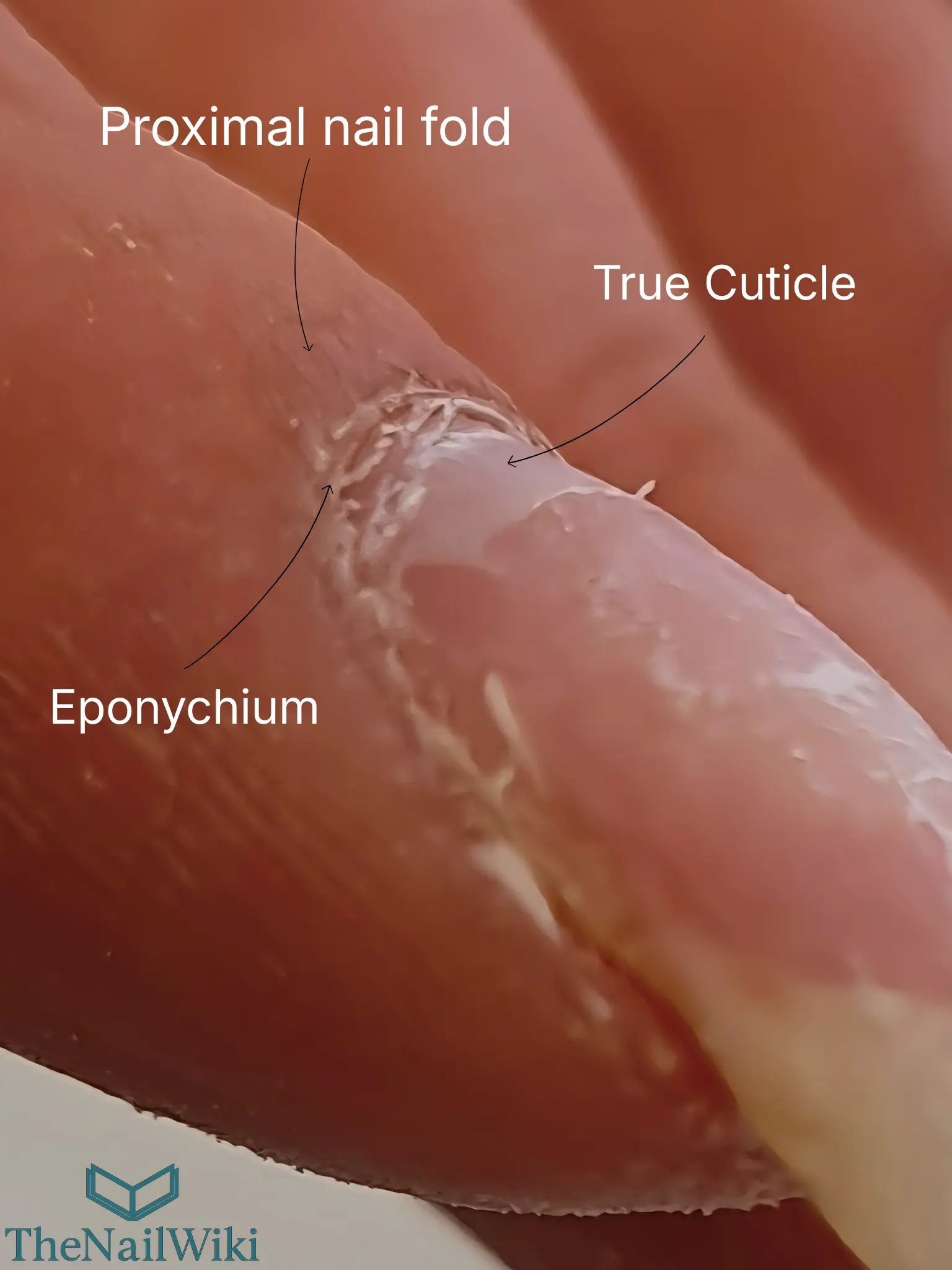
The word cuticle is used loosely in the salon to cover three structures: the proximal nail fold, the living eponychium at its lower edge, and the true cuticle. Only the last is non-living. The true cuticle is a thin, translucent layer of keratinised tissue shed from the underside of the proximal nail fold onto the plate. As the plate emerges from beneath the fold, it carries this layer forward.
It follows that the cuticle does not grow back in the way that hair does. Instead, the fold keeps shedding new tissue onto a plate that keeps moving, so a clean plate gradually acquires a fresh film. Because the nail advances roughly 3 to 3.5 mm per month, the plate that was clean at the base at one appointment has moved forward by the next, and new tissue has been deposited behind it.
What Regrowth Looks Like
On a nail that has not been recently prepared, the true cuticle appears as a slightly whitish, slightly ragged film on the plate just beyond the base of the fold. On many clients it is almost invisible, especially to a beginner or an untrained eye. That is part of the difficulty: a nail can look clean while a thin layer of non-living cuticle remains on the plate.
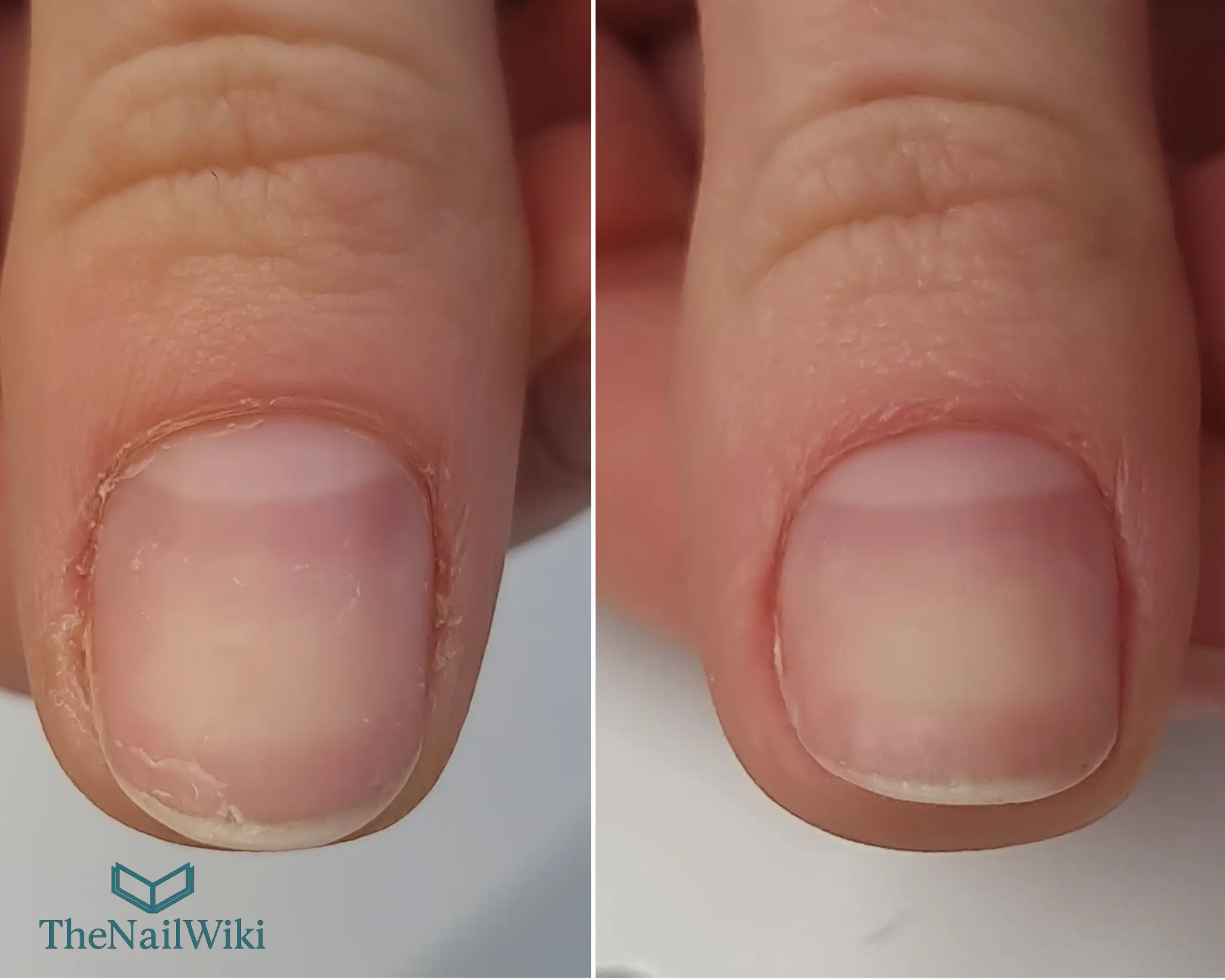
When the cuticle is not maintained, the layer accumulates and the fold can look thickened and untidy. This is the most common presentation in the salon, and it can be addressed through professional cuticle work. It is distinct from damage at the fold caused by picking or infection, which is covered in What the Proximal Nail Fold Shows.
Why Regrowth Matters for Gel and Enhancements
Non-living tissue left on the plate acts as a barrier between the nail and the product. Product applied over it cannot bond directly to the plate, which increases the risk of lifting at the proximal edge. The Library notes that manual preparation frequently leaves a thin film behind even when the technician believes the plate is clean, because the true cuticle is so hard to see.
Lifting at the base also allows product to migrate onto the surrounding skin during wear. Product on living skin is a pathway to contact sensitisation, so clean preparation supports both the durability of the service and the safety of the client. The article The Proximal Nail Fold and Safe Cuticle Work explains what is safe to remove and what is not, and the nail plate preparation page covers preparation in general.
Setting Expectations With Clients
Clients often judge the success of cuticle work by how long the base of the nail stays tidy. A short explanation can change that.
- The cuticle returns because the nail grows. New tissue is deposited continuously, so some regrowth is expected between appointments.
- A growth gap is normal. With coloured product, the visible gap at the base is the nail growing forward, not the product moving.
- Maintenance depends on the client. The interval that suits one client may not suit another, so it is better to agree it at consultation than to promise a fixed number of weeks.
- Dry or overgrown tissue improves gradually. A first appointment on neglected cuticles may not give a perfect result, and steady maintenance and aftercare are more realistic than a single visit.
What to Advise Between Appointments
Most of the useful advice is about what not to do. Pushing, cutting or picking at the base between appointments can injure the living fold and eponychium, which are structurally different from the true cuticle and must not be cut in routine preparation. The fold sits over the matrix, so repeated injury can be transmitted to the tissue forming the nail, with effects that appear weeks later (see Why Damage at the Nail Matrix Shows Up on the Nail Weeks Later).
Keeping the skin around the nail conditioned supports its flexibility and resilience. This is general skin care and does not remove the true cuticle, but it helps the tissue stay comfortable between services.
⚠️ Redness, swelling or pain at the base of the nail
Regrowth of the true cuticle is painless and unremarkable. Redness, swelling, warmth or tenderness at the fold is not regrowth and may indicate irritation or infection. Do not work the area, and refer the client where appropriate.
Use Precise Language
Describing a service as cuticle removal is accurate when the true cuticle is being removed from the plate. The same words describe a different and riskier action when the living eponychium is being cut. Precise terms in client records, in the salon team and in conversation with clients keep expectations and decisions clear.
Frequently Asked Questions
Why does my cuticle grow back so quickly?
The true cuticle is shed continuously from the underside of the proximal nail fold onto the plate, and the plate carries it forward as it grows. New tissue is therefore always being deposited.
Is the cuticle the same as the skin at the base of the nail?
No. The skin fold and the eponychium at its edge are living. The true cuticle is a thin, non-living layer on the plate.
Why does gel lift at the base of the nail?
One cause is residual cuticle on the plate, which prevents product bonding directly. Preparation that leaves this film behind increases the risk of proximal lifting.
How often should cuticle work be repeated?
It depends on the client's nail growth, tissue and how the nails are cared for between appointments. The interval is best agreed at consultation.
Should clients push back or cut their own cuticles?
Doing so risks injury to the living fold and eponychium. It is better to leave the base of the nail alone between appointments and keep the skin conditioned.
Related Library Pages
- Eponychium and Cuticle
- Proximal Nail Fold
- Nail Matrix
- Nail Plate Preparation
- Nail Hydration
- Nail Patch Testing