
Sore, Tight or Lifting Sidewalls After a Service: A Diagnostic Guide
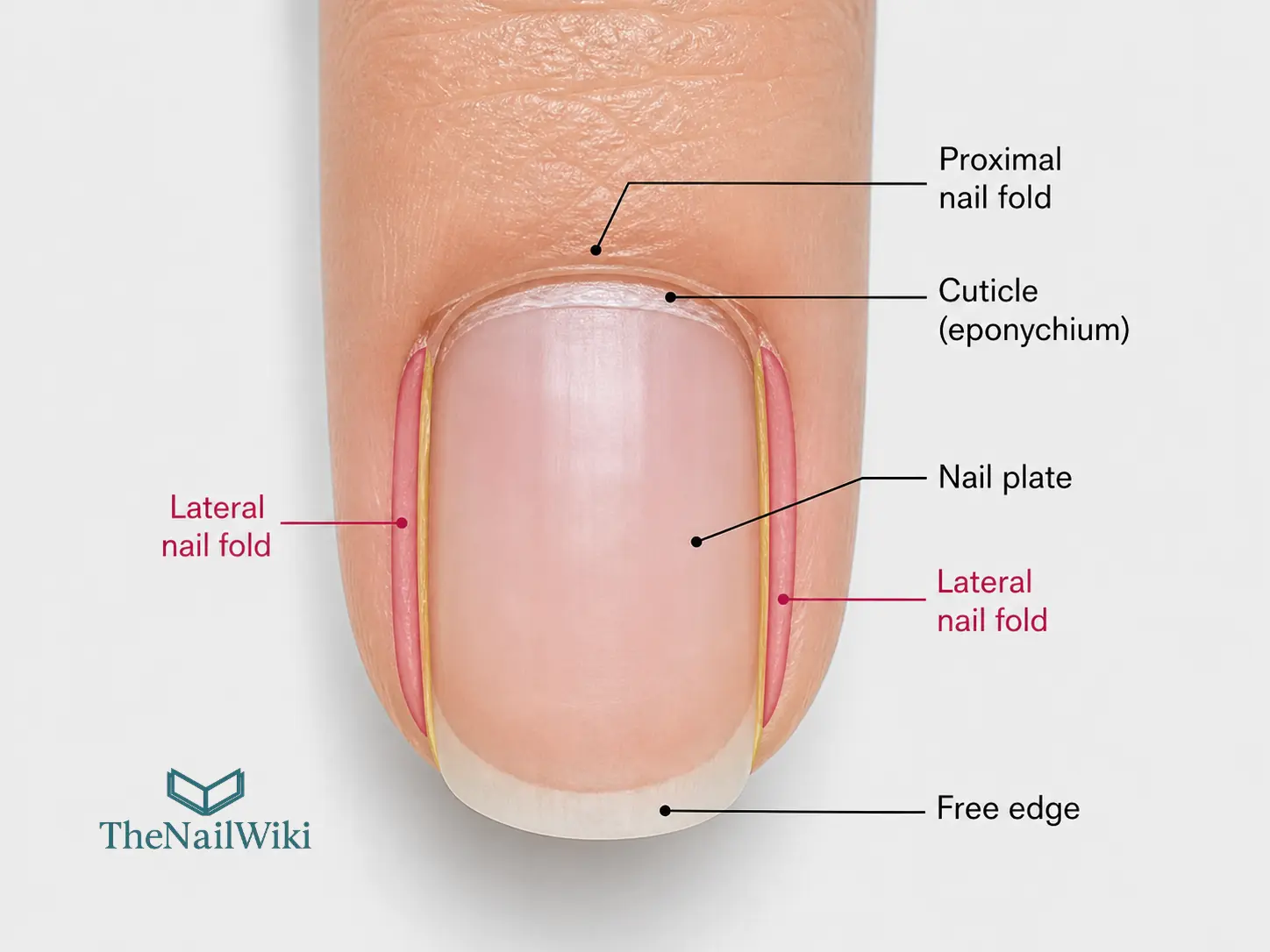
Quick Answer: Why Do the Sides of the Nail Become Sore, Tight or Lift?
Problems at the sidewalls usually come from one of five sources: a form or product that compresses the lateral nail folds, a curve that does not match the natural nail, product contact with the skin, filing that has narrowed or damaged the sides, or a pre-existing condition at the fold. Sidewall lifting in particular has several possible causes, including preparation, product compatibility and curing, so it helps to assess the sides methodically rather than assume one explanation.
Why it matters: a client's description of the symptom, such as tightness, soreness or lifting, narrows down the likely cause and decides whether the next step is a change of technique or a referral.
Start With What the Client Reports
Ask where the discomfort is, when it began, and what changed. A symptom that began immediately after a service points towards something done at that appointment. One that developed gradually, or that was already present, points towards the nail itself, habits or an existing condition. The sections below follow the common symptoms.
Tightness or Pressure Along the Sides
A feeling of tightness usually means that something is pressing on the folds. There are two main possibilities.
- A form or structure that was too narrow. A dual form that is too narrow for the nail compresses the lateral folds when it is pressed into place and when product cures. Pressure at the folds causes discomfort, uneven product distribution and lifting at the sides. The form needs to enclose the growth points without compressing the folds, and selection should account for the width and curvature of the nail at the folds as well as the width of the plate overall.
- An enhancement whose curve does not suit the nail. The C-curve of an enhancement should follow the natural curve of the nail bed. A mismatch can create internal stress in the cured product and may contribute to lifting at the sidewalls over time. A curve that is deeper than the nail supports can also press inwards on the folds.
The prominence of the folds contributes to curvature, because nails with prominent folds tend to have a deeper natural C-curve and nails with lower folds tend to be flatter. This is one reason why the same form does not suit every client.
Lifting at the Sidewalls
Product that lifts at the sides may be a mechanical problem, a preparation problem or both. The curve mismatch described above is one candidate. Others include:
- Product on the skin. Product that flows onto the fold and cures against the skin forms a rigid attachment that lifts and can pull on the skin as the nail grows forward. It is also a route to contact sensitisation.
- Preparation. Debris or incomplete preparation at the sides weakens adhesion, and the lateral grooves in particular need to be clean. See nail plate preparation.
- Compatibility and curing. Product compatibility and curing affect adhesion across the whole nail, and the sidewalls are often where a problem shows first.
Because several causes can combine, a methodical review works better than a single assumption. The article Why Gel Nails Lift: A Diagnostic Guide for Nail Technicians sets out a general approach to lifting.
Soreness, Redness or Swelling at the Fold
⚠️ Findings that stop or modify a service
Infection (paronychia): redness, swelling and tenderness along the side of the nail. Acute infection is a contraindication to services in that area.
Ingrown nail (onychocryptosis): when the edge of the plate grows into the fold instead of along the groove, the fold becomes inflamed, painful and sometimes infected. In the acute phase it is a contraindication.
Where there is any doubt, refer the client to a medical professional rather than proceeding. See contraindications in nail services.
Soreness that follows a service, without signs of infection, may reflect pressure from a form, skin contact with product, or irritation from filing or e-file work at the fold. The skin at the lateral folds is thinner and more sensitive than the skin of the fingertip, so it needs lighter pressure and more careful technique than the fingertip skin. A fold that repeatedly reacts after services should prompt questions about product contact and sensitisation, and a cautious approach for clients with a history of reactions.
Cracking or Breaking at the Sides
If the sides of a nail crack or break, ask whether the sides of the free edge have been over-narrowed. Removing too much from the sides undermines the plate's structural support at the point where the folds provide their guidance and protection, which overlaps with the stress zone and raises the risk of side cracking.
The growth points are part of the same picture. On a short nail, a tapered shape requires the sides to be filed back close to the growth points, which removes material from the zone that gives the nail its lateral support. Shape and length therefore need to be chosen together. The article Why the Corners of the Nail Lift covers damage at the growth points in more detail.
Ingrowing Edges After a Service
An edge that begins to grow into the fold after a service often follows corners that were cut or filed too short. The newly forming edge then has to find its way back into the lateral groove without a corner to guide it. See lateral nail grooves and the article Why Some Clients Get Ingrowing Nail Edges.
A Quick Diagnostic Table
Symptom, likely contributors and first response
- Tightness at the sides: form too narrow, curve deeper than the nail supports. Review form fit and curve.
- Lifting at the sidewalls: curve mismatch, product on skin, preparation, compatibility, curing. Review each in turn.
- Red, swollen, tender fold: infection or ingrown edge. Stop and refer.
- Soreness without infection: pressure, product contact, filing or e-file irritation. Reduce contact and review technique.
- Cracking at the sides: over-narrowing, growth point damage, length for the structure. Review shape and length.
- Edge growing into the fold: corners cut too short. Leave the corner and let the edge grow out.
For practical technique around the folds during a service, see Working Safely Around the Lateral Nail Folds.
Frequently Asked Questions
Why do my nails feel tight at the sides after an enhancement?
A form that was too narrow, or a curve deeper than the nail supports, can press on the lateral nail folds. The discomfort is usually from compression rather than from the product itself.
Why does product keep lifting at the sidewalls?
There are several possible causes, including curve mismatch, product on the skin, incomplete preparation, compatibility and curing. They are best reviewed in turn.
Is a red, swollen side fold normal after a service?
No. Redness, swelling and tenderness may indicate infection or an ingrown nail. Services in the area should stop and the client should be referred if there is any doubt.
Why do the sides of my nails crack?
Over-narrowing the sides, damage at the growth points, or a length that the structure cannot support can all contribute.
Related Library Pages
- Lateral Nail Folds
- Lateral Nail Grooves
- Growth Points
- C-Curve — Transverse Arch
- Stress Zone
- Nail Plate Preparation
- Contraindications in Nail Services