
What Is Russian Manicure? A Professional Guide for Nail Technicians
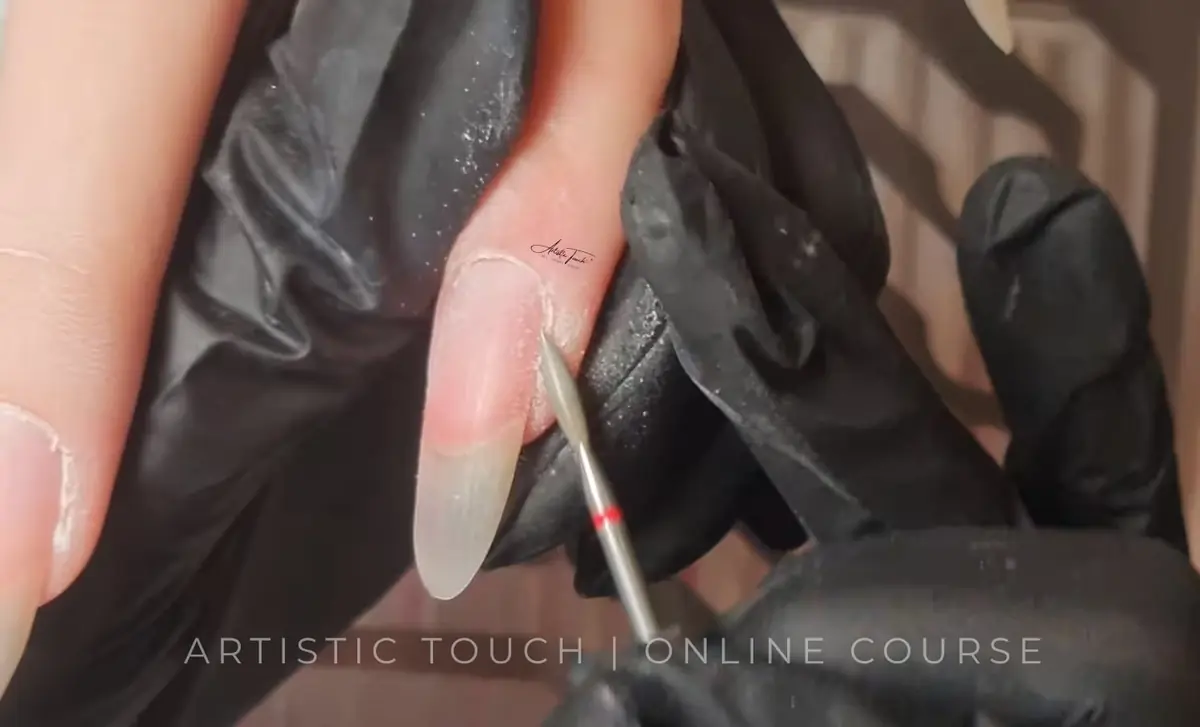
Russian Manicure is a dry manicure technique in which an e-file, used with a selection of bits and sometimes small hand tools, prepares the cuticle area and the surface of the nail plate. It is designed to leave the natural nail clean and well defined, so that a coating such as gel polish can be applied neatly around and beneath the cuticle area.
The central concept is that Russian Manicure requires an understanding of anatomy, controlled e-file work, appropriate tool selection and professional assessment, rather than simply following a sequence of movements. This guide explains the technique from a nail technician's point of view and sets out what needs to be understood before it is offered to clients. For a broader general overview, see the TheNailWiki guide to Russian Manicure and dry manicure technique.
What Russian Manicure Is and What It Is Designed to Achieve
Russian Manicure is also known as dry manicure or e-file manicure. It developed in Russia and Eastern Europe and is now taught and offered in many other countries. The name describes the working method rather than a single tool: the preparation is carried out without soaking, and an e-file does most of the work, supported where appropriate by tools such as scissors or nippers and by polishing bits.
The technique is designed to produce a clean, controlled result around the nail rather than to remove as much tissue as possible. It aims to tidy the cuticle area, remove true cuticle from the nail plate, refine the skin at the sides of the nail and leave a surface that is ready for the coating that follows. How that is achieved depends on the tissue in front of the technician, which is why the technique is described in terms of decisions as well as movements.
How Russian Manicure Differs From a Conventional Manicure
A conventional manicure commonly softens the cuticle area with water and relies mainly on manual tools. Russian Manicure is usually performed dry and relies mainly on the e-file. That difference in method changes what the technician needs to know, because the e-file works quickly and close to the living skin around the nail.
The difference is therefore less about the tool than about the skills the tool demands. A technician using an e-file in this area needs to recognise which tissue is being addressed, to control how the bit meets that tissue, and to decide when enough work has been done. Neither technique should be described as inherently safer or more hazardous than the other: the outcome of either depends on training, assessment and care. TheNailWiki compares the two in more detail in Russian Manicure vs Traditional Wet Manicure.
The Role of the E-File
The e-file supplies the rotation, but it does not supply the judgement. Every bit removes material according to how it is angled, how much pressure is applied, how fast it rotates and how it moves across the tissue, and all of those are controlled by the technician. For background on the equipment, see TheNailWiki guides to the e-file machine and e-file bits.
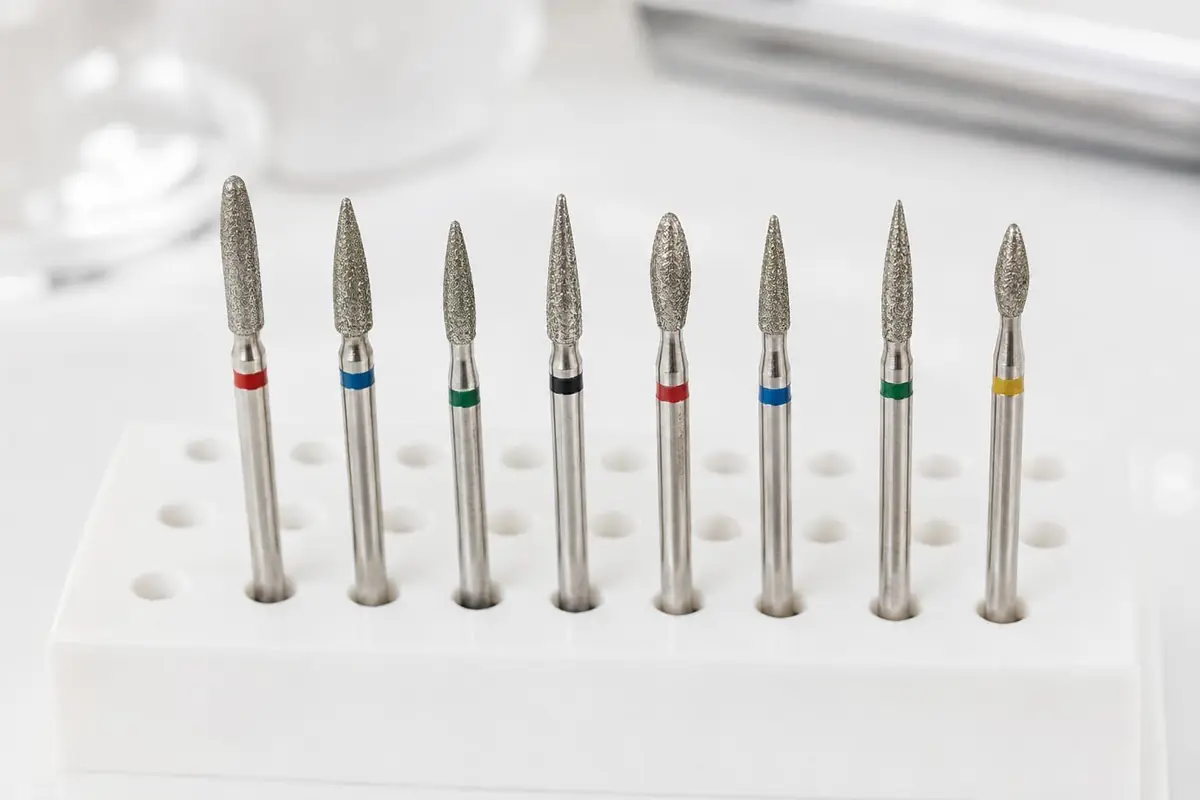
The flame bit is the tool most closely associated with Russian Manicure, and it appears in most demonstrations. Because it is so visible, it is easy to assume that mastering its movement is the whole technique. It is not. The tool remains the same from client to client while the anatomy does not, and the same bit used in the same way can give different results on two different hands. The relationship between speed, pressure, angle and contact is covered in Russian Manicure E-File Control: Why RPM Alone Is Not Enough.
Why Anatomy Matters Before Technique
Anatomy matters because Russian Manicure is carried out beside living tissue, and the technician must know which structure is in front of the bit. The distinction that matters most is between true cuticle and the living skin around it. True cuticle is the translucent, non-living layer that grows from the matrix onto the nail plate. The eponychium is living skin at the base of the nail. The two are worked on in completely different ways, and confusing them is one of the commonest sources of error.
Other structures influence decisions in the same way. The proximal nail fold may be soft and flexible on one client and firmer on another. The cuticle pocket may open easily or hardly at all. The nail sinuses and lateral nail grooves differ in how accessible they are and how much visibility they allow. Each of these changes what is reasonable to do, which is why two clients should not automatically be approached in exactly the same way. How this plays out across different clients is explained in Why One Russian Manicure Routine Does Not Work for Every Client.
A Clean Result Is Not the Same as More Removal
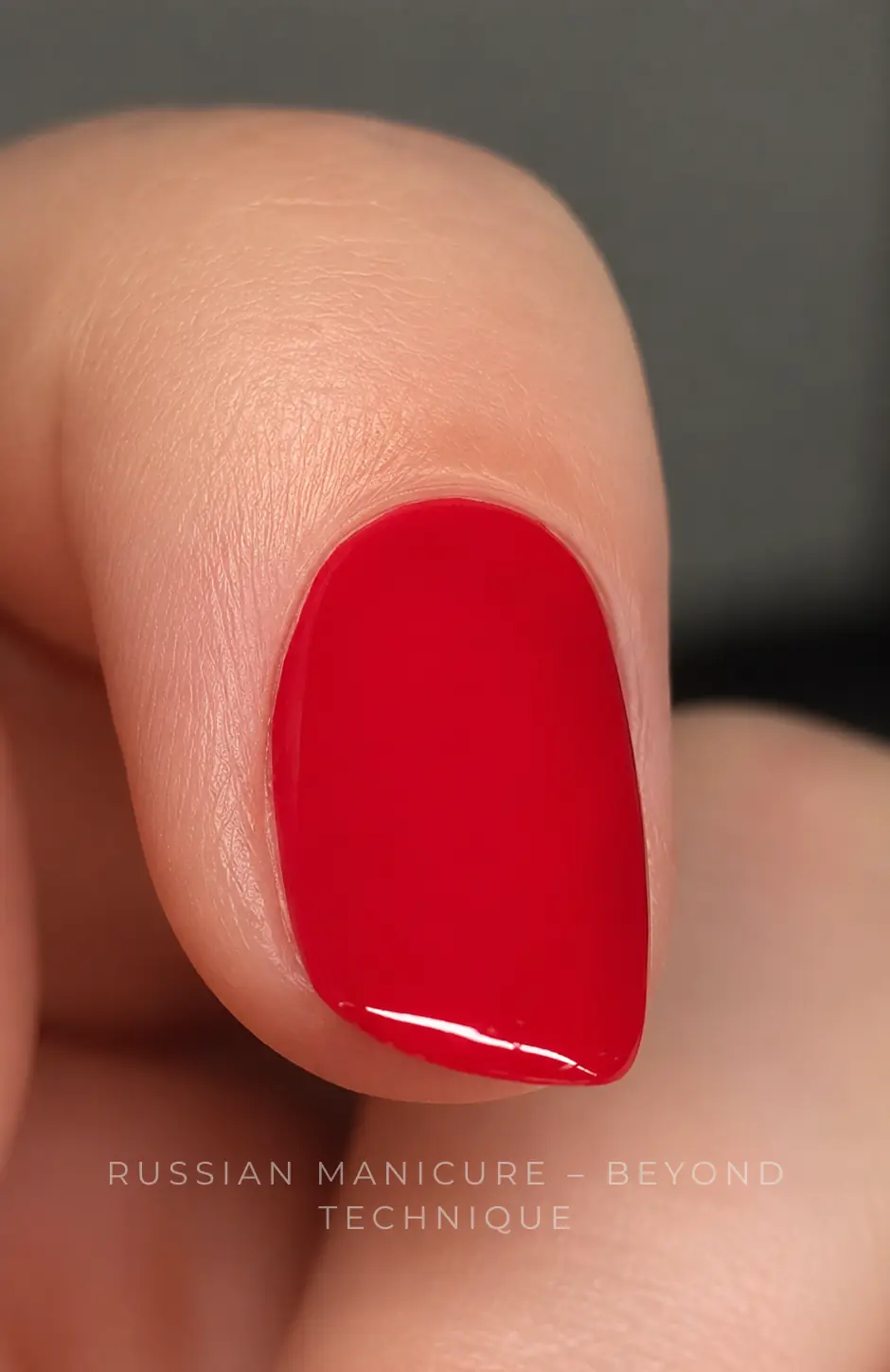
A natural assumption is that the more bare the nail looks afterwards, the better the work must have been. That assumption is understandable, because a photograph shows the finished edge but not the decisions behind it. The amount of tissue removed is not, on its own, a measure of the quality of a Russian Manicure. A clean result is better understood as evidence of accuracy and judgement: work matched to that client's tissue and to what the service actually required.
The risk in measuring quality by removal is that removal itself becomes the goal, through a series of small decisions to do a little more because it will look cleaner. A more useful question is whether the work suited that client's tissue. This is also why knowing when to stop is treated as a professional skill: further work can add risk without adding any real value to the result.
Why Judgement Cannot Be Replaced by One Bit, One RPM or One Sequence
It is tempting to look for a single answer: one bit, one speed setting, one fixed order of steps. Each of these is useful as a starting point and none is sufficient on its own.
- One bit. Bit shape, diameter and abrasiveness all affect how a tool behaves, and a worn or unsuitable bit affects control whatever the technician's movement. Different clients, and different areas of the same hand, may call for different choices.
- One RPM. Speed affects friction and heat, but it is only one variable. Increasing it does not improve efficiency automatically, and it does not compensate for poor visibility or positioning.
- One sequence. A structured sequence tells a technician the general order of the work. It does not say whether a step is appropriate for a particular client, or how to adapt when the tissue differs from the one demonstrated.
Professional judgement is what connects these elements. It is the ability to observe the tissue, choose tools and technique to suit it, and adjust as the work progresses.
From Preparation to a Finished Professional Service
Russian Manicure is rarely the end of the appointment. In many salons it forms the preparation for a coating, commonly gel polish, applied neatly beneath and around the opened cuticle area. The quality of that application depends on the preparation that came before it, and on the way each stage supports the next.
A complete service also includes the elements that surround the technique: advice on aftercare and maintenance, an honest explanation of what the service can and cannot achieve for a particular client, and a considered approach to how the service is priced and presented. Treating the manicure as one connected service, not a set of separate demonstrations, is what turns a technique into something that clients understand and value.
Who Should Perform Russian Manicure
Russian Manicure should be performed only by trained professionals who follow current hygiene and safety requirements, carry out a full client consultation and check for contraindications before the service. The technique involves working close to living tissue with a rotating tool, so training, assessment and care are essential, in the same way as for any service that carries risk when performed without them.
Local regulations, licensing rules and insurance requirements differ between countries and regions, and they should be checked directly with the relevant authority and insurer. This guide is educational and does not provide legal or regulatory advice.
What Technicians Need to Learn Before Offering It
A technician who intends to offer Russian Manicure professionally should be confident in the following areas before working on paying clients:
- Anatomy in working conditions: recognising the nail plate, true cuticle, eponychium, proximal nail fold, sinuses and lateral structures while an e-file is running, not just naming them.
- Tissue assessment: observing whether the tissue is dry or hydrated, thin or resistant, overgrown or closely attached, and how the surrounding skin looks.
- E-file control: how speed, pressure, movement, contact point, angle, stabilisation, positioning and visibility work together.
- Tool selection and care: what each tool is for, where it should and should not be used, and how instruments are cleaned, disinfected, sterilised and stored.
- The complete technique: how each stage supports the one that follows, including the coating application.
- Adaptation: how decisions change between clients, and how to recognise when to stop.
- The surrounding service: aftercare, maintenance and the way the service is positioned and priced.
Basic e-file experience is a sensible foundation. The physical control involved still develops through practice, but understanding what to practise towards makes that practice more purposeful.
Structured Further Training
Technicians who would like structured training in these areas can study them in Russian Manicure – Beyond Technique, a self-paced online course created by Radina Ignatova and delivered through Artistic Touch Nail Training Academy. It teaches anatomy, e-file control, tool selection, the complete technique and adaptation across different real clients, through video and text lessons and real-client demonstrations. It is suitable for technicians learning Russian Manicure for the first time and for those who already offer it. Basic e-file experience is recommended, and previous Russian Manicure training is not required. The course is described further in the launch announcement.
See what Russian Manicure – Beyond Technique teaches
Frequently Asked Questions
What is Russian Manicure?
Russian Manicure is a dry manicure technique in which an e-file, with a selection of bits and sometimes small hand tools, prepares the cuticle area and the nail plate so that a coating can be applied neatly around and beneath the cuticle area.
Is Russian Manicure the same as dry manicure?
The terms are used almost interchangeably. Both describe preparation carried out without soaking and relying mainly on an e-file.
Is Russian Manicure only about using a flame bit?
No. The flame bit is the tool most often associated with the technique, but scissors, nippers and polishing bits are also used. The decisions about where, when and how to use any tool depend on the client's anatomy and tissue.
Does a cleaner result mean more tissue was removed?
No. The amount of tissue removed is not a measure of quality on its own. A controlled result reflects work matched to that client's tissue and to what the service required.
Should a technician train before offering Russian Manicure?
Yes. It involves working close to living tissue with an e-file, so structured training in anatomy, e-file control, tool selection and client assessment is essential, together with attention to hygiene, contraindications and local requirements.
This guide is for professional nail technician education only. Russian Manicure is not risk-free and should be performed only by trained professionals following current hygiene and safety requirements. Always carry out a full client consultation and check for contraindications before any nail service.