
Working Near the Lunula: Why the Base of the Nail Calls for Restraint
Quick Answer: Why Is the Base of the Nail Treated With Extra Care?
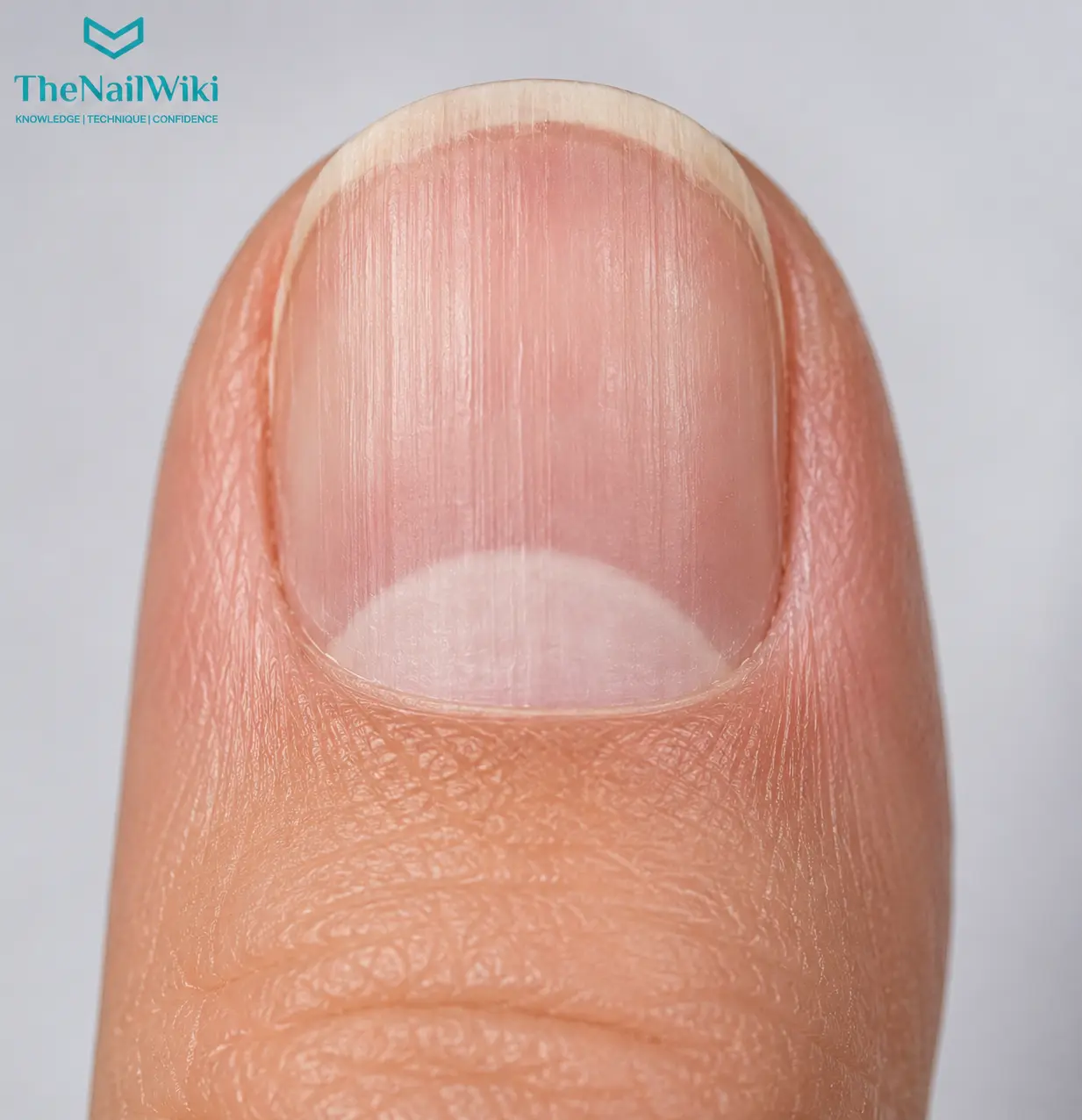
The base of the nail needs particular care because the nail matrix, which produces the plate, lies directly beneath it. The lunula is the visible part of the distal matrix, so it acts as a reference for where that living tissue sits. Work at or below the lunula, whether filing, cuticle work or product placement, is carried out immediately above the tissue that determines the quality of the nail that grows next.
Why it matters: an injury at this level can alter the plate being produced at that moment, and the change is carried forward with the nail for months.
What the Lunula Shows About What Lies Beneath
The lunula is not a separate structure. It is the distal portion of the matrix showing through the plate, where cells are still completing their transformation into plate cells and therefore appear opaque and white. In this zone the plate is thicker and less transparent than further forward, and the tissue beneath is less vascular than the nail bed, which is why the pink colour does not show through.
Its visibility depends on how far the matrix extends beyond the proximal nail fold. It is usually clear on the thumb, less so on the index finger, and often hidden on the little finger. A lunula that is small or invisible on most fingers is normal anatomy and not a sign of disease. For the technician, the useful point is that where the lunula is visible, it marks the front edge of the matrix, and the matrix itself extends further back beneath the fold than most people realise.
Why This Zone Calls for Restraint
The matrix is living tissue with a blood supply and nerve endings, and every cell in the plate originates there. Anything that disturbs it can change the plate it is producing at that moment. Three features make the base of the nail different from the rest of the nail.
- The consequences are delayed. A disturbance is fixed into the plate and appears later as it grows forward. The article Why Damage at the Nail Matrix Shows Up on the Nail Weeks Later explains the timeline.
- The consequences can be lasting. Surface damage to the plate resolves as the plate grows out. Damage to the matrix itself can alter the quality, thickness or shape of what is produced.
- The area is hidden. The matrix sits beneath the fold, so the technician cannot see how close a tool or pressure is to it.
What This Means for Different Parts of a Service
Preparation
The lunula zone needs the same care as the rest of the proximal area: gentle technique, appropriate tools and awareness that the matrix lies directly beneath. Heavy filing at the base is working immediately over living tissue. The principles of nail plate preparation are covered on the nail plate preparation page.
Cuticle work
Cutting or working the cuticle near the base is also carried out close to the matrix. The distinction between true cuticle and the living eponychium is essential here, and it is covered in The Eponychium and Cuticle and in the article The Proximal Nail Fold and Safe Cuticle Work.
Product placement
When product is applied at the base, the lunula is a useful visual reference. Keeping application from the lunula forward and away from the fold supports clean application and reduces the risk of product reaching the surrounding skin. Product at the base should not flood onto the skin, and it should not be applied with pressure that could transmit trauma to the matrix beneath. This applies to gel, BIAB and other enhancement systems alike.
Trauma at the Lunula
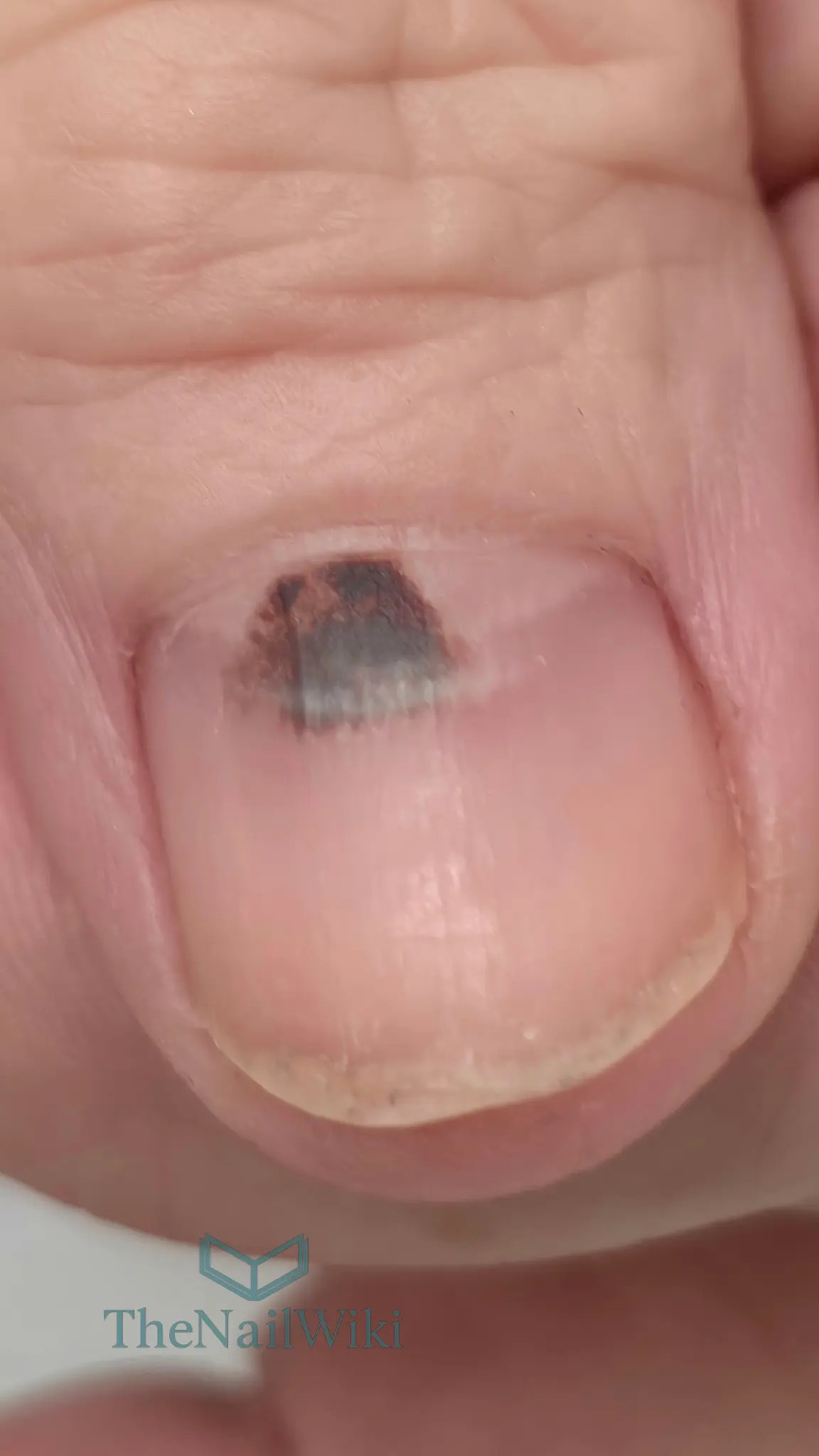
A blow or compression injury at the lunula carries a greater risk of lasting change than an injury further forward on the plate, because it is injury at or near the matrix. This is particularly the case where a subungual haematoma extends into the lunula area. Marks of this kind lie within the plate and move forward with it, so they cannot be polished away and leave only as the nail grows out. For the types of haematoma and when a service should not proceed, see nail haematoma types.
⚠️ A haematoma near the base is not a cosmetic problem
A client with fresh bruising beneath the plate near the lunula should not have pressure, heavy filing or product applied over it. Assess the area, avoid further trauma and, where there is pain, swelling or doubt about the cause, refer the client to a medical professional. See contraindications in nail services.
Colour Changes in the Lunula
A change in the colour of the lunula can be associated with systemic conditions. A red lunula has been associated with cardiovascular and autoimmune conditions, a blue or purple lunula with certain circulatory or systemic conditions, and a lunula that is obscured, with the nail appearing mostly white, with liver disease, heart failure and other conditions. A nail technician does not diagnose or treat these changes. An unexplained colour change should lead to a suggestion that the client sees their doctor.
Using the Lunula in Client Conversations
Clients sometimes worry about the pale crescent at the base of the nail or about its absence on some fingers. Explaining that it is the visible portion of the matrix, and not a flaw or a sign of damage, helps clients understand their own anatomy and supports the technician's credibility. The same conversation is an opportunity to explain why the base of the nail is treated gently.
Frequently Asked Questions
Why is the lunula white?
The cells in this zone are still completing keratinisation, so they scatter light and appear opaque, and the tissue beneath is less vascular than the nail bed, so the pink colour does not show through.
Is it a problem if I cannot see my lunula?
No. It is visible on some fingers and hidden beneath the proximal nail fold on others. Absence on most fingers is normal.
Can the lunula be affected by nail services?
The lunula marks where the distal matrix lies. Aggressive work at or near the base can disturb the matrix and affect the plate that grows afterwards.
What does a red or blue lunula mean?
Colour changes in the lunula can be associated with systemic conditions. They should be assessed by a doctor and are not diagnosed or treated in the salon.
Can a white mark near the base be buffed out?
No. It is within the plate and leaves only as the nail grows out.
Related Library Pages
- Lunula
- Nail Matrix
- Nail Plate
- Proximal Nail Fold
- Eponychium and Cuticle
- Nail Plate Preparation
- Nail Haematoma Types