
Reading the Nail Unit Before a Service: A Practical Visual Assessment for Nail Technicians
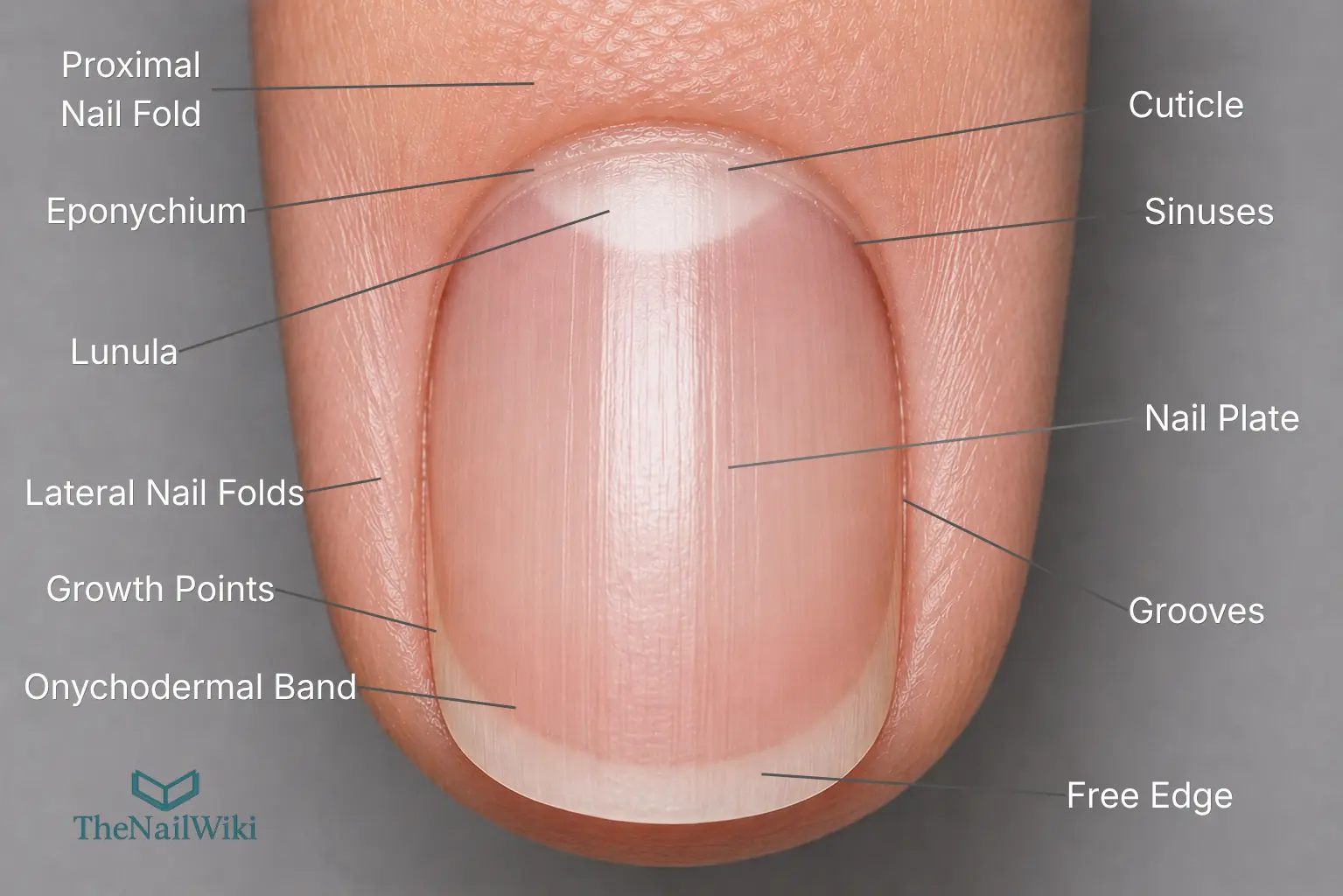
Quick Answer: What Should a Technician Look at Before Starting a Service?
Look at the whole nail unit, not just the nail plate, and work through it in a fixed order: the base, the sides, the plate and the tip. Each area has its own structures, and each shows different signs. Redness and swelling, an uneven surface, a boundary that has moved, debris beneath the edge and an unusual colour all mean something, and they change what is appropriate that day.
Why it matters: the structures form a system. A problem in one area can affect another, and product applied without a look at the whole system can seal in a problem or create one.
Why Assess the Whole Unit
The nail plate is the visible output of a system. The matrix produces it, the nail bed supports and adheres it, the folds and the hyponychium seal it, and the grooves and growth points guide it. Because the parts depend on one another, a disturbance at the proximal fold can damage the seal and pass trauma to the matrix, while over-filing the plate reduces the protection it offers everything beneath. A short, systematic look at the whole unit lets the technician see these relationships before any tool or product touches the nail.
The Order of the Check
A fixed order prevents omissions and takes about a minute once practised. The sequence below runs from base to tip.
1. The base: fold, eponychium, cuticle and lunula
Look at the proximal nail fold and the skin at its edge. The skin should be calm, without redness, swelling, warmth or tenderness. A ragged or overgrown cuticle is common and can be dealt with in a service, but redness and swelling at the fold can indicate infection, and a central ridge along the plate can indicate habitual picking. The guide What the Proximal Nail Fold Shows explains these presentations.
Note the lunula where it is visible. It marks where the distal matrix lies beneath the plate, so work in this zone calls for care, and marks or grooves near the base are the result of events weeks earlier (see Why Damage at the Nail Matrix Shows Up on the Nail Weeks Later).
2. The sides: lateral folds, grooves and sinuses
Check each lateral nail fold for redness, swelling, tenderness or broken skin, and look at where the plate edge sits in the groove. An edge that is entering the fold, or an inflamed fold, is a reason to stop work in that area. Thickened or callused skin is common and can be managed gently. At the corners, the sinuses are where debris collects, and they are hard to see, so open and inspect them rather than assume they are clean.
3. The plate: surface, thickness and curve
Look at the nail plate for dullness, roughness, peeling, translucency, ridges, pitting or pigmentation, and ask about earlier services. These findings indicate how much preparation the plate can take. A thin or previously over-filed plate needs less, as explained in How the Nail Plate's Layers Decide How Much You Can Remove. View the nail end-on to judge the C-curve, which informs form choice and product placement in enhancement work.
4. The tip: free edge, band and hyponychium
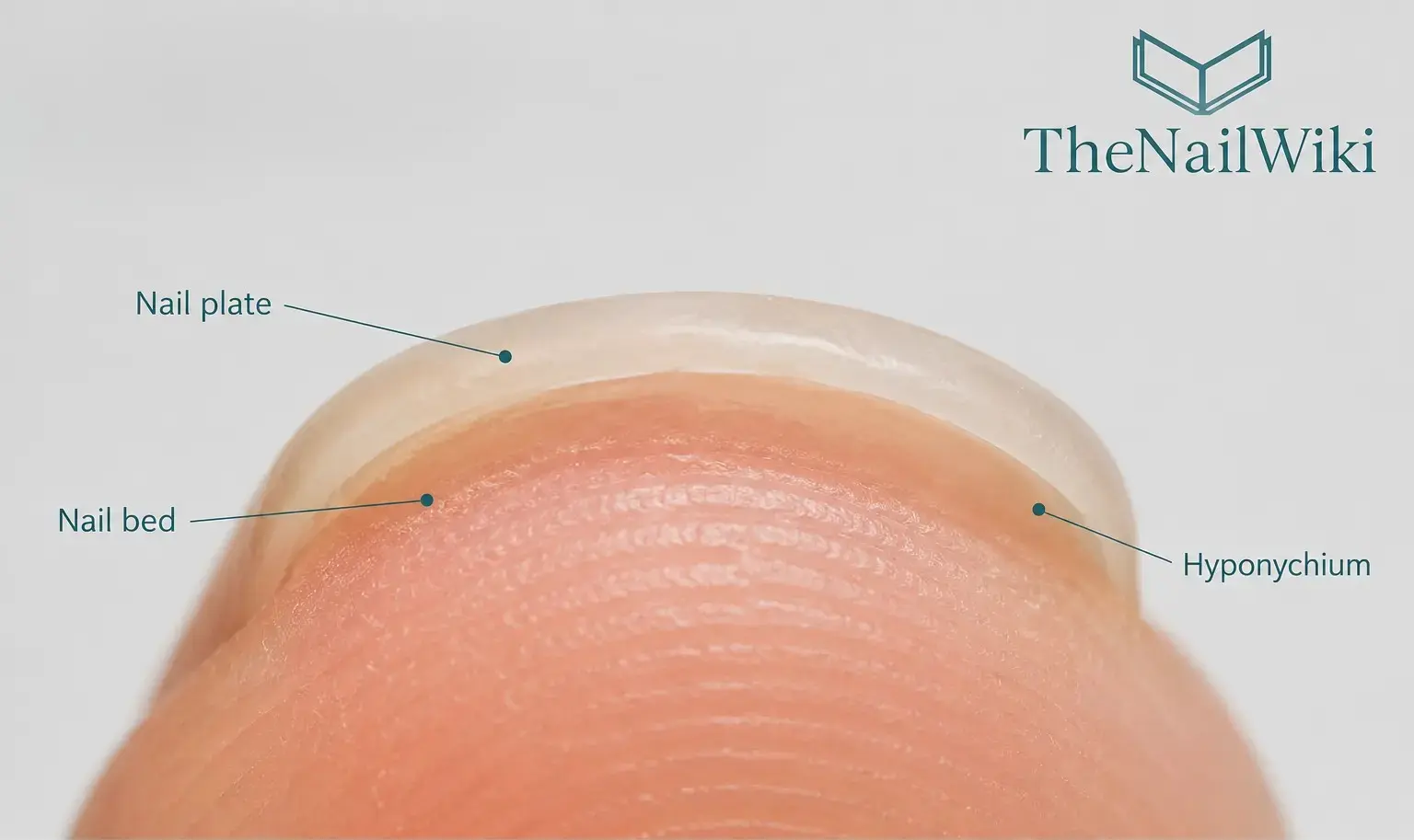
Look at the free edge for chips, splits and peeling, and note its length against the structure. Then locate the point where the pink attached nail gives way to the white edge. The onychodermal band marks the normal limit of firm attachment, and a white or discoloured area beyond it that has moved back from the tip suggests separation, which is explained in Normal White Free Edge or Early Onycholysis?. Look for debris or discolouration beneath the edge, but do not probe beneath the plate, because the hyponychium forms the distal seal and is easily disrupted.
5. The colour through the plate
The colour of the nail bed shows through the translucent plate. Healthy nails are pink because the bed is richly supplied with blood. Colour changes, such as pallor, yellowing, green discolouration or dark areas, should be noted. Green discolouration beneath a lifting product is caused by bacteria and is not mould. Dark or pigmented lines or areas, particularly if new, call for referral.
Turning Observations Into Decisions
What each observation usually means for the service
- Calm skin, intact seal, healthy plate: proceed as planned.
- Ragged cuticle, mild callus: proceed with appropriate work for the tissue.
- Thin or previously damaged plate: reduce abrasion and reconsider the service.
- Short free edge or unusual curve: adapt shape and form to what the nail supports.
- Debris or discolouration beneath a lifting edge: remove product, keep clean and dry, and do not apply new product over it.
⚠️ Findings that stop a service or call for referral
Redness, swelling, warmth or pus at a fold; an ingrown nail that has penetrated the fold; signs of infection beneath the plate; unexplained pain; new or changing pigmentation; and rapid or progressive changes in a single nail. See contraindications in nail services and refer the client to a medical professional where there is doubt.
Recording What You Find
A brief written record of the observations, made at the first appointment and updated afterwards, lets the technician compare appointments and notice change. It also supports the client conversation, because findings can be explained and the reasons for any modification understood. A structured form helps. See the guide to the nail consultation form.
Where to Read More
Each structure is covered in detail in the Library, and the following articles apply the structures to common situations.
- Why Do Nails Lift? for plate-to-bed separation.
- The Proximal Nail Fold and Safe Cuticle Work for the base.
- Working Safely Around the Lateral Nail Folds for the sides.
- Common Free Edge Problems for the tip.
Frequently Asked Questions
What is the nail unit?
The complete anatomical system of the nail, including the plate and every structure that produces, supports, seals, guides and surrounds it.
What should be checked first before a nail service?
A consistent order works best: the base and fold, the sides and corners, the plate surface and curve, and the tip, together with colour and any signs of infection or contraindication.
Why look at skin as well as the nail plate?
Redness, swelling or broken skin at the folds can indicate infection or injury, and some of these findings are contraindications to services in the area.
Is it necessary to keep a record?
A record allows comparison between appointments and supports explanations to the client, and it helps show what was observed and why a decision was made.
Related Library Pages
- Nail Unit
- Nail Plate
- Nail Bed
- Proximal Nail Fold
- Eponychium and Cuticle
- Lateral Nail Folds
- Hyponychium
- Free Edge
- Onycholysis